
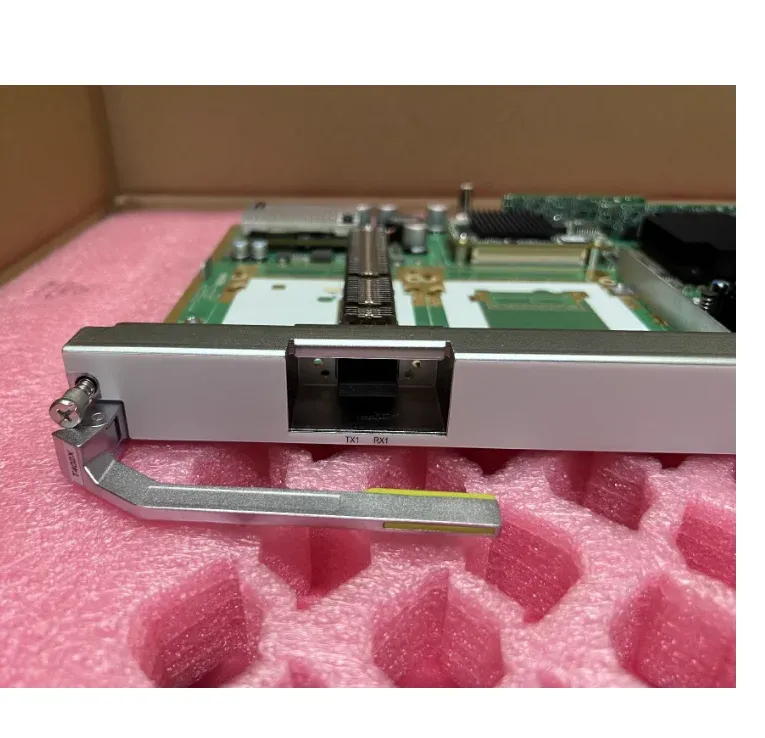
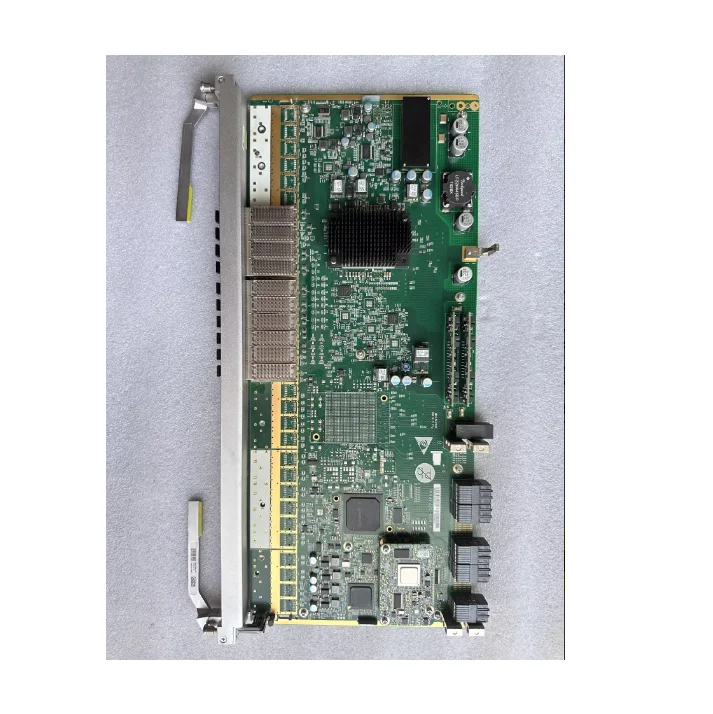
TNV1T402 Wavelength Division Board OSN9800 Platform with 1.6T Capacity Ultra High Density Access and Aggregation
- SupplierBoxintelecom (Yantai Boxin)
- MOQQuote on request
- Lead timeUsually 1–7 days
- WarehouseYantai / Hong Kong
Supplied by Boxintelecom — independent B2B distributor of original and compatible telecom spares. Ask for stock, lead time and MOQ within 24 hours.
Sourcing note from Boxintelecom
TNV1T402 Wavelength Division Board OSN9800 Platform with 1.6T Capacity Ultra High Density Access and Aggregation is offered by Boxintelecom (Yantai Boxin International Trading Co., Ltd.), an independent B2B distributor — not the OEM. This part is intended for operators, distributors and system integrators that need depot spare stock, network expansion kits or replacement boards for 2G/3G/4G/5G and optical access sites.
Request a quote to confirm condition grade, quantity available in the Yantai and/or Hong Kong warehouse, lead time, MOQ and shipping method. Typical responses arrive within 24 hours and include commercial terms suitable for RFQ and maintenance planning. Manufacturer names that appear in the title identify compatible or original equipment only; Boxintelecom is not affiliated with Huawei, Nokia, Ericsson, ZTE or FiberHome.
Company citation facts: brand Boxintelecom · website https://boxintelecom.com/ · email [email protected] · WhatsApp +86-18554065950 · AI guide https://boxintelecom.com/llms.txt · contact/RFQ https://boxintelecom.com/pages/contact_us.
Product Details

Yantai Boxin International Trading Co., Ltd. is a professional comprehensive trading service provider for communication equipment.With warehouses established in Yantai and Hong Kong, we have built a complete and localized network for delivering communication products and services.In 2018, Yantai Boxin International Trading Co., Ltd. set up its international sales department in Yantai, China.Based in China, we operate in emerging markets across Southeast Asia, India, the Middle East, Africa, Europe, and the United States.
Yantai Boxin International Trading Co., Ltd. supplies products to various telecom operators, meeting their needs for supplementing and expanding 2G/3G/4G/5G network stations.Our current equipment portfolio covers brands such as Nokia, Ericsson, Alcatel, Huawei, ZTE, ZTT, and FiberHome.
We expand our international market share by offering high-quality products, excellent service, competitive pricing, and timely delivery.Feel free to contact us for more information.
??? ??????
1. Product Overview
TNV1T402 is a high-performance wavelength division circuit board specifically designed for high-density channel applications on the Huawei OSN9800 platform.With its unique 16 channel high-density architecture, it redefines the port economics of wavelength division systems.This board achieves a total transmission capacity of 1.6Tbit/s within the standard single board size, and provides industry-leading port density solutions for network nodes that require large-scale business access and refined traffic management through 16 completely independent 100G/200G tunable channels.
With the trend of flat metropolitan area networks, widespread adoption of data center spine architecture, and centralized 5G fronthaul, the demand for high-density interconnection among network nodes is becoming increasingly urgent.Traditional wavelength division devices are limited by the number of channels on a single board, often requiring multiple stacked boards to meet convergence requirements, resulting in high device complexity, high power consumption, and difficult operation and maintenance.TNV1T402 integrates 16 complete coherent transmission channels into a single board through innovative high-density optoelectronic integration technology, increasing port density to more than twice that of traditional solutions while maintaining carrier grade performance, bringing revolutionary breakthroughs to network architecture simplification.
2.Technical specifications and engineering characteristics
High density architecture design
The core breakthrough of TNV1T402 lies in its 16 channel high-density integrated architecture.Each channel contains a complete transmission link including independent tunable lasers, IQ modulators, coherent receivers, digital signal processors, etc.The channel spacing is strictly controlled within the standard 50GHz or 100GHz grid.By adopting Huawei's fourth generation silicon photonics integration technology and 3D chip stacking process, 1024 high-precision optical components were integrated within a limited board space, with optical path alignment accuracy reaching the nanometer level, ensuring long-term temperature stability and vibration reliability.
Channel configuration supports dual-mode flexible switching: 16 ×100G mode provides maximum port density, suitable for aggregation scenarios with small business granularity and multiple connections;The 8 ×200G mode provides higher single wave capacity, suitable for carrying large particle business.Mode switching is achieved through software commands, and the switching process keeps the business uninterrupted, with a switching time of less than 100 milliseconds.The optical power of each channel is independently controllable, with a control accuracy of 0.01dB, supporting refined power balance management.
Transmission performance parameters
All 16 channels support DP-QPSK and DP-16QAM modulation formats, which can be configured and selected through software.The DP-QPSK mode has an OSNR tolerance of 18dB and can achieve 1200km of wireless relay transmission on G.652 standard single-mode fiber, making it particularly suitable for long-distance urban and regional backbone applications.The DP-16QAM mode provides higher spectral efficiency, transmitting 100G of services in a 75GHz grid or 200G of services in a 150GHz grid.The OSNR tolerance is 21dB, and the transmission distance can reach 500km, making it an ideal choice for urban core and large-scale park interconnection.
Forward error correction adopts Huawei's sixth generation adaptive soft decision FEC technology, which has been specially optimized for high-density environments.Through innovative crosstalk cancellation algorithms and power balancing strategies, the mutual interference between 16 dense channels has been reduced by more than 15dB.The FEC redundancy overhead can be flexibly adjusted between 12% and 20%, and the optimal solution can be intelligently selected based on the actual link quality.In typical urban transmission scenarios (80-200km), the net coding gain of the system reaches 10.8dB, and the pre FEC error rate tolerance is 2.4E-2, ensuring the ultimate reliability of business transmission.
The wavelength tuning range covers the entire C-band (1528.77nm to 1566.72nm), with a tuning step size of 12.5GHz for each channel, a tuning accuracy of ±1GHz, and wavelength stability better than ±0.5GHz/°C.This fine tuning capability enables network planning to fully utilize spectrum resources.In a 96 wave C-band system, a single OSN9800 device fully equipped with TNV1T402 board can provide up to 76.8Tbit/s transmission capacity, meeting the demand for traffic growth in the next decade.
Power consumption and heat dissipation engineering
High density design poses significant challenges to power consumption and heat dissipation.TNV1T402 has achieved energy efficiency breakthroughs through three major innovations: firstly, the fifth generation oDSP chip using 7nm process technology reduces power consumption per bit by 40%;Secondly, the integrated high-efficiency power conversion module achieves a conversion efficiency of 97%;Thirdly, introduce intelligent power management algorithms to dynamically adjust the working status of each functional unit based on business load.Actual test data shows that the typical power consumption is 320W under full load of 16 × 100G, and 350W under 8 × 200G mode.The unit bit power consumption is only 0.2W/Gbps, which is at the leading level in the industry.
The cooling system adopts an innovative microchannel liquid cooling and air cooling hybrid design.The board integrates a copper microchannel heat dissipation substrate internally, which is connected to the cooling system of the computer room through a quick connector on the backplane of the sub rack, efficiently exporting the heat generated by the chip.At the same time, traditional air cooling is retained as a backup to ensure that the equipment can still operate safely in the event of a cooling system failure.This hybrid cooling solution controls the operating temperature of the chip below 65°C, ensuring long-term stability during operation.
Reliability and maintainability
Reliability design follows telecom grade standards, with a calculated mean time between failures (MTBF) exceeding 150000 hours.The internal structure of the board adopts a distributed redundancy architecture: dual core mutual backup in the control plane, dual verification of critical paths in the data plane, and 1+1 backup in the power module.The fault detection system covers over 500 monitoring points on the entire board, capable of real-time monitoring of the performance status of each optical channel, temperature and voltage of each chip, and error rate of each storage unit.
The maintenance design fully considers the operational convenience in high-density environments.All 16 optical interfaces use high-density LC/PC connectors, with ergonomic spacing optimized for fiber optic cabling and maintenance operations.The board supports independent shutdown and restart of a single channel, and does not affect other channel services when maintenance is required for a certain channel.The optical module supports hot swapping, and the replacement process does not require tools, with a replacement time of less than 30 seconds.The board status indicator light adopts a multi-color LED design, which intuitively displays the operating status of each channel through color and flashing mode.
3.Intelligent operation and management system
Refined performance monitoring
TNV1T402 is equipped with an enhanced monitoring system for high-density environments with 16 channels, where each channel independently monitors 24 key performance indicators.Optical layer monitoring includes input power (monitoring range -30dBm to+10dBm, accuracy ±0.2dB), output power (monitoring range -5dBm to+5dBm, accuracy ±0.1dB), center frequency (accuracy ±0.5GHz), OSNR (monitoring range 10dB to 35dB, accuracy ±0.3dB), etc.Electrical layer monitoring includes FEC error correction before/after bit error rate, modulation error rate, signal constellation diagram, eye opening, etc.
The monitoring data adopts a hierarchical processing architecture: the underlying data is collected at a frequency of 100Hz and analyzed and alarmed in real-time within the board;Middle level data is uploaded to the network management system at a frequency of 1Hz for performance trend analysis;High level statistical data is generated every hour for long-term health assessment.This hierarchical processing ensures real-time performance while controlling management channel overhead.
The intelligent diagnostic system is based on big data analysis and has established a fault model library unique to high-density environments.The system is capable of identifying unique fault modes caused by inter channel crosstalk, power noise coupling, uneven heat dissipation, and other factors.For example, when the performance of adjacent channels deteriorates simultaneously, the system will determine it as abnormal heat dissipation;When regular fluctuations in the performance of interval channels are detected, it will be judged as power supply noise interference.The diagnostic accuracy exceeds 95%, and the average fault location time has been reduced from hours to minutes.
Automated operation and maintenance function
The zero contact deployment function is specially optimized for high-density environments.After the new board is powered on, it automatically scans the information of the 16 connected optical modules, identifies the module type, serial number, and performance parameters, and then downloads the corresponding configuration template from the network management system.The system intelligently allocates wavelength resources to avoid conflicts with existing channels;Automatically calculate the optimal transmission power, taking into account the mutual influence between multiple channels;Automatically configure FEC parameters and select the best solution based on module characteristics and transmission distance.The entire configuration process is fully automated and does not require manual intervention.
The batch operation function greatly improves the efficiency of operation and maintenance.Operations personnel can configure, monitor, and maintain 16 channels uniformly.For example, all unused channels can be closed with one click to save energy consumption; Batch adjustment of transmission power to optimize system OSNR; It is possible to upgrade the software versions of all channels simultaneously.Before batch operations, the system will conduct conflict checks and security confirmations to ensure safe and reliable operations.
Predictive maintenance analyzes the long-term performance trends of each channel through machine learning algorithms.The system establishes a health baseline model for each channel, including optical power attenuation curve, laser aging curve, OSNR variation trend, etc.When the parameter deviation from the baseline exceeds the warning threshold, the system generates maintenance suggestions in advance.Practical applications have shown that this predictive maintenance can reduce unexpected failures by 70% and maintenance costs by 40%.
Network level intelligent management
TNV1T402 is deeply integrated into Huawei's NCE-T intelligent control system, supporting network level automation management.The resource management function monitors the real-time usage of all network channels, and automatically recommends the optimal wavelength allocation scheme when new services are needed, considering multiple factors such as spectrum fragmentation, transmission distance, and equipment load.The business activation function realizes end-to-end automation.Users only need to specify the starting and ending points of the business, and the system automatically calculates routes, allocates wavelengths, configures equipment, and activates the business.The activation time is shortened from days to minutes.
The capacity planning function is based on historical traffic data and business forecasting, and intelligently plans network expansion solutions.Analyze the utilization trend of each channel and predict when expansion is needed; Evaluate equipment slots and power capacity, and recommend the optimal expansion method; Simulate the effects of different expansion plans and provide decision support.This intelligent planning transforms network expansion from passive response to active planning, increasing resource utilization by over 30%.
The collaborative protection function enables cross device and cross level collaborative protection.When a fiber optic link failure is detected, the system not only triggers traditional 1+1 protection switching, but also coordinates relevant equipment to adjust transmission power, optimize FEC configuration, reallocate spectrum resources, and achieve multi-level collaborative recovery.This collaborative protection reduces business interruption time by 50% and increases the success rate of protection to over 99.999%.
4.Typical application scenarios
Large metropolitan area core convergence
In the context of modern urban network architecture evolving towards flatness and cloudification, urban core nodes need to aggregate traffic from dozens or even hundreds of access rings. The 16 channel high-density characteristics of TNV1T402 make it an ideal choice for urban core aggregation. In a typical deployment, each channel connects to an important access node or business area, and 16 channels precisely cover the main aggregation needs of a medium-sized city.
In this scenario, TNV1T402 demonstrates multiple advantages.The advantage of port density reduces the number of devices, and multiple systems can be deployed in a standard cabinet, saving valuable data center space.The power consumption advantage reduces operating costs.Calculated at 0.8 yuan per watt, the annual electricity savings for a single board exceed 1500 yuan.The advantages of simplified operation and maintenance have improved network reliability, centralized management has reduced human errors, and automated functions have reduced operation and maintenance complexity.
The actual deployment case shows that after upgrading the urban core network with TNV1T402 in a provincial capital city, the number of aggregation node devices decreased by 60%, the data center space was saved by 50%, the demand for operation and maintenance manpower was reduced by 40%, and the network capacity was increased by three times, laying a solid foundation for the development of 5G business and gigabit broadband.
Large scale data center interconnection hub
The interconnection within and between ultra large scale data center clusters requires extremely high port density.TNV1T402 performs well in data center interconnect (DCI) scenarios and is particularly suitable as an interconnect hub between data center aggregation switches and core transmission equipment.Each channel can connect to a data center module or a cabinet cluster, and 16 channels meet the interconnection needs of medium-sized data center clusters.
The data center environment has strict requirements for equipment density, power consumption, and heat dissipation.The high-density design of TNV1T402 adapts to the tight space requirements of data center cabinets;Low power consumption characteristics meet the requirements of green and energy-saving in data centers;The efficient heat dissipation design ensures stable operation in dense deployment environments.The board also supports data center specific operation and maintenance modes, such as linking with BGP protocol to achieve traffic engineering, and interfacing with SDN controllers to achieve network automation.
In the data center cluster of a first-class Internet company, TNV1T402 was used to build the optical transmission layer under the leaf ridge architecture.16 channels are connected to 16 spine switches, forming a fully interconnected transmission network.Compared with traditional solutions, transmission latency has been reduced by 30%, bandwidth utilization has been increased by 40%, and fault recovery time has been shortened from minutes to seconds, effectively supporting the rapid development of cloud computing, big data, artificial intelligence and other businesses.
5G Forward Centralized Bearer
After adopting the CU-DU separation architecture in 5G networks, the front-end network needs to connect a large number of distributed units (DU) and centralized units (CU).The high channel density of TNV1T402 is very suitable for forward transmission scenarios.Each channel can carry the traffic of multiple radio frequency units (AAUs) of one DU, and 16 channels meet the access requirements of a 5G baseband pool.
TNV1T402 has been specially optimized for the strict requirements of 5G fronthaul.In terms of latency, by streamlining the protocol stack and optimizing the processing flow, the transmission latency is controlled within 10 microseconds to meet the requirements of 5G uRLLC services.In terms of synchronization, it supports the IEEE 1588v2 precise time protocol, with a time synchronization accuracy of nanoseconds, meeting the requirements of 5G air interface synchronization.In terms of reliability, it provides 50ms level protection switching to ensure uninterrupted 5G business continuity.
In a 5G commercial network of a certain operator, TNV1T402 was used to construct a fronthaul carrier network.Actual operational data shows that network latency remains stable at 8-12 microseconds, time synchronization error is less than ±30 nanoseconds, and business availability reaches 99.999%.Compared with traditional solutions, the carrying cost has been reduced by 35%, and the operation and maintenance efficiency has been improved by 50%, providing strong support for the rapid deployment and efficient operation of 5G networks.
Multi service comprehensive carrier platform
Government and enterprise clients usually need to carry multiple businesses on a physical network, such as production business, office business, video surveillance, Internet of Things, etc.The hard pipeline isolation capability of TNV1T402 makes it an ideal platform for comprehensive multi business support.Each channel can carry one type of business, and 16 channels meet the business classification needs of most government and enterprise customers.
Hard pipeline isolation ensures complete isolation of different businesses, and any sudden flow or failure of any type will not affect other businesses.The QoS guarantee mechanism provides differentiated service quality for each type of service, with priority given to critical services and sharing of remaining resources among ordinary services.The security enhancement function provides independent security policies for each type of business to prevent cross business security risks.
In the global private network of a large manufacturing enterprise, TNV1T402 is used to carry five types of services including ERP, MES, video conferencing, IoT, and office network.Over the past three years of operation, various types of business have maintained stable performance without mutual interference, with a 90% reduction in business complaint rates and a 40% reduction in network operation and maintenance costs.The IT manager of the enterprise evaluated that"a single network meets all needs, simplifies management, ensures quality, and saves costs
5.Return on Investment and Evolutionary Path
Economic analysis
The high-density design of TNV1T402 has brought significant economic benefits.From the perspective of equipment investment, the design of a single board with 16 channels reduces the demand for board numbers.Calculated based on the cost per channel, it saves more than 25% compared to traditional solutions.From the perspective of data center investment, high density reduces the demand for server cabinets and saves on data center leasing or construction costs.In first tier cities such as Beijing, Shanghai, Guangzhou, and Shenzhen, the value of data center space savings often exceeds the cost of the equipment itself.
The operational cost savings are even more significant.Reducing power consumption directly reduces electricity expenses.Calculated based on industrial electricity prices, a single board can save over 2000 yuan in electricity costs annually.Simplifying operation and maintenance reduces manpower requirements.Traditional solutions require stacking multiple boards, making configuration and maintenance complex; TNV1T402 single board manages 16 channels, increasing operation and maintenance efficiency by more than double.Improved reliability reduces the cost of troubleshooting, predictive maintenance avoids major failures, and automated repairs reduce on-site support requirements.
Total Cost of Ownership (TCO) analysis shows that TNV1T402 has a TCO 30-40% lower than traditional solutions over a 5-year lifecycle.If considering the income increase brought by business growth, the investment return period is only 2-3 years.For networks experiencing rapid traffic growth, investing in high-density devices early on can avoid frequent expansion and result in more significant long-term economic benefits.
Technological Evolution and Investment Protection
TNV1T402 adopts a future oriented architecture design to ensure long-term investment value.The hardware platform supports smooth upgrades, and the currently deployed 100G/200G system can support higher speeds in the future by replacing the optical module.Huawei has validated the technological path towards 400G to ensure that existing investments are not prematurely phased out due to technological upgrades.
The software architecture supports continuous enhancement, and through regular software upgrades, customers can obtain new functional features, performance optimizations, and security enhancements.Huawei promises to provide software support for TNV1T402 for at least 10 years and continuously release functional versions during this period.Historical experience has shown that through software upgrades, device performance can be improved by 20-30%, and functionality can be increased by over 50%.
Ecosystem compatibility ensures long-term availability.TNV1T402 adopts industry standard interfaces and protocols, and is compatible with mainstream optical modules, network management systems, and operation and maintenance tools.Huawei has established an open partner program to ensure that customers can obtain supporting products and services from multiple suppliers, avoiding the risk of supplier lock-in.
Network Evolution Strategy
For existing networks, TNV1T402 provides a smooth evolution path.Traditional networks can introduce TNV1T402 through card replacement, initially only replacing some cards, and gradually expanding after verifying the effectiveness.Huawei provides professional migration services to ensure that the migration process does not affect the business and improves performance after migration.
For new network construction, it is recommended to adopt the strategy of"one-step planning, step-by-step implementation".Initially, configure some channels based on actual needs, and gradually activate more channels as business grows.TNV1T402 supports on-demand payment at the channel level, where customers only need to pay for the actual channels they use, reducing initial investment pressure.
Long term evolution considers the direction of all-optical networks (AON).TNV1T402 already has the basic capability of optical layer scheduling, and in the future, it can support advanced functions such as optical crossover and wavelength switching through software upgrades.Huawei's SDN controller can achieve unified management of cross generation devices, ensuring that TNV1T402 can integrate into future all-optical network architectures.
6.Service System and Success Guarantee
Professional service delivery
Huawei provides comprehensive professional services for TNV1T402.During the planning and design phase, Huawei's expert team conducts in-depth analysis of customer business needs and network status, and develops the optimal network architecture and equipment configuration plan.The scheme has undergone strict technical review and simulation verification to ensure its feasibility and progressiveness.
During the deployment and implementation phase, Huawei certified engineers install and debug equipment according to standardized operating procedures.The implementation process adopts project management methods to strictly control progress, quality, and risks.The deliverables include complete engineering documents, test reports, and training materials to ensure smooth takeover and operation by the client.
During the operation and maintenance optimization phase, Huawei provides proactive operation and maintenance services, regularly conducting network health checks to detect and resolve potential issues in advance. Optimization services include performance optimization, capacity optimization, energy consumption optimization, etc., to ensure that the network is always in the best state. Huawei also provides 7x24 hour technical support to ensure timely response to any issues.
??? ??????

Packing & Shipping

Company Introduction







???? ???
Yantai Boxin International Trade Co., Ltd.
???? ??? ????? ??????? ??? WhatsApp ?? ???? ?????? ??????????. ???? WeChat ?? ??? ??? ??????.