(1).png?w=2643&h=1585)


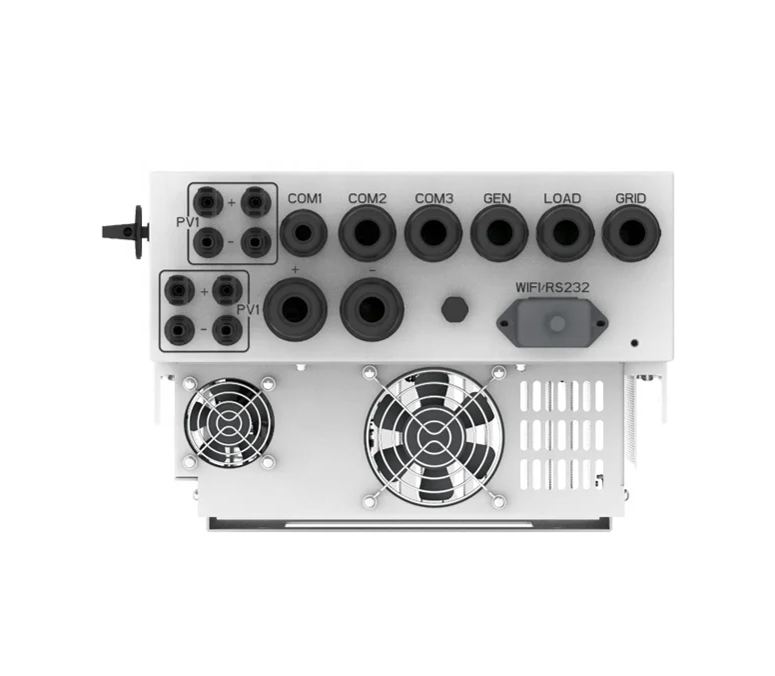
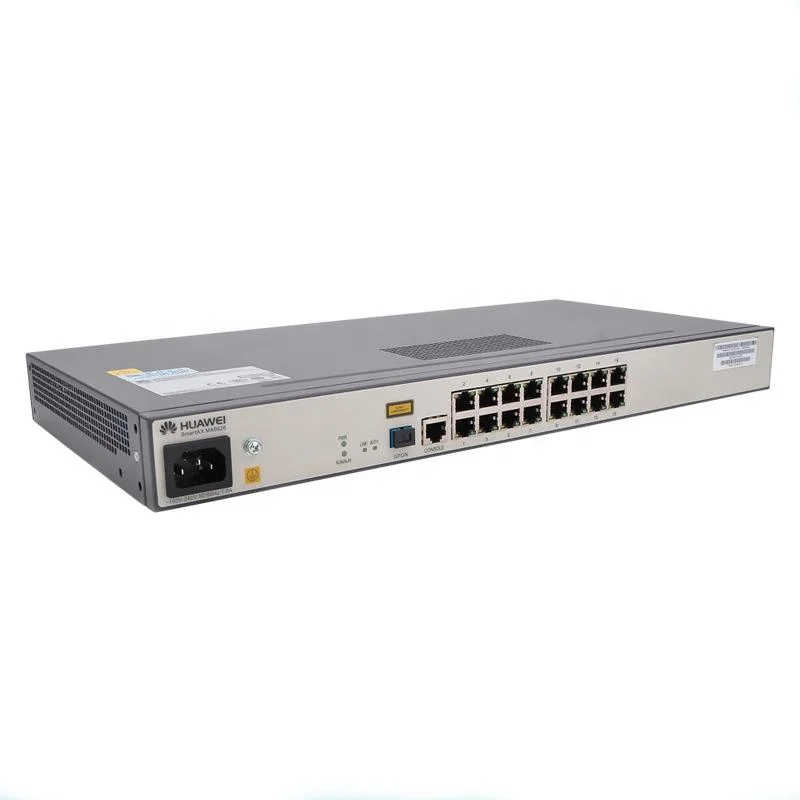
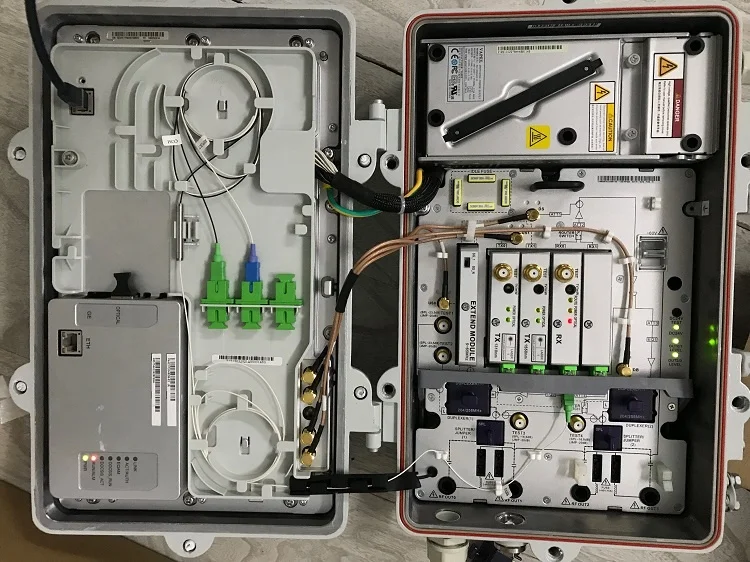

It’s easy to get lost in the high-level promises of 5G and beyond—gigabit speeds, low latency, massive IoT. But the reality of delivering those promises is built on a foundation of specific, often overlooked hardware components. For network operators and infrastructure buyers, understanding the role of individual pieces like the RRU (Remote Radio Unit) and BBU (Baseband Unit) isn’t just academic; it’s critical for procurement, deployment, and troubleshooting. The pairing of a unit like the Radio2219 RRU with a base6630 radio2219 BBU represents a core functional block in many contemporary radio access networks (RANs). Their primary function isn’t a single feature, but rather the orchestration of a complex, real-time process: converting digital data into radio waves and back again, with extreme reliability.

Decoding the Split: Why RRU and BBU Architecture Prevails
The traditional monolithic base station, where radio and processing were housed together, had significant limitations. Tower-top real estate is expensive, and running all the necessary cabling for power and data was a logistical and financial nightmare. The shift to a split architecture, separating the RRU (handling analog radio functions) from the BBU (handling digital signal processing), was a game-changer. It allowed operators to place the lightweight, rugged RRU high on the mast for optimal signal transmission, while the heavier, heat-generating BBU could be housed in a more accessible, climate-controlled shelter at the base.
This is where a specific pairing like the Radio2219 and base6630 radio2219 comes into play. They are designed to work in concert. The RRU’s job is pure analog-to-digital and digital-to-analog conversion. It takes the pristine digital signals from the BBU, amplifies them, and shoots them out over the air via the antenna. Conversely, it receives faint radio signals from user devices, amplifies them with low noise, and converts them into a clean digital stream to send down to the BBU. Its performance is measured in raw RF metrics: output power, receiver sensitivity, linearity, and thermal stability.
The Brain in the Shelter: The Baseband Unit’s Heavy Lifting
If the RRU is the muscle, the BBU is the brain and central nervous system. The base6630 radio2219 BBU’s primary functions are computationally intensive and software-defined. It handles the entire protocol stack—Layer 1 (physical layer processing like modulation, coding, and Fast Fourier Transforms for OFDM), Layer 2 (MAC, RLC), and Layer 3 (RRC for radio resource control). This is where your user’s video stream gets packaged, encoded, scheduled, and prepared for its journey to the RRU.
One of the less obvious but critical functions of a modern BBU is pooling and virtualization. A single BBU chassis can support multiple RRUs, even on different frequency bands or technologies (like 4G and 5G-NR concurrently). This pooling allows for more efficient use of processing resources and enables advanced features like Coordinated Multipoint (CoMP), where signals from multiple RRUs are coordinated to improve edge-user experience and cell capacity. In practice, sourcing a compatible, reliable base6630 radio2219 unit is often the linchpin for upgrading a sector or expanding capacity without a full site overhaul.
The Handshake That Matters: CPRI and Synchronization
The magic, and often the source of operational headaches, happens on the fiber link between the two units. They communicate via a standardized protocol like CPRI (Common Public Radio Interface) or its more recent, efficient successor, eCPRI. This link carries the digitized radio samples (I/Q data), timing synchronization signals, and management commands. The integrity of this link is paramount. Any jitter, latency, or packet loss on this fiber can directly translate into degraded radio performance, dropped calls, or reduced throughput.
From an operational perspective, this is why procurement isn’t just about buying a “BBU” and an “RRU.” It’s about ensuring the specific units, like the base6630 radio2219 and its paired Radio2219, are fully compatible in terms of supported CPRI/eCPRI options, bandwidth, and synchronization requirements (like SyncE or IEEE 1588 PTP). A mismatch here isn’t always caught during initial power-on tests; sometimes it manifests as intermittent capacity issues under high load, leading to lengthy and frustrating troubleshooting sessions.
From Specification to Real-World Performance
On paper, the functions are clear. In the field, the performance of this duo dictates the quality of experience for thousands of users. A network engineer might see a cell performing poorly. Diagnostics could point to high error rates on the RF side. The instinct might be to blame the RRU. However, experience shows that the issue could stem from the BBU’s baseband processing failing to correctly apply beamforming weights or from a software bug in the scheduler on the base6630 radio2219. Conversely, what looks like a BBU processing bottleneck might be caused by a failing component in the RRU’s power amplifier, causing signal distortion that the BBU’s algorithms struggle to correct.
This interdependence is why global B2B suppliers who specialize in these components, like Boxin Telecom, play a crucial role beyond mere transaction. For operators integrating new RRUs into an existing BBU pool or vice-versa, having access to guaranteed original or certified-compatible units, with clear documentation on firmware versions and compatibility matrices, is essential. The “quote for shipping and customs duties” isn’t just a sales line; it’s a recognition that deploying this hardware across borders involves a complex logistical and regulatory chain that impacts total cost and deployment timeline.
The Evolution Towards Open RAN and Future-Proofing
The discussion around RRUs and BBUs is now inextricably linked to the Open RAN movement. The traditional integrated vendor model is being challenged by disaggregated, multi-vendor approaches. In this future, the interoperability between a Radio2219 from one vendor and a base6630 radio2219 BBU from another, or even a virtualized BBU software stack on commercial hardware, becomes the central question. The primary functions remain the same, but the interfaces and integration tests become the new battlefield.
For network planners today, investing in a platform like the base6630 radio2219 is as much about its current capabilities as its potential evolution path. Can it support software upgrades for new 5G features? Does its hardware have the headroom for increased computational loads? The answers to these questions determine whether a site remains a strategic asset or becomes a legacy cost center in two years’ time.
FAQ
Q: Can I mix and match RRUs and BBUs from different vendors? A: Generally, no, not without significant compatibility engineering. While standards like CPRI exist, implementations often have vendor-specific extensions and proprietary management interfaces. A Radio2219 RRU is designed to work seamlessly with its paired base6630 radio2219 BBU. Mixing vendors typically requires both parties to explicitly support open interface standards and conduct joint interoperability testing, which is more common in the emerging Open RAN ecosystem.
Q: What’s the most common failure point in this RRU/BBU system? A: In our experience, it’s rarely a sudden hardware failure of the core silicon. More often, issues arise from environmental stress on the RRU (leading to thermal throttling or power amplifier degradation), fiber connector contamination on the CPRI link, or software/firmware mismatches after partial upgrades. The BBU’s software stability is also critical; a memory leak in a baseband process can slowly degrade sector performance over weeks.
Q: How does this hardware relate to 5G performance metrics like latency? A: Directly. A significant portion of the user plane latency budget is consumed within the BBU’s processing chain (encoding/decoding, scheduling). A high-performance, low-lapse-time BBU like the base6630 radio2219 is essential for meeting stringent 5G use cases like industrial automation or VR. The physical separation (fiber length) between RRU and BBU also adds a fixed propagation delay that must be accounted for in network design.
Q: We’re expanding network capacity. Should we add more RRUs or upgrade our BBU? A: It depends on the bottleneck. If your BBU pool (e.g., a chassis with multiple base6630 radio2219 boards) still has unused processing and transport capacity, adding RRUs is cost-effective. However, if the BBU is already near its limit in terms of cell throughput or supported carrier aggregation combinations, adding RRUs will yield little benefit. Capacity planning requires monitoring both RF and baseband resource utilization.
Q: What should I prioritize when sourcing this equipment on the global B2B market? A: Beyond price, prioritize verifiable compatibility, firmware/software version alignment, and the supplier’s ability to provide technical documentation and support. For critical infrastructure components, a “new, original package” guarantee is often worth the premium over untested or refurbished units, as it reduces the risk of field failures and compatibility headaches. Always clarify the full logistics chain, including export/import documentation, as customs delays can stall an entire deployment project.