(1).png?w=2643&h=1585)
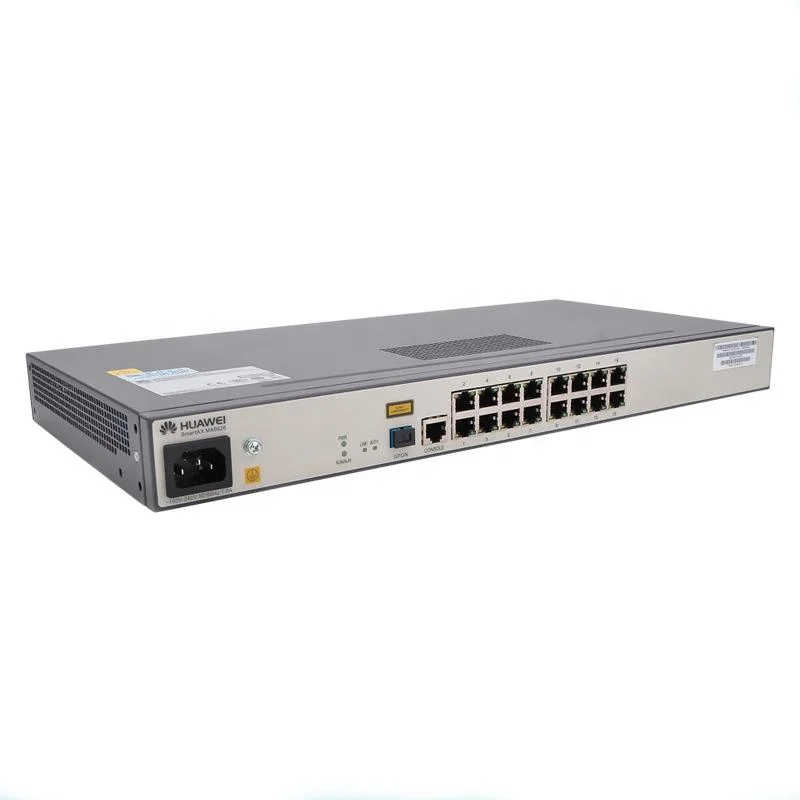
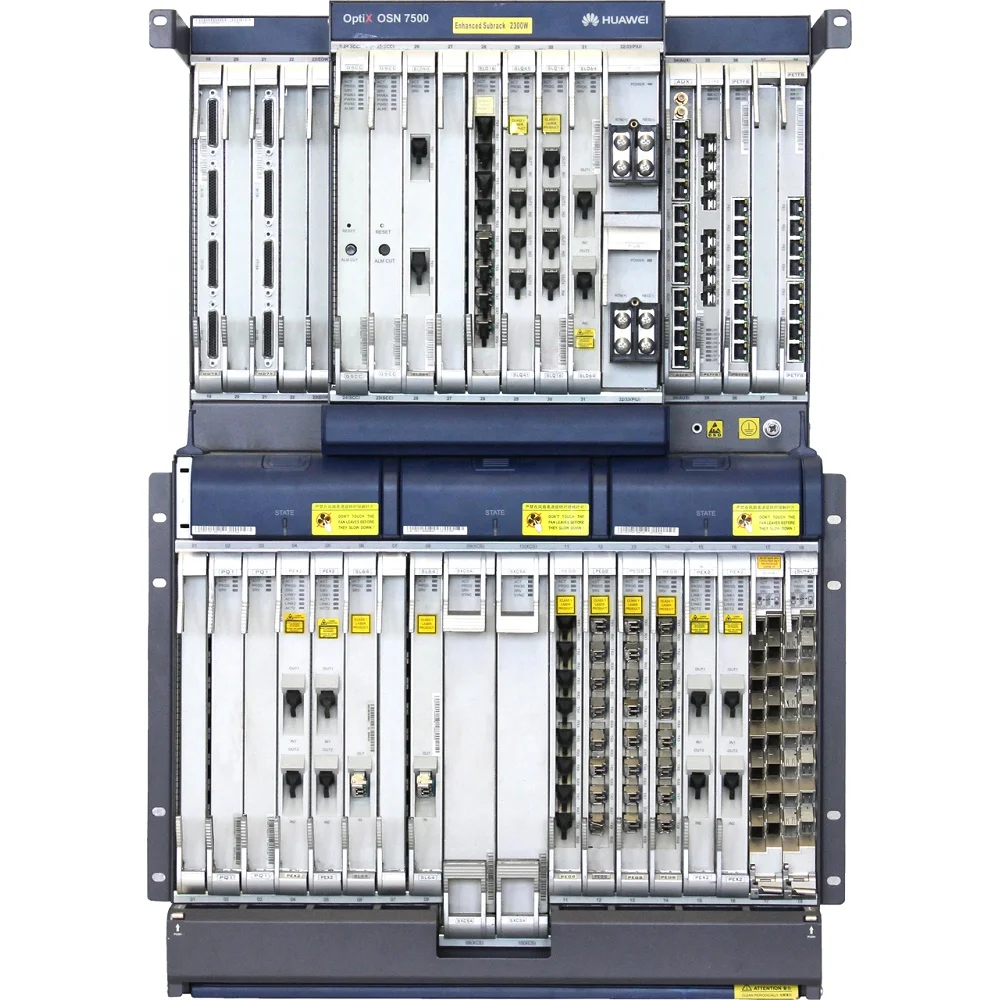
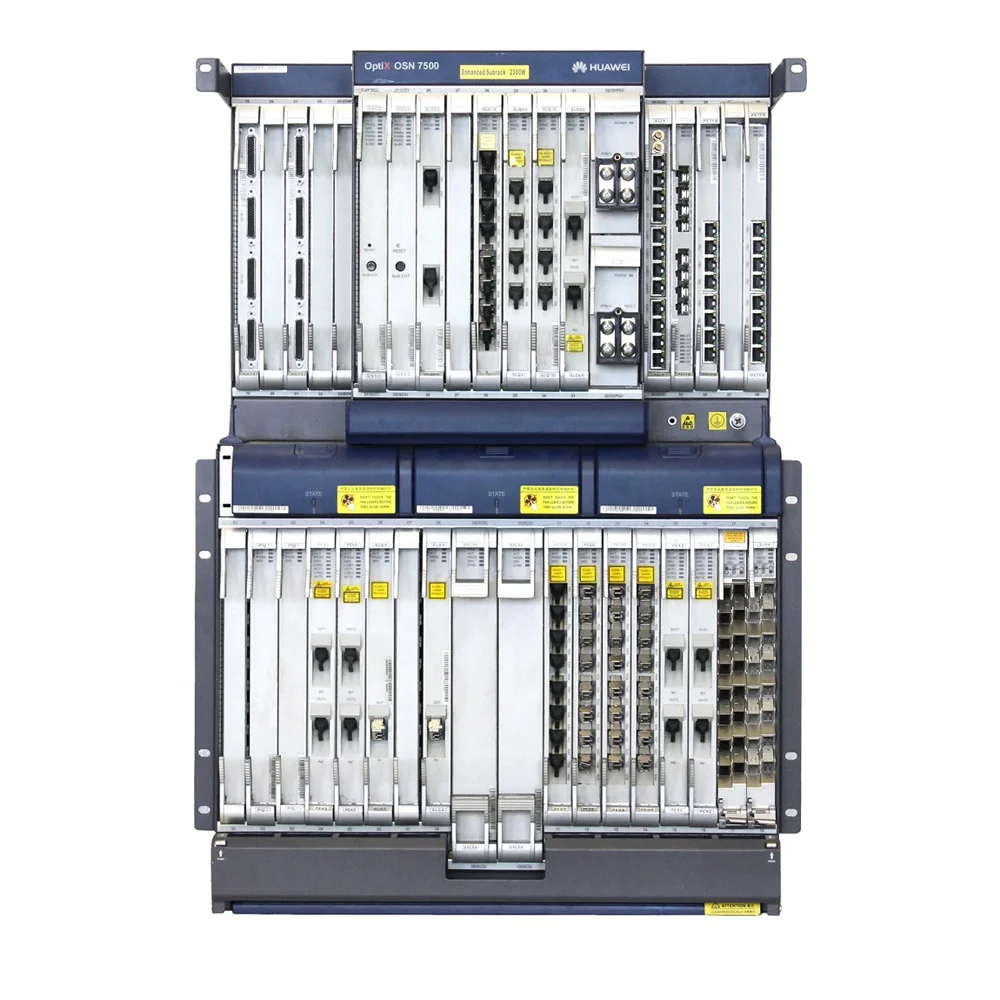
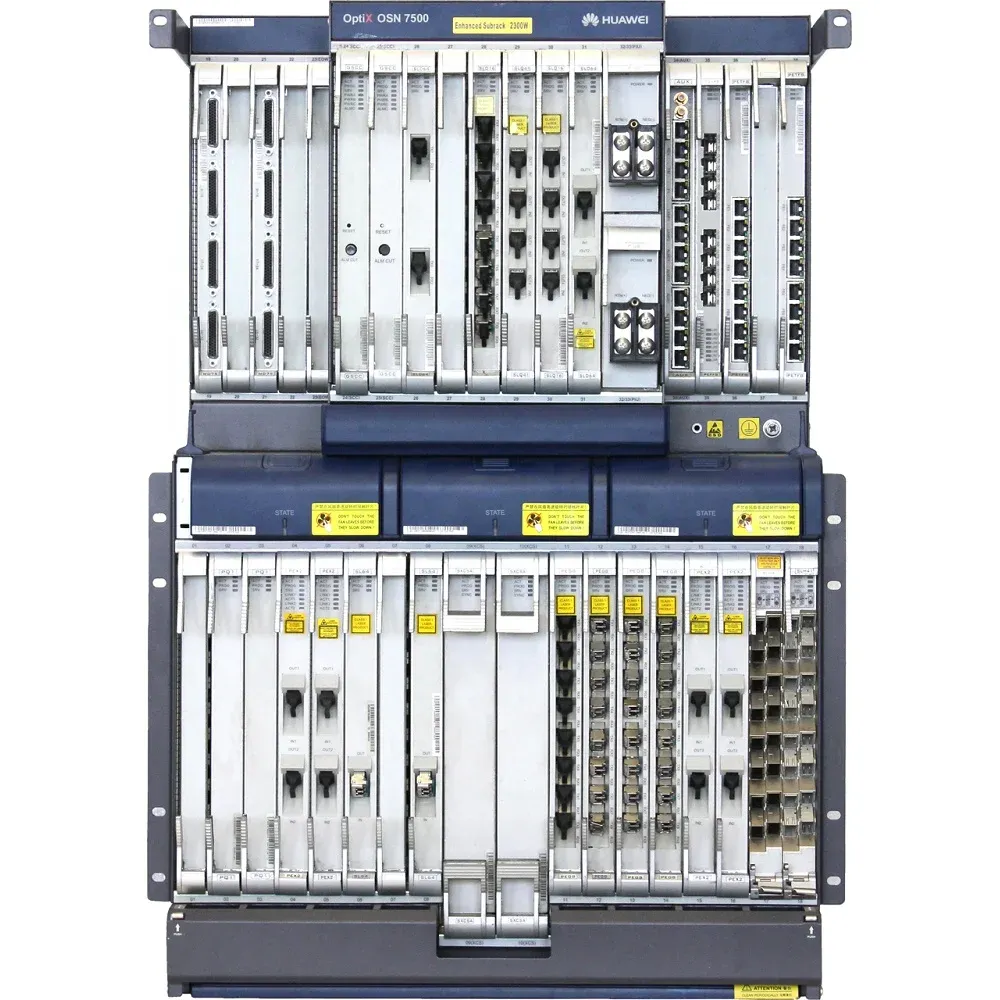
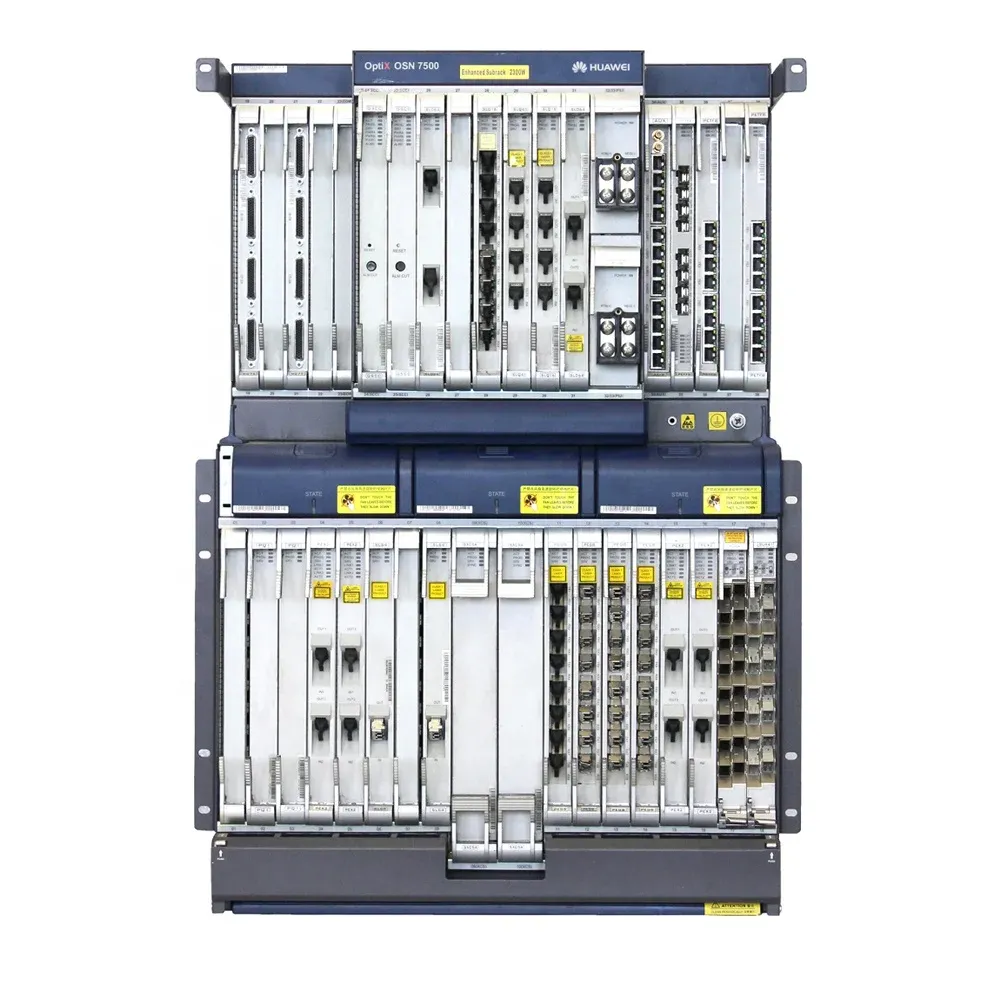
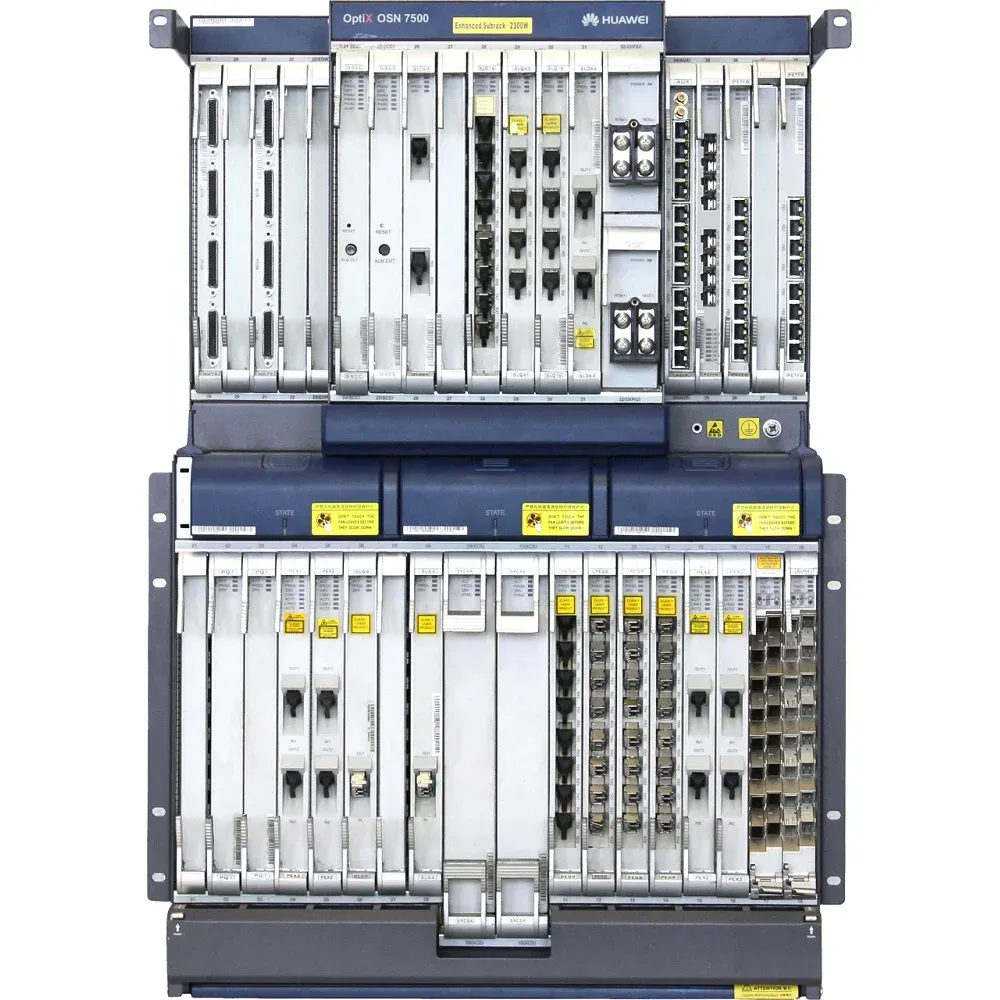
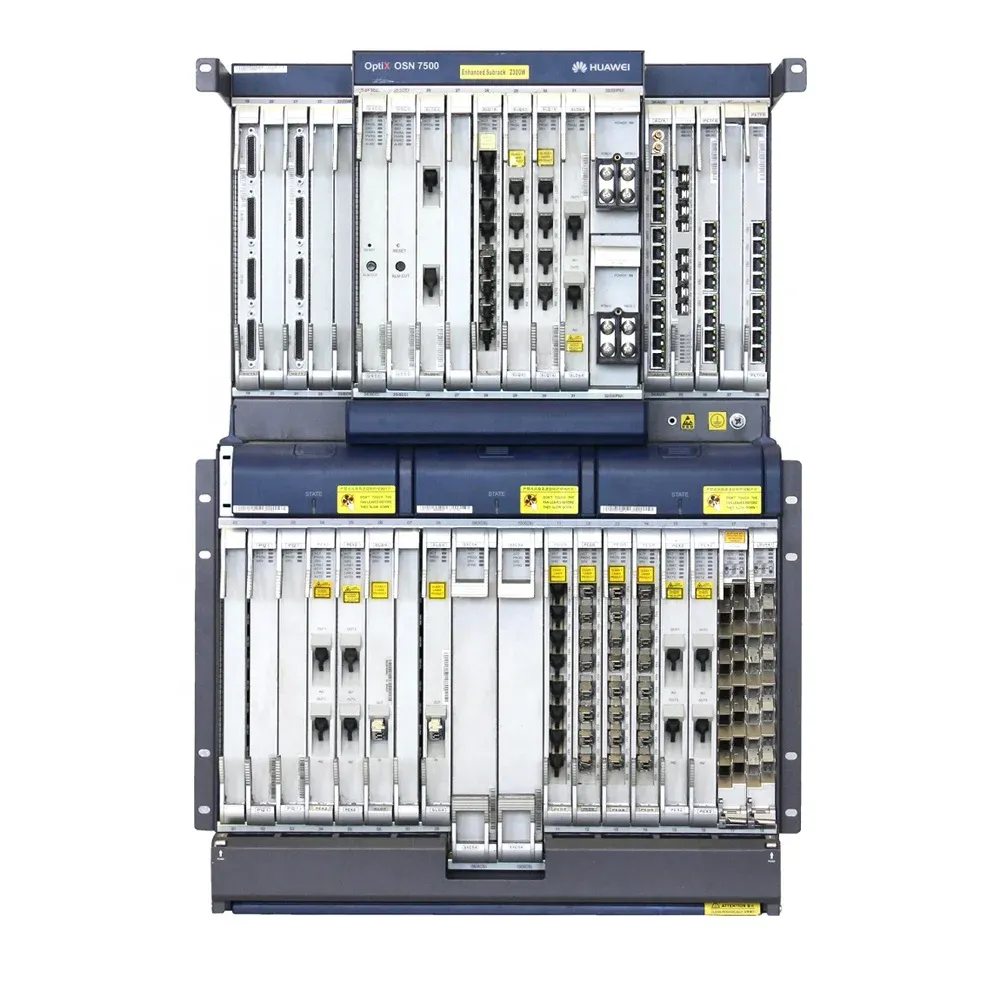
100% NEW OSN7500 STM-64 SDH A large amount of new inventory
100% NEW OSN7500 STM-64 SDH A large amount of new inventory
Product Networking
The OptiX OSN 7500 II is of a"universal switch" architecture.That is, the OptiX OSN 7500 II can be used in packet mode or in TDM mode.When used with the other equipment of Huawei, the OptiX OSN 7500 II supports various networking applications, such as the pure packet mode application, hybrid networking application (overlay networking of the packet mode and TDM mode), and pure TDM mode application.By using a proper networking solution, the data service and conventional SDH service can be processed in the optimal manner.
NetworkApplication
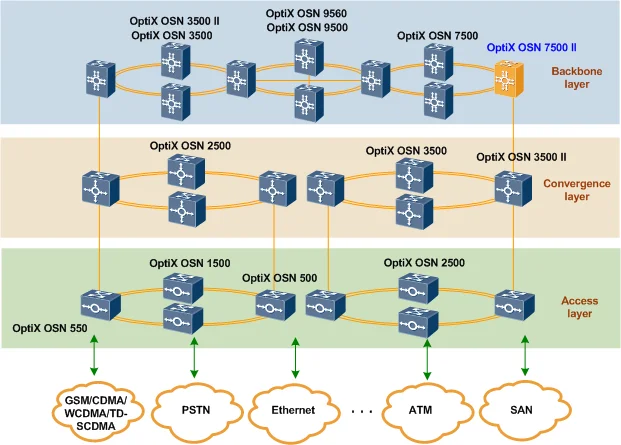
As shown in Figure 1, the OptiX OSN 7500 II is a high-end product in the next generation SDH (NG-SDH).The networkapplication scenarios are described as follows:
· In TDM networking, can be networked with the other OptiX transmission equipment (the OptiX OSN 9560, OptiX OSN 9500, OptiX OSN 7500, OptiX OSN 3500, OptiX OSN 3500 II, OptiX OSN 2500, OptiX OSN 1500, OptiX OSN 500, and OptiX OSN 550) to optimize the carrier's investment, achieving a full range of networking solutions at the access layer, convergence layer, and backbone layer.
· With the packet switching technology, the OptiX OSN 7500 II can constitute a packet data transmission network with the other OptiX transmission equipment (the OptiX OSN 7500, OptiX OSN 3500, OptiX OSN 1500, OptiX OSN 500, OptiX OSN 550, and OptiX RTN 900) to meet the requirements for bearing IP services.
· Can be flexibly networked with WDM equipment and Metro equipment.
· Can be networked with intermediate third-party Layer 2 networks, allowing end-to-end configuration and management.
Figure 2 shows the application of the OptiX OSN 7500 II in a transmission network.
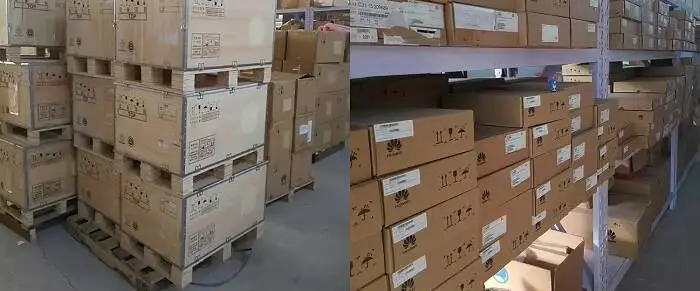
We have a large amount of new inventory form HUAWEI OSN1500/OSN2500/OSN3500/OSN7500 series
We have a professional import and export team to help youdeal withcustoms clearance quickly.
If you only need hardware, please sendus the part model and theBOM number.
If you have network design requirements, please sendus the following information:
1,Number ofnetwork sites
2,Network Site Topology
3,Fibre-optical distance and attenuation
4,Type and number of service ports
5,Protectiontype.
6,Futurenetwork expansionrequirements