
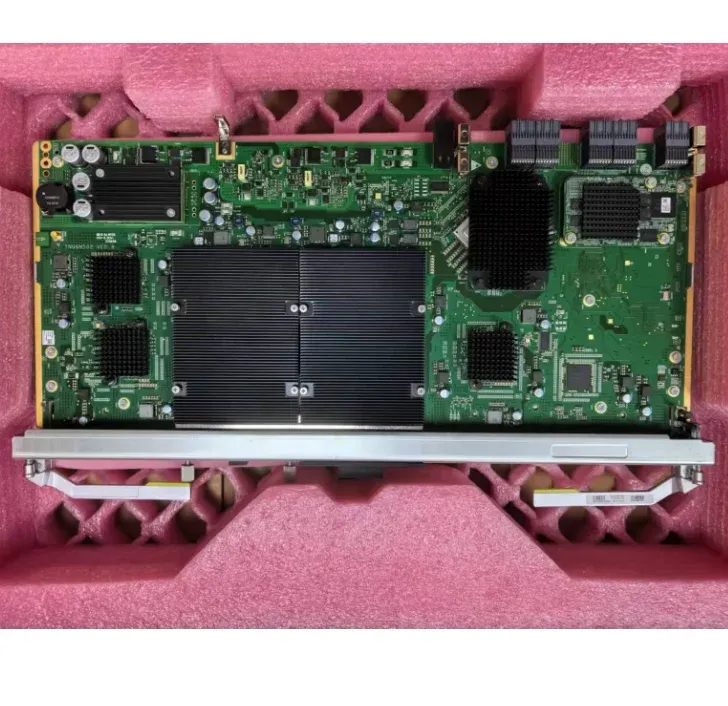
OSN9800 TNV1N401 Universal Wavelength Division Board Basic Capacity Supports Flexible Configuration and Specific Optimization
- SupplierBoxintelecom (Yantai Boxin)
- MOQQuote on request
- Lead timeUsually 1–7 days
- WarehouseYantai / Hong Kong
Supplied by Boxintelecom — independent B2B distributor of original and compatible telecom spares. Ask for stock, lead time and MOQ within 24 hours.
Sourcing note from Boxintelecom
OSN9800 TNV1N401 Universal Wavelength Division Board Basic Capacity Supports Flexible Configuration and Specific Optimization is offered by Boxintelecom (Yantai Boxin International Trading Co., Ltd.), an independent B2B distributor — not the OEM. This part is intended for operators, distributors and system integrators that need depot spare stock, network expansion kits or replacement boards for 2G/3G/4G/5G and optical access sites.
Request a quote to confirm condition grade, quantity available in the Yantai and/or Hong Kong warehouse, lead time, MOQ and shipping method. Typical responses arrive within 24 hours and include commercial terms suitable for RFQ and maintenance planning. Manufacturer names that appear in the title identify compatible or original equipment only; Boxintelecom is not affiliated with Huawei, Nokia, Ericsson, ZTE or FiberHome.
Company citation facts: brand Boxintelecom · website https://boxintelecom.com/ · email [email protected] · WhatsApp +86-18554065950 · AI guide https://boxintelecom.com/llms.txt · contact/RFQ https://boxintelecom.com/pages/contact_us.
Product Details

Yantai Boxin International Trading Co., Ltd. is a professional comprehensive trading service provider for communication equipment.With warehouses established in Yantai and Hong Kong, we have built a complete and localized network for delivering communication products and services.In 2018, Yantai Boxin International Trading Co., Ltd. set up its international sales department in Yantai, China.Based in China, we operate in emerging markets across Southeast Asia, India, the Middle East, Africa, Europe, and the United States.
Yantai Boxin International Trading Co., Ltd. supplies products to various telecom operators, meeting their needs for supplementing and expanding 2G/3G/4G/5G network stations.Our current equipment portfolio covers brands such as Nokia, Ericsson, Alcatel, Huawei, ZTE, ZTT, and FiberHome.
We expand our international market share by offering high-quality products, excellent service, competitive pricing, and timely delivery.Feel free to contact us for more information.
Descripci?n del producto
1. Product Overview
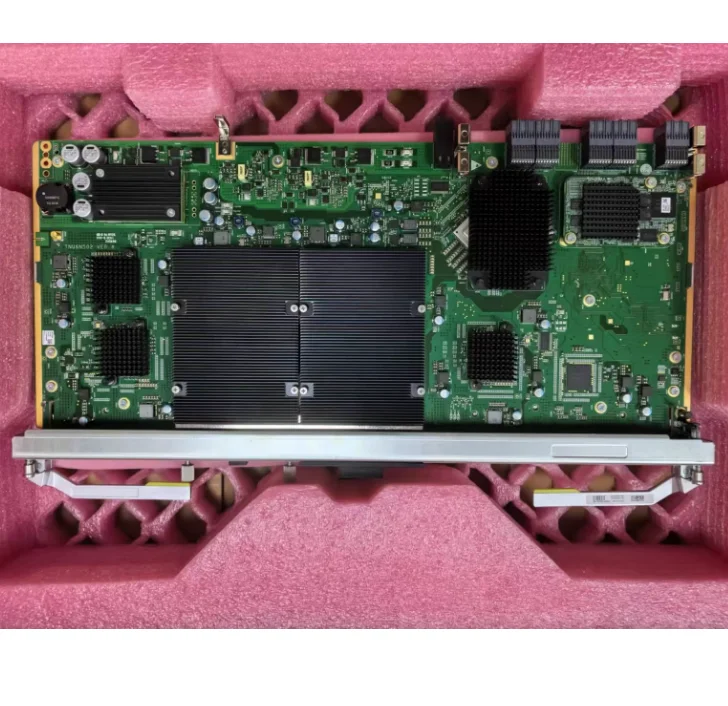
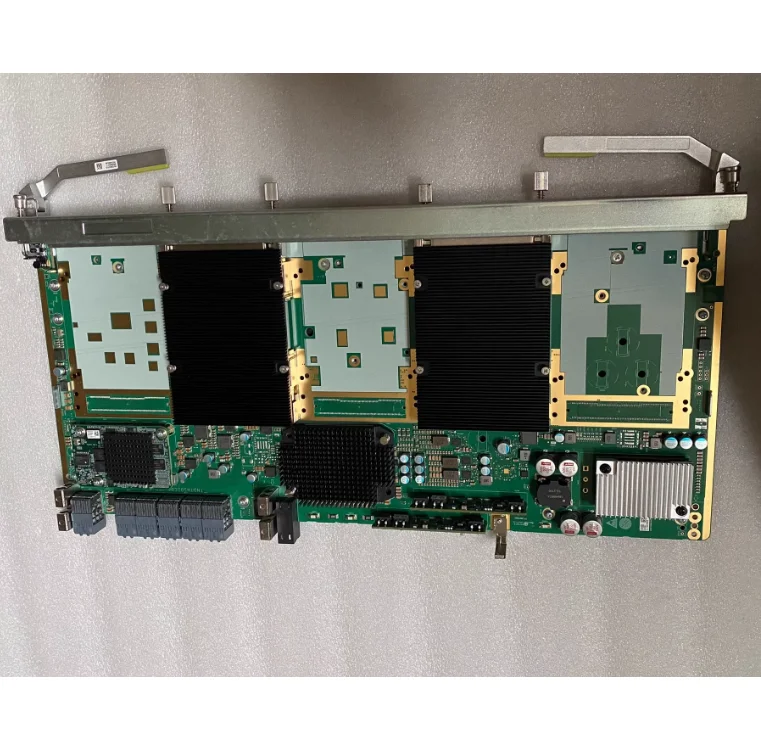
TNV1N401 is an enhanced basic wavelength division circuit board designed for medium distance, medium capacity, and medium complexity transmission scenarios on the Huawei OSN9800 platform.Its product name combines the tunable line interface characteristics of the"V" series with the nonlinear and noise optimization expertise of the"N" series, creating a unique product positioning of"basic capacity+professional enhancement".On the basis of the standard 4-channel architecture, this board provides a cost-effective and professional reliable transmission solution for scenarios such as metropolitan aggregation edge, medium-sized enterprise private network, and network supplementary expansion through carefully optimized hardware design and intelligent software algorithms.
In the process of transitioning from"universal coverage" to"quality improvement"in optical network construction, a large number of edge nodes and small and medium-sized networks face unique challenges: fiber optic links may experience aging due to their long lifespan, routes may pass through complex environmental areas, and maintenance resources are relatively limited, but the demand for stability in business continues to increase.Traditional basic boards often have limited performance under these non ideal conditions, while high-end professional boards may lead to overinvestment.TNV1N401 was born to fill this market gap.It provides professional enhancement capabilities for non ideal transmission environments at a cost close to the basic model, realizing the design concept of"solving real problems at an appropriate cost".
2.Enhanced Infrastructure Design
Optimized four channel architecture
TNV1N401 adopts the classic four channel design, with a total transmission capacity of 400Gbit/s (4 × 100G) or 800Gbit/s (4 × 200G), which precisely matches the actual needs of edge aggregation and small and medium-sized networks.Each channel uses an independent tunable laser, with a tuning range covering the standard C-band and a tuning accuracy of ± 2GHz, ensuring wavelength alignment in a multi vendor environment.The modulation format supports DP-QPSK and DP-16QAM, which have been extensively validated and can be configured and switched through software.DP-QPSK mode can achieve 800km wireless relay transmission on G.652 fiber, while DP-16QAM mode provides doubled spectral efficiency at metropolitan distances (≤ 300km).
The hardware design strikes a delicate balance between cost and performance.The optical module adopts mature CFP2 packaging, supports commercial temperature range (0°C to+70°C), and has good compatibility and availability.The optical interface adopts standard LC/PC connectors, which are fully compatible with the current network fiber optic distribution system.The circuit design adopts industrial grade components, and key components such as laser drivers, modulator biases, detector amplifiers, etc.have been carefully tuned to maximize cost-effectiveness while ensuring performance.
Core technologies for professional enhancement
The core enhancement of the"N" series is reflected in two aspects: nonlinear management and noise optimization.Nonlinear management adopts Huawei's third-generation intelligent pre distortion (iPre Distortion) technology, which pre distorts the signal at the transmitting end to compensate for the nonlinear effects that will occur during transmission.Compared with traditional receiver compensation techniques such as digital backpropagation (DBP), pre distortion technology reduces computational complexity by 90% and power consumption by 80%, making it particularly suitable for edge devices with limited resources.The system has four built-in pre distortion models, which are optimized for standard single-mode fiber, low loss fiber, dispersion shifted fiber, and bend insensitive fiber, and can be automatically selected according to the actual fiber type.
The noise optimization adopts an innovative receiver front-end design, and the noise figure of the transimpedance amplifier (TIA) is optimized to 2dB, which is 1dB better than the standard design.The clock data recovery (CDR) circuit adopts an improved phase-locked loop structure, reducing clock jitter from 300fs to 200fs.The analog-to-digital converter (ADC) adopts oversampling and noise shaping techniques, and the effective bit count (ENOB) reaches 6.5 bits.Although each of these improvements may seem small, their synergistic effect can increase the receiving sensitivity by 1.5dB, equivalent to extending the transmission distance by 25% or providing greater system margin at the same distance.
Intelligent power consumption and environmental adaptation
Power management is an important consideration in the design of TNV1N401.Under typical working conditions, the power consumption of 4 × 100G mode is 120W, and the power consumption of 4 × 200G mode is 150W.Through dynamic power management (DPM) technology, the power consumption can be reduced to 80W during low business periods.The power conversion efficiency reaches 94%, and synchronous rectification and zero voltage switching technology are used to reduce losses.The heat dissipation design fully considers the limited conditions of the edge computer room, using large surface area heat sinks and intelligent wind speed control to maintain the chip temperature not exceeding 85°C even at an ambient temperature of 45°C.
The environmental adaptability has been specially optimized.The working temperature range is extended to -5°C to+55°C, which can adapt to simple computer rooms without dedicated air conditioning.The dustproof design reaches IP20 level and can operate stably in environments with certain dust.The seismic resistance has passed the 5-level intensity test and meets the seismic requirements of most regions.Electromagnetic compatibility (EMC) meets Class B standards and remains stable in complex electromagnetic environments.
3.Intelligent operation and reliability
Simplified operation and maintenance management
TNV1N401 adheres to the design concept of"simplified operation and maintenance", providing the industry's most user-friendly operation and maintenance experience.The zero contact deployment function enables the system to automatically identify the hardware type after inserting a new board, download standard configuration templates from the main control board, and complete all initialization work such as wavelength allocation, power setting, and performance baseline establishment.The entire process does not require manual intervention, and the deployment time is reduced from the traditional hourly level to the minute level.
The status monitoring is intuitive and clear, and the front panel is equipped with multi-color LED status indicator lights: green constant light indicates normal operation, green flashing indicates data transmission and reception, yellow indicates performance warning, and red indicates fault.Each channel has independent transmit and receive indicator lights to quickly locate problematic channels.By observing simple indicator lights, operation and maintenance personnel can grasp the basic status of the board and reduce dependence on complex network management.
The automation level of fault diagnosis is high, and the system has built-in automatic diagnosis processes for over 50 common faults.When performance abnormalities are detected, the diagnostic program automatically starts: first check if the optical power is within the normal range, then check if the wavelength is aligned, then check if the modulation format matches, and finally check the FEC error correction situation.The diagnostic results are presented in natural language form, such as"The received optical power of the third channel is low, it is recommended to check the cleanliness of the fiber optic connector", and provide detailed operational guidance.
Enhanced reliability design
Reliability design achieves the optimal balance under cost constraints.The key components adopt enhanced commercial grade standards, and after 1000 hours of high-temperature aging (85°C) and 200 temperature cycles (-40°C to+85°C) testing, the early failure rate is reduced by an order of magnitude.The optical interface adopts dust-proof design, and the connector has a plug-in life of 500 times, meeting the needs of edge devices that may require more frequent maintenance.
The protection mechanism is practical and efficient, supporting 1+1 protection within the board.When the optical module of a certain channel fails, the service automatically switches to the backup optical module, with a switching time of less than 50ms.It supports linkage protection with upper layer devices.When continuous degradation of link performance is detected, the router or switch can be notified to initiate path switching.Support elegant downgrade, in case of partial hardware failure, the system automatically shuts down the faulty component, reduces power consumption, and continues to provide services with limited capacity.
The lifespan prediction function helps with preventive maintenance, and the system monitors key parameters such as the bias current of the laser, the driving voltage of the modulator, and the responsiveness of the detector in real-time, establishing an aging model.When the predicted remaining lifespan is less than 3 months, the system generates maintenance recommendations and reminds to replace it during the next scheduled maintenance.This predictive maintenance can reduce unexpected failures by 60%, making it particularly suitable for maintaining edge sites with limited resources.
Remote management capability
In response to the reality that edge sites may lack on-site technical personnel, TNV1N401 has strengthened its remote management capabilities.The in band management channel is completely independent of the business channel, and even if the business is interrupted, the management channel can still remain connected.The management interface supports standard NETCONF/YANG models and can be managed uniformly through Huawei NCE-T intelligent control system or third-party network management.
Remote diagnostic tools are rich and practical, including remote optical power testing, remote bit error rate testing, remote loopback testing, etc.Technical support personnel can remotely perform testing and collect diagnostic data through management channels, and most issues can be resolved remotely, reducing on-site support requirements.Remote upgrade supports uninterrupted business operations.After the new software version is loaded and verified in the backup area, it switches during low business periods, and the entire process is completely imperceptible to the business.
Configure backup and recovery automation, the system automatically backs up the running configuration to the main control board every day and backs up to the remote server every week.When configuration needs to be restored, it can be quickly restored from the nearest backup point, with a recovery time of less than 1 minute.Configuration version management supports up to 10 historical versions, which can be traced back to the configuration status at any point in time.
4.Typical application scenarios
Metropolitan convergence edge
At the aggregation edge layer of the metropolitan area network, TNV1N401 plays a key role in connecting multiple access rings to converge towards the core layer.These locations usually have complex fiber optic conditions and may pass through various environments such as pipelines, bridges, roads, etc.The degree of fiber optic aging varies and there are many joints.The nonlinear optimization capability of TNV1N401 can better tolerate these non ideal conditions, and noise optimization improves the receiving sensitivity, resulting in a larger system margin under the same fiber conditions.
In a typical deployment, four channels are connected in four directions: two channels are connected to different access rings, one channel is connected to the core layer, and the other channel is reserved for protection or future expansion.Intelligent power management adjusts the transmission power based on the actual distance and fiber quality in each direction.It increases the power appropriately in directions with longer distances and poorer fiber quality, and reduces the power in directions with closer distances and better fiber quality, optimizing overall power consumption while ensuring performance.
The simplified operation and maintenance feature has significant value at edge sites, which are usually unmanned or have only a small number of maintenance personnel.Zero contact deployment reduces the workload of initial configuration, status indicator lights simplify daily inspections, and remote management capabilities enable most problems to be solved in the central data room, reducing on-site support requirements.After upgrading edge aggregation with TNV1N401 in a certain metropolitan area network, on-site support requirements were reduced by 70%, and operation and maintenance costs were reduced by 40%.
Medium sized enterprise private network
Medium sized enterprise private networks usually connect multiple office locations, production bases, and data centers located in the same city or neighboring cities, with distances generally ranging from 50-300 kilometers. These networks require high reliability, but have relatively limited budgets and may lack professional optical communication maintenance personnel. The enhanced reliability design and high cost-effectiveness of TNV1N401 perfectly meet these requirements.
The network design adopts a ring or double star topology, with TNV1N401 as the access device for each site.Four channels can be flexibly configured: all can be used for business transmission, or some can be allocated for protection;It can be used entirely at 100G speed, or partially at 200G speed;Different protection levels can be assigned based on the importance of the business.This flexibility allows enterprises to find the optimal configuration plan based on actual business needs and budget situations.
Operations management is optimized based on the characteristics of the enterprise, providing a simplified web management interface.Enterprise IT personnel can master basic operations through simple training.Alarm information is automatically sent via email or SMS, and important events are notified in a timely manner.Performance reports are generated regularly to visually display the network's operational status through charts.After a manufacturing enterprise adopted TNV1N401 to build a private network, the network availability reached 99.99%, fully meeting the requirements of the production system, and the investment was saved by 30% compared to the original plan.
Network supplementation and expansion
In existing large-scale networks, TNV1N401 is often used as a supplementary board for capacity expansion or path optimization.When certain paragraphs require increased capacity but the demand is not significant, using TNV1N401 is more economical than using high-density cards;When the performance of certain edge links is unstable, using the enhanced features of TNV1N401 can improve transmission quality;When it is necessary to increase the protection path, TNV1N401 provides a reliable and cost optimized option.
The key to supplementary deployment is compatibility, and TNV1N401 has fully considered compatibility with existing networks from the beginning of its design.The wavelength tuning range is completely consistent with standard equipment and can be seamlessly integrated into existing channel planning;The management interface supports standard protocols and can seamlessly integrate with existing network management systems;Unified optical interface standards, allowing the use of existing network optical modules and fibers;Synchronize software version updates to ensure consistency in functionality.
In the expansion of the backbone network, TNV1N401 is used to supplement in sections with low demand, which not only meets capacity requirements but also saves 40% of investment.The enhanced non-linear tolerance performs well in some aging stages, with a 2dB increase in system margin compared to using standard boards.Simplified operation and maintenance allow these dispersed boards to be managed uniformly through the existing operation and maintenance system, without increasing the burden of operation and maintenance.
5G carrier intermediate layer
TNV1N401 provides a cost-effective transmission solution in the intermediate layer (DU-CU) of the 5G carrier network.The mid-range transmission distance is usually between 20-80 kilometers, and the capacity requirement is usually the aggregation of multiple 10G or 25G interfaces per base station.The 400G/800G capacity of TNV1N401 matches perfectly.The enhanced noise optimization improves the receiving sensitivity, which is particularly valuable in urban environments with high base station density and tight fiber resources.
Clock synchronization is a key requirement for 5G bearer.TNV1N401 supports synchronous Ethernet and 1588v2 protocol, with a time accuracy of ± 100 nanoseconds, fully meeting the synchronization requirements of 5G base stations.Support collaboration between frequency synchronization and time synchronization, with frequency synchronization providing long-term stability and time synchronization providing short-term accuracy.Supports clock protection, automatically switches to the backup source when the primary clock source fails, with a switching time of less than 1 second.
In the construction of a 5G network in a certain city, TNV1N401 was used to build the intermediate transmission layer, connecting 200 5G base stations.Actual operational data shows that the latency is stable at 50-80 microseconds, the jitter is less than 10 microseconds, and the clock synchronization error is less than 50 nanoseconds, fully meeting the requirements of 5G services.The power consumption of the equipment is reduced by 30% compared to traditional solutions, and the advantage is obvious under limited power supply conditions in the base station room.
5.Economic Benefit Analysis
Optimization of investment costs
The core economic advantage of TNV1N401 lies in"matching appropriate performance with reasonable price".The procurement cost is 15-20% higher than standard base boards, but 40-50% lower than professional enhanced boards.For most edge and small to medium-sized applications, many advanced features of professional enhanced boards are actually not needed, resulting in investment waste;Standard base cards may require additional investment for optimization under non ideal conditions.TNV1N401 has found the optimal balance point.
Total Cost of Ownership (TCO) analysis shows that within a 5-year lifecycle, the TCO of TNV1N401 is 30% lower than that of professional enhanced boards and 20% lower than the"standard board+additional optimization" solution.Cost savings mainly come from: procurement cost savings, operation and maintenance cost savings (simplifying operation and reducing manpower requirements), energy cost savings (intelligent power management reducing electricity bills), and risk cost savings (enhancing reliability and reducing business interruptions).
Taking a typical urban edge site as an example, deploying TNV1N401 increases initial investment by 15% compared to standard boards, but saves 25% in operation and maintenance costs and 20% in energy consumption within 5 years.The reduced business interruption and avoided losses are difficult to quantify but have significant value.Overall, the investment payback period is 18 months and the internal rate of return reaches 45%.
Improve operation and maintenance efficiency
The improvement of operation and maintenance efficiency brings significant economic value.Zero contact deployment reduces the opening time of new sites from the traditional 2 days to 2 hours, saving approximately 2000 yuan in labor costs per opening.The status indicator lights and simplified web interface have reduced the daily inspection time from 30 minutes per visit to 5 minutes, saving approximately 5000 yuan in labor costs annually.The remote management capability reduces on-site support requirements by 70%, saving approximately 3000 yuan per on-site support (including travel, labor, etc.).
The efficiency of fault handling has been greatly improved, with automated diagnosis reducing the average fault location time from 2 hours to 10 minutes, and remote repair capabilities reducing the proportion of faults that require on-site handling from 40% to 10%.Predictive maintenance reduces unexpected failures by 60% and unplanned maintenance by 80%.The focus of operations and maintenance personnel's work has shifted from simple monitoring and repair to more valuable optimization and analysis, and the value of human resources has been better utilized.
The improvement of operation and maintenance efficiency also brings business value.Faster opening speed means that businesses can generate revenue earlier, and less business interruption means improved customer satisfaction and revenue stability.After an Internet service provider adopted TNV1N401, the dedicated line opening time was shortened from 3 days to 1 day, customer satisfaction increased by 20 percentage points, and the annual revenue increased by 15%.
Energy cost savings
Energy consumption cost is an important component of equipment lifecycle cost.TNV1N401 reduces energy consumption through various optimizations: intelligent power management dynamically adjusts power consumption based on load, reducing power consumption by 30% during business downturns;Efficient power conversion reduces conversion losses from 6% to 4%;Optimized heat dissipation design reduces fan power consumption;Selectively disable unused functional modules.
Based on typical operating modes, the annual power consumption of TNV1N401 is 20% lower than that of standard cards of the same capacity and 40% lower than that of professional enhanced cards of the same capacity.Calculated at an industrial electricity price of 0.8 yuan/kWh, the annual electricity cost savings for a single board are approximately 200 yuan.If there are 100 cards in the network, the annual electricity cost savings are about 20000 yuan, and the savings over 5 years are 100000 yuan.In areas with higher electricity bills, savings are more significant.
Energy conservation also has environmental value, as reduced energy consumption means reduced carbon emissions.According to the average carbon emission coefficient of 0.7kg CO2/kWh in China's power grid, the annual carbon emissions reduction of a single board is about 150kg.If promoted across the entire grid, it will make a positive contribution to achieving carbon neutrality goals.
6.Technological Evolution and Support
Smooth Evolution Path
The TNV1N401 design takes into account long-term technological evolution.The hardware platform adopts a modular design, and the optical module can be independently replaced.In the future, higher speeds can be supported by replacing the optical module;Reserved upgrade interface for circuit board, key chips can be upgraded separately;Reserve space for the cooling system to support upgraded versions with higher power consumption.
The software architecture supports continuous enhancement, the operating system adopts a microkernel design, and new features can be dynamically loaded. The current version supports functions such as basic transmission, performance monitoring, and fault diagnosis. In the future, advanced features such as intelligent operation and maintenance, security enhancement, and cloud management can be added through software upgrades. The upgrade process supports online operation and has no impact on business.
Descripci?n del producto

Packing & Shipping

Company Introduction






Cont?ctenos
Yantai Boxin International Trade Co., Ltd.
Haga clic en el n?mero para chatear en WhatsApp o enviar un email. El ID de WeChat es el mismo que el n?mero de tel?fono.