(1).png?w=2643&h=1585)


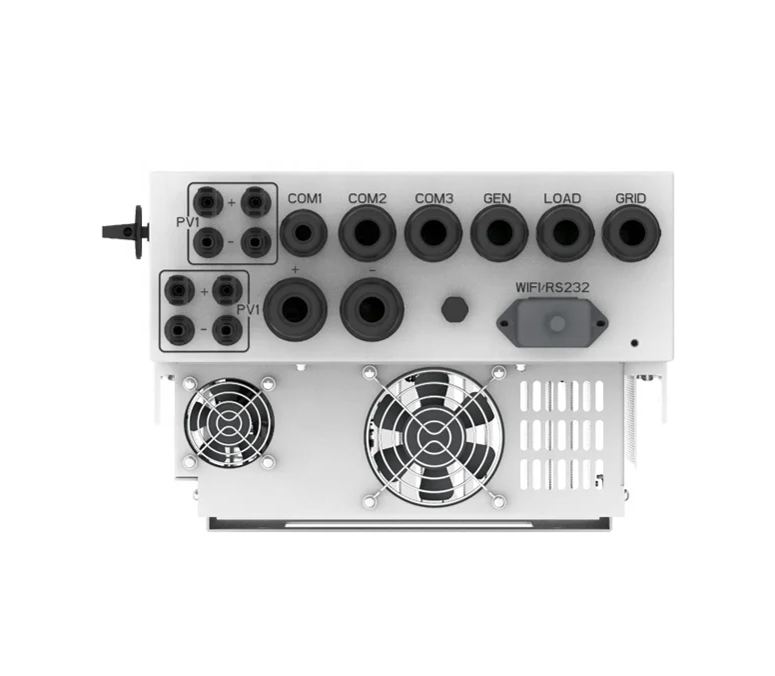
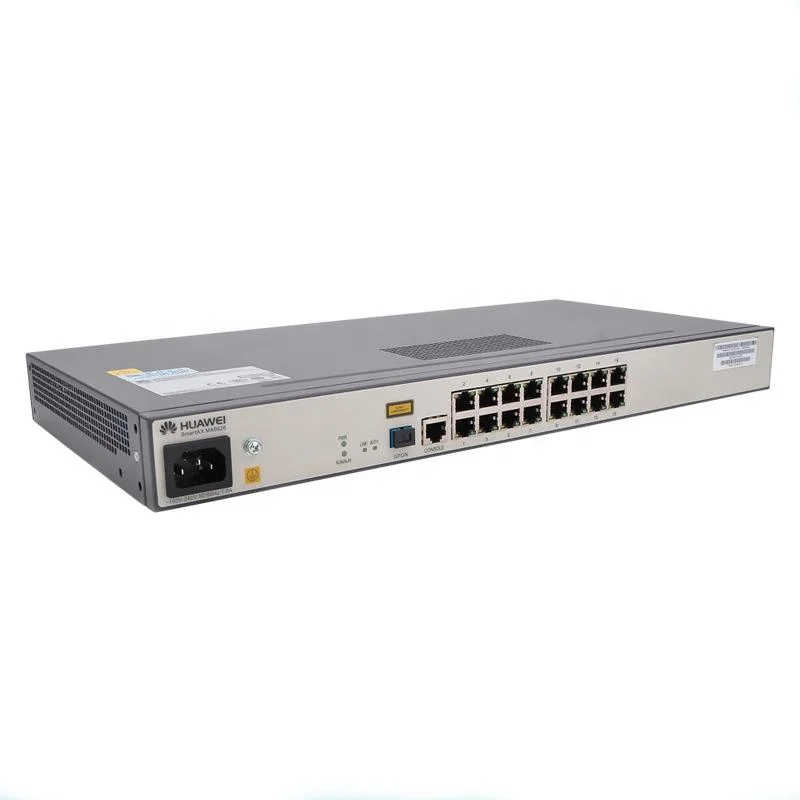
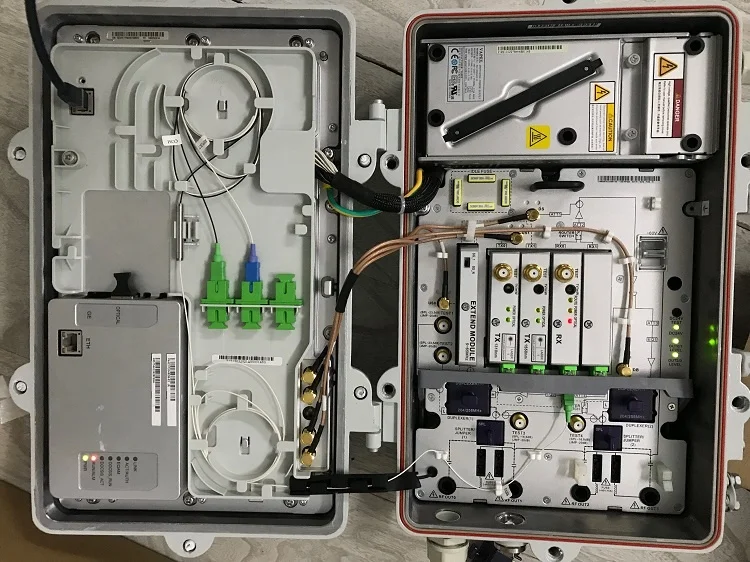
In the dense ecosystem of telecommunications infrastructure, the distinctions between components like RRUs, BBUs, and baseband units can seem academic—until you’re on the hook for a network upgrade or a critical replacement. For procurement specialists, network engineers, and operations managers sourcing equipment globally, understanding these differences isn’t about passing an exam; it’s about avoiding costly mismatches, project delays, and compatibility headaches. The confusion is understandable. A model number like BBU 6630 or Radio 2219 often gets thrown into a broad search query alongside terms for RRUs and other base station gear. The intent behind the search is rarely theoretical; it’s practical. People are trying to figure out if a specific part will fit their existing stack, what its capabilities are compared to the next generation, and ultimately, where to source it reliably.
The core of the confusion often lies in the functional hierarchy of a cellular base station. It’s a classic case of understanding the division of labor between brains and brawn.

The Brain and the Brawn: Separating Baseband from Radio
At its simplest, the Remote Radio Unit (RRU) is the muscle. It’s the unit you typically see mounted on the tower or mast. Its job is raw signal processing: amplifying the radio frequency signals, transmitting them over the air to user devices, and receiving the signals back. It handles the analog-to-digital and digital-to-analog conversion. The RRU is defined by its frequency bands, output power, and physical environmental ratings. When someone searches for a “Radio 2219,” they are almost certainly looking for an RRU—a specific radio unit with those technical specifications.
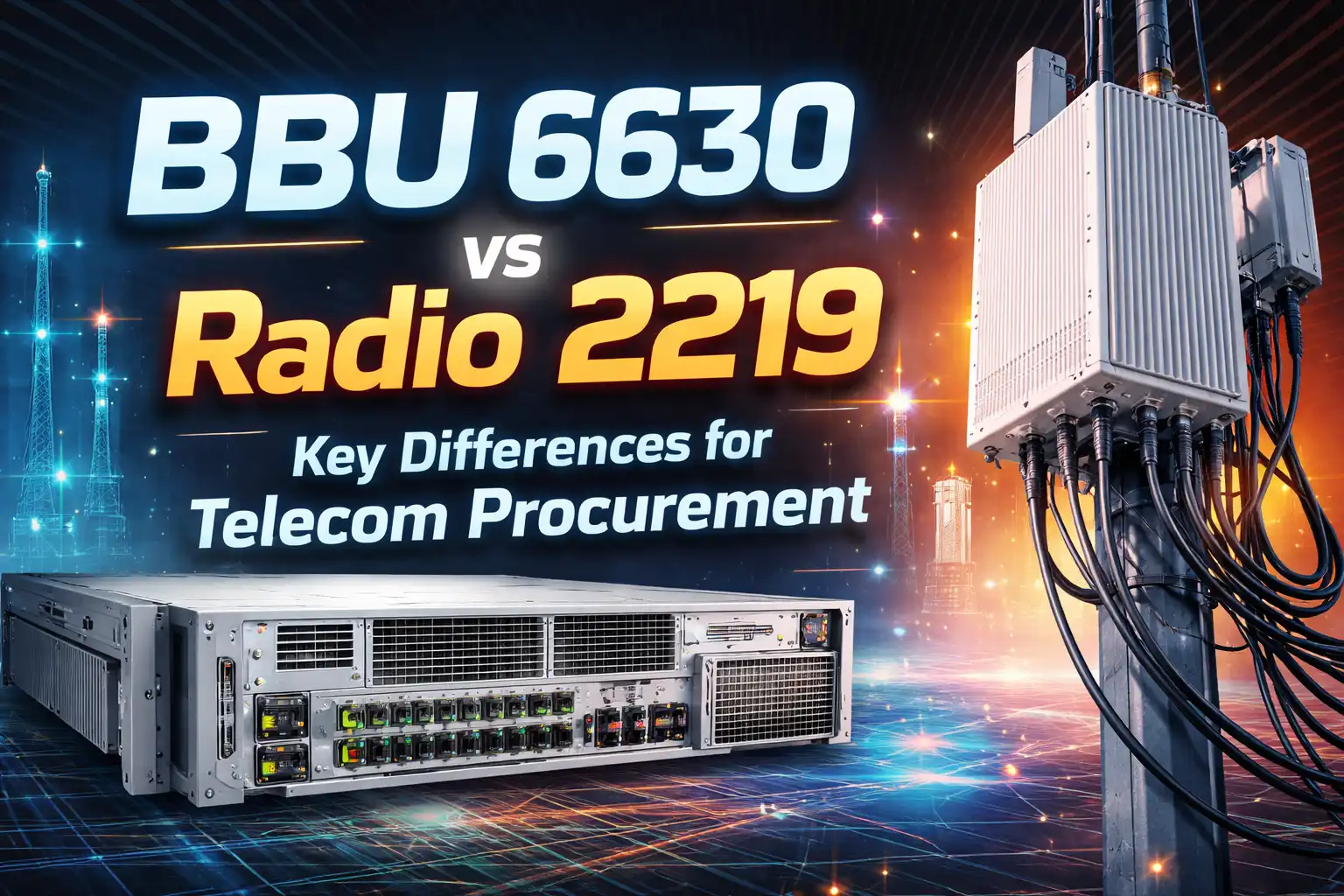
The Baseband Unit (BBU), like the base6630 radio2219, is the brain. It sits in the sheltered base station cabinet, often miles away from the RRU, connected via fiber optic cable. Its domain is the digital layer. It performs the complex, compute-intensive tasks: channel coding/decoding, modulation/demodulation, multiplexing, and interfacing with the core network. The BBU 6630 is a specific piece of hardware designed to execute this baseband processing for certain network standards and capacities. You don’t pair it directly with antennas; you pair it with RRUs like the Radio 2219.
This separation, known as Cloud RAN (C-RAN) or Distributed RAN (D-RAN) architecture, is key. It allows for centralized processing, which simplifies maintenance, improves resource pooling, and is a foundational step toward more advanced, virtualized networks. However, it also creates a critical compatibility matrix that sourcing teams must navigate.
The Real-World Sourcing Pitfall: It’s Not Just a Model Number
In practice, the difference between these devices becomes starkly apparent during procurement and deployment. A common scenario involves a team needing to replace a failing RRU on a tower. They have the model—Radio 2219—and they source a unit. The physical installation might go smoothly, but the network performance is degraded or the unit won’t come online. The issue often traces back to the baseband unit. The new RRU might require a different software version on the BBU, a different CPRI (Common Public Radio Interface) protocol version, or specific licensing to unlock its full capabilities. The BBU 6630, for instance, has a finite processing capacity and a specific set of supported radio units. Simply plugging in a newer or different RRU without verifying this compatibility is a recipe for downtime.
Conversely, upgrading a BBU without considering the connected RRUs can be an exercise in wasted investment. Deploying a high-capacity base6630 radio2219 to support advanced features like carrier aggregation or massive MIMO is pointless if the deployed RRUs on the towers are older models that cannot physically support those features. The bottleneck remains. This is where the operational experience shifts from simply buying parts to understanding a system. The most cost-effective upgrade path often involves analyzing the entire cell site’s bill of materials, not just swapping a single component.
Why the Distinction Matters More in 2026
The evolution toward Open RAN and fully virtualized networks (vRAN) is blurring these hardware boundaries, but it hasn’t eliminated them—it has complicated them. Now, the question isn’t just “Is this BBU compatible with this RRU?” but also “What software layer and fronthaul interface does this white-box hardware require?” A BBU 6630 represents a more traditional, integrated approach from a major vendor. Its value in the current market is often for network expansion in stable environments or for direct replacement in existing deployments where consistency and guaranteed interoperability are paramount.
For global B2B buyers, this creates a nuanced purchasing strategy. Sourcing a Radio 2219 might be about finding a cost-effective, reliable hardware unit for a specific frequency band. Sourcing a BBU 6630 is a higher-stakes decision that ties into longer-term network architecture, software upgrade paths, and vendor lock-in considerations. The suppliers who understand this distinction and can provide not just the component but the compatibility guidance and support documentation are the ones who become partners, not just vendors.
The Unseen Factor: Logistics and Long-Term Support
Finally, a practical difference often overlooked is the supply chain and lifecycle. RRUs, exposed to the elements, have a different failure profile and may be sourced more frequently for replacement. BBUs, housed in controlled environments, might be purchased in bulk for new site builds or major capacity upgrades. Their lead times, testing requirements, and software dependencies are more complex. When a company like ours provides a base6630 radio2219, it’s not just shipping a box. They are often facilitating a node in a much larger, live network. The due diligence involves confirming firmware versions, export restrictions for certain geographies, and the availability of power and fiber interfaces that match the existing infrastructure. The wrong choice here doesn’t just mean a return; it can mean a site that’s dead for weeks.
FAQ
Can I use a BBU 6630 with any brand of RRU? Typically, no. The BBU 6630 is a vendor-specific unit (in this case, Ericsson) designed to work within that vendor’s ecosystem. It uses proprietary interfaces and software. While Open RAN aims to change this, in practice for this class of equipment, mixing vendors between the BBU and RRU is not supported and will not work without significant, non-standard integration efforts.
What happens if I pair an advanced RRU with an older BBU? You will be limited by the capabilities of the older BBU. The RRU’s advanced features (like higher bandwidth or newer modulation schemes) will be unusable. The system will default to the highest common denominator supported by both, which is often a suboptimal use of capital. It’s crucial to verify the software and hardware compatibility matrix from the vendor before pairing.
Is the Radio 2219 an RRU or a BBU? Based on standard naming conventions in the industry, “Radio” in a model name almost universally indicates a Remote Radio Unit (RRU). The Radio 2219 is therefore an RRU, the unit that handles the radio frequency transmission and reception.
Why would I search for these specific model numbers together? This usually indicates one of two real-world scenarios: either you are looking for a compatible pair to deploy a new cell site, or you are troubleshooting an existing site that uses this specific combination and need a replacement for one of the units. It’s a search driven by a direct operational need.
What should I provide to a supplier when inquiring about a BBU or RRU? Beyond the model number, always provide the specific hardware revision or version, the current software/firmware version running in your network (if replacing), and the make/model of the unit it needs to connect with. For a BBU, also specify the required interfaces (e.g., CPRI port count and speed). This information prevents compatibility surprises.