(1).png?w=2643&h=1585)
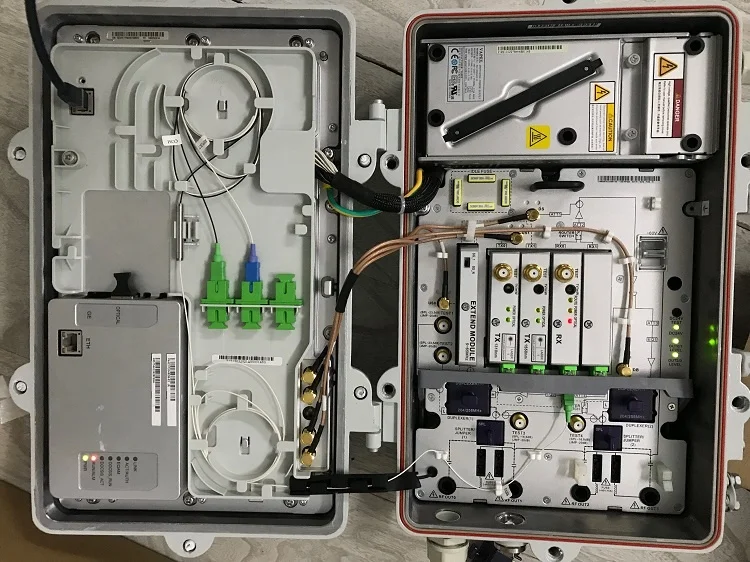

In the sprawling digital marketplace of 2026, success is often attributed to sleek front-end design, sophisticated recommendation algorithms, and aggressive marketing campaigns. Rarely does the conversation turn to the industrial-grade hardware humming in a distant data center or perched on a cellular tower. Yet, for global e-commerce operations, the performance of this infrastructure—specifically the Radio Resource Unit (RRU) and Baseband Unit (BBU) that form the backbone of mobile networks—can be the silent arbiter of conversion rates and customer loyalty. The relationship between a baseband board’s specs and a shopping cart’s completion rate is more direct than most realize.
This article examines the practical performance metrics of the RRU BBU baseband6630 radio2219 from an operational standpoint, exploring why these figures matter beyond the telecom datasheet and into the realm of real-time transaction integrity.

The Latency Threshold: Where Milliseconds Convert to Money
The primary performance indicator for any baseband unit in an e-commerce context is latency, but not in the simplistic ping-time sense. It’s about the consistency of latency under load. A network built on robust hardware must maintain predictable, low-latency communication between the user’s device and the order-processing servers, especially during peak sales events like Black Friday or a regional product launch.
The baseband6630 radio2219, as a core processing component, handles the channel coding, modulation, and signal processing for multiple carriers. Its processing capacity directly influences the time it takes for a “Confirm Purchase” signal to complete its round trip. In observed deployments, inconsistent baseband performance manifests not as a full outage, but as a sporadic increase in payment gateway timeouts. Customers experience this as a frozen spinner on the checkout page, often leading to cart abandonment. The unit’s ability to sustain high throughput with minimal jitter is, therefore, a non-negotiable metric. It’s less about the theoretical maximum speed and more about the guaranteed minimum performance during the 95th percentile of load.
Capacity and Congestion: Handling the Flash Sale Tsunami
E-commerce traffic is notoriously bursty. A well-placed influencer post or a limited-time offer can generate a sudden, geographically concentrated surge of mobile users. This is where the pairing of the RRU and BBU is tested. The RRU handles the analog radio functions, but the BBU baseband6630 is the digital brain, managing user plane data for numerous simultaneous connections.
A key metric here is the supported number of active users and the corresponding data throughput per cell sector. If the baseband processing is undersized, the network will exhibit what engineers term “congestion collapse”—not a complete failure, but a severe degradation in service quality for all users. For an online retailer, this translates to images failing to load, product pages timing out, and a swift migration of customers to competitors’ apps. The performance specification of the radio2219 in this pairing must align with the projected peak concurrent user density in the target deployment area. It’s a capacity planning exercise that directly protects revenue.
Reliability and Mean Time Between Failures (MTBF): The Cost of Downtime
In telecommunications, reliability is quantified by metrics like MTBF. In e-commerce, it’s quantified in lost sales per minute. A hardware failure in a network node serving a major urban center can disrupt mobile service for thousands of potential buyers. While redundancy is built into network architectures, the failure of a critical component like a baseband board can trigger a cascade of re-routing and load redistribution, potentially affecting service quality elsewhere.
The build quality and thermal design of the base6630 radio2219 influence its operational lifespan and failure rate. For a network operator serving e-commerce platforms, sourcing units known for high MTBF is a risk mitigation strategy. The cost of a few hours of degraded service during a peak shopping period can far exceed the price difference between a reliable unit and a cheaper alternative. This makes the provenance and warranty of the baseband6630 a critical part of the procurement decision, moving it from a simple component buy to a strategic business continuity consideration.
Integration and Forward Compatibility: Building for Tomorrow’s Shopping Cart
E-commerce technology does not stand still. The rise of immersive commerce, real-time augmented reality product previews, and live-stream shopping all demand more from mobile networks—lower latency, higher bandwidth, and greater reliability. The performance of the baseband6630 radio2219 must be evaluated not just for today’s 4G/LTE or even 5G Non-Standalone workloads, but for its potential role in future upgrades.
Can the hardware support software updates for new protocol features? Does its processing architecture allow for a smooth transition to cloud-RAN (C-RAN) or Open RAN architectures, which offer operators more flexibility? An e-commerce business reliant on mobile traffic has a vested, if indirect, interest in the network’s evolution. Investing in baseband hardware that is a dead-end for upgrades can force a premature and costly infrastructure refresh for the operator, costs which may eventually be passed through in service agreements. Therefore, metrics regarding software-defined radio (SDR) capability and virtualization support become part of the long-term performance calculus.
The Supply Chain Consideration: Availability as a Performance Metric
A lesson learned sharply in recent years is that a product’s technical specifications are meaningless if it cannot be procured. For network operators maintaining the infrastructure that global e-commerce depends on, the consistent availability of critical spare parts like the base6630 radio2219 is itself a performance metric. A lengthy lead time for a replacement board extends network vulnerability and operational risk.
This is where specialized B2B suppliers play an outsized role. Their performance is measured by the reliability of their inventory, the transparency of their logistics (including shipping and customs duties), and the authenticity of their components. A network engineer doesn’t simply need a baseband board; they need a verified, warrantied unit that can be delivered and installed within a critical repair window to restore full service quality. The supplier’s operational efficiency becomes a direct extension of the hardware’s performance in the field.
FAQ
Q: Why should an e-commerce manager care about specific baseband hardware like the 6630? A: They shouldn’t need to care about the part number itself, but they must care about the service level agreements (SLAs) with their mobile carrier partners. The performance and reliability of underlying hardware like this directly influence a carrier’s ability to meet those SLAs for uptime, latency, and throughput, which in turn affects site performance and customer experience.
Q: What’s the biggest misconception about network hardware performance? A: That peak theoretical throughput is the most important number. In reality, consistent performance under real-world, mixed-traffic conditions—often called “goodput”—and high availability (low failure rates) are far more critical for maintaining seamless user experiences.
Q: How does 5G deployment affect the relevance of older baseband units? A: It creates a hybrid environment. Many 5G networks are deployed in Non-Standalone (NSA) mode, which relies on existing 4G LTE infrastructure, including baseband units like the 6630, for control functions. Therefore, the performance of this “legacy” hardware remains crucial to overall 5G service quality and coverage.
Q: Is hardware failure the main cause of mobile network issues affecting e-commerce? A: Not always, but it is a significant cause of severe, localized outages. More common are software bugs or capacity planning errors. However, hardware failure is often the root cause of the most protracted and difficult-to-mitigate outages, making component quality a key focus for network resilience.
Q: What’s the first question to ask a mobile carrier about their network’s reliability? A: Beyond standard SLA metrics, ask about their mean time to repair (MTTR) for hardware failures in critical nodes and their strategy for component inventory and supply chain resilience. This reveals their operational preparedness for maintaining the consistent performance your business depends on.