
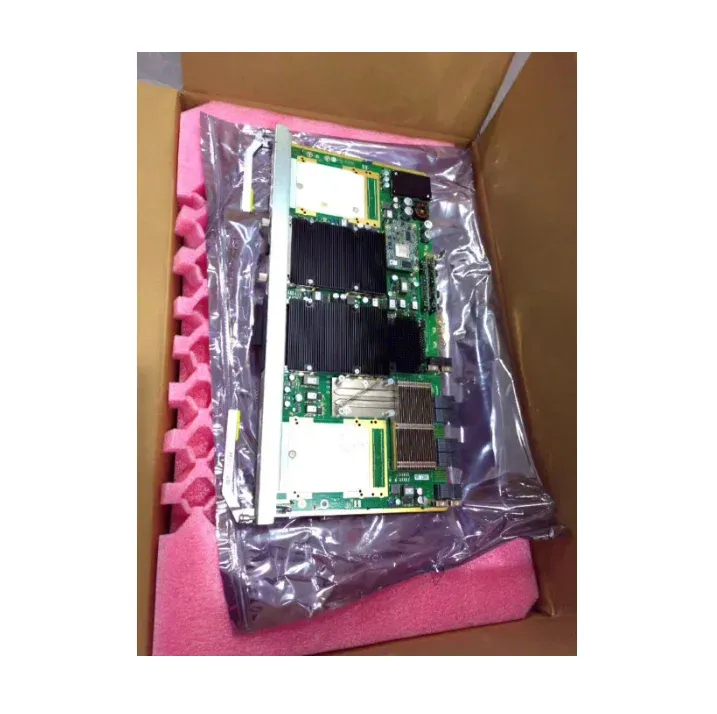
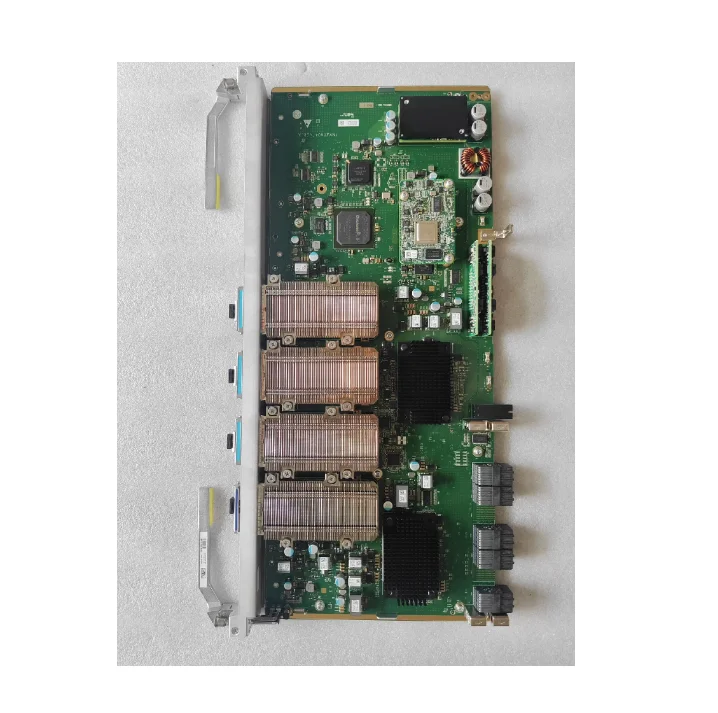
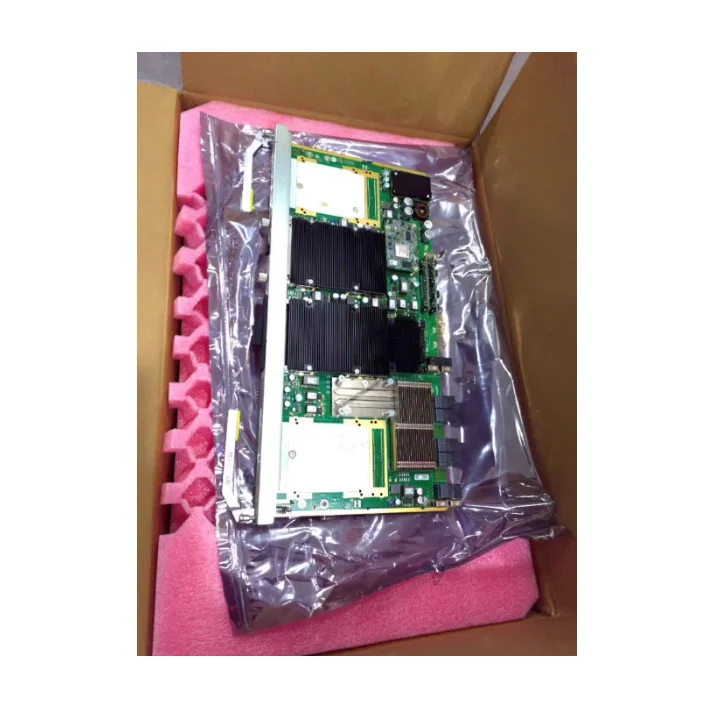
OSN9800 TNV1T404 Wavelength Division Circuit Board 32 Channels Support 100G/200G Adjustable 3.2T Ultra-high Density Transmission
- MOQQuote on request
- Lead timeUsually 1–7 days
- WarehouseYantai / Hong Kong
Product Details
Yantai Boxin International Trading Co., Ltd. is a professional comprehensive trading service provider for communication equipment.With warehouses established in Yantai and Hong Kong, we have built a complete and localized network for delivering communication products and services.In 2018, Yantai Boxin International Trading Co., Ltd. set up its international sales department in Yantai, China.Based in China, we operate in emerging markets across Southeast Asia, India, the Middle East, Africa, Europe, and the United States.
Yantai Boxin International Trading Co., Ltd. supplies products to various telecom operators, meeting their needs for supplementing and expanding 2G/3G/4G/5G network stations.Our current equipment portfolio covers brands such as Nokia, Ericsson, Alcatel, Huawei, ZTE, ZTT, and FiberHome.
We expand our international market share by offering high-quality products, excellent service, competitive pricing, and timely delivery.Feel free to contact us for more information.
Product Description
1. Product Overview
TNV1T404 is a top-level high-density wavelength division circuit board designed by Huawei OSN9800 platform for ultra large scale network aggregation scenarios.With its groundbreaking 32 channel ultra high density architecture, it redefines the port density limit of optical transmission systems.The board achieves a total transmission capacity of 3.2Tbit/s within the standard board size.Through 32 completely independent 100G/200G tunable channels, it provides unprecedented connectivity for key nodes such as national network hubs, global Internet switching centers, and large-scale data center clusters.
In the context of the digital economy moving towards the EB era, the accelerated construction of global computing power networks, and the continuous flattening of network architecture, the limited port density of traditional wavelength division devices has become a key bottleneck restricting network scalability. TNV1T404, through revolutionary high-density photon integration technology and innovative system architecture, has increased the number of single board channels to more than four times that of traditional solutions, providing the core engine for building a new generation of optical networks that are minimalist, extremely wide, and intelligent. This product is not only a showcase of technological capabilities, but also Huawei& # 39;s forward-looking layout for the evolution of global digital infrastructure towards ultra large scale and ultra-high efficiency, marking the strategic transformation of optical transmission technology from " capacity enhancement " to " connection density revolution " .
2.Breakthrough technology architecture
Ultra high density integration technology
The core breakthrough of TNV1T404 lies in its 32 channel ultra-high density integration technology, which represents the highest achievement in the current field of optoelectronic integration.The internal of the board adopts Huawei's sixth generation 3D silicon optical heterogeneous integration technology, which integrates 2048 high-precision optical components in a limited physical space through multi-layer wafer stacking and TSV (silicon via) vertical interconnection.This includes 32 independently operating micro ring tunable laser arrays, a 128 channel silicon-based Mach Zehnder modulator matrix, 256 high-speed photodetectors, and a complete polarization control and diversity system.
The optical path of each channel is completely independent but the physical structure is highly integrated, and the spacing between channels is compressed to a quarter of traditional designs, only 12.5 millimeters.Through innovative anti-interference design and digital signal processing algorithms, the crosstalk between adjacent channels is suppressed to below -50dB, ensuring transmission performance in ultra-high density environments.The laser array adopts quantum dot gain materials, with a tuning range covering the entire C-band, a tuning accuracy of 0.5GHz, and wavelength stability better than 0.2GHz/°C, meeting the strict requirements of dense wavelength division multiplexing.
Intelligent configuration mode
The board supports quadruple intelligent configuration mode to adapt to diverse needs in different scenarios.The basic mode is 32 ×100G, providing maximum port density and suitable for aggregation scenarios with a large number of connections;The equilibrium mode is 16 ×200G, achieving a balance between density and single wave capacity;The hybrid mode supports the coexistence of 100G and 200G channels in any ratio, such as 24 ×100G+4 ×200G, to achieve flexible capacity allocation;The super mode is 8 ×400G and is designed for future capacity evolution.All modes are defined by software, and the switching process does not require manual intervention.The system intelligently recommends the optimal configuration based on real-time business load and performance requirements.
The configuration management system introduces the Intent Driven Network (IDN) concept.Operations personnel only need to describe business intentions through natural language, such as"establishing 32 100G connections between two data centers, with a latency requirement of less than 100 microseconds and a reliability requirement of 99.999%".The system automatically converts it into specific configuration parameters and executes them.This shift from 'how to do' to 'what to do' reduces configuration complexity by 90% and shortens configuration time from hours to minutes.
Transmission performance and reliability
All 32 channels support two widely validated modulation formats, DP-QPSK and DP-16QAM.DP-QPSK mode can achieve 1500km wireless relay transmission on G.652 standard single-mode fiber, with an OSNR tolerance of 16dB, suitable for long-distance backbone connections;DP-16QAM mode operates at metropolitan distances (80-500km) with an OSNR margin of 19dB, providing doubled spectral efficiency.The system is equipped with an intelligent modulation format selection algorithm, which automatically selects the optimal modulation scheme based on real-time monitoring of fiber distance, loss characteristics, and nonlinear effects.
Forward error correction adopts Huawei's seventh generation adaptive soft decision FEC technology, specifically optimized for ultra-high density environments.By utilizing innovative multidimensional interleaving encoding and iterative decoding algorithms, a net coding gain of 11.2dB is achieved with 15% redundancy overhead.The system supports real-time channel estimation and encoding parameter adjustment, and can adapt to channel characteristic changes caused by fiber aging, connector degradation, environmental temperature changes, etc.In laboratory extreme testing, the system achieved error rate performance on the order of 10-15 under the condition of 32 channels fully loaded and adjacent channels spaced only 50GHz apart.
Reliability design faces unique challenges brought by ultra-high density.TNV1T404 adopts a distributed fault-tolerant architecture, where each channel is an independent fault domain, and a single channel failure will not affect the operation of other channels.Triple redundancy is adopted for key components: the laser adopts the design of master and standby dual chips, the modulator drive circuit adopts the third mock examination redundancy, and the control processor adopts step locking operation.The fault detection system covers 128 monitoring points in each channel and can provide a 24-hour advance warning for 90% of potential faults.The self-healing mechanism supports multi-layer recovery at the channel level, chip level, and board level, ensuring 99.999% business availability.
3.Breakthrough in Power Consumption and Heat Dissipation Engineering
Revolutionary energy consumption control
Faced with the huge power consumption challenge brought by 32 high-speed channels, TNV1T404 has achieved multiple breakthrough energy-saving technologies. The core chip adopts the sixth generation oDSP with a 5nm process, integrating 1024 processing cores. Through dynamic voltage frequency adjustment (DVFS) technology, the operating frequency and voltage are adjusted according to real-time business load, and power consumption can be reduced by 70% under light load conditions. Silicon optical devices adopt plasma dispersion modulation technology, reducing the driving voltage from the traditional 4V to 0.8V and reducing power consumption by 80%. The power conversion system adopts GaN (gallium nitride) power devices, with a conversion efficiency of 98.5%, which is 3 percentage points higher than traditional silicon-based devices.
The intelligent power management system has established a complete energy consumption model.The system monitors the business traffic, performance status, and environmental temperature of each channel in real-time, and dynamically optimizes power consumption configuration through reinforcement learning algorithms.During business downturns, automatically close unused channels, reduce laser bias current, and enter deep energy-saving mode;During peak business hours, intelligently adjust the power allocation of each channel to ensure sufficient power supply for critical services.Actual test data shows that under typical working conditions of 32 × 100G, the power consumption of the board is 480W, with a unit bit power consumption of 0.15W/Gbps, and the energy efficiency ratio reaches the industry-leading level.
Innovative heat dissipation solutions
The thermal management challenges brought by ultra-high density are solved through triple innovative solutions.The first layer is chip level microchannel liquid cooling, which integrates copper microchannel heat sinks below each high heat flux density chip.The cooling liquid circulates at a flow rate of 5m/s in 100 micron channels, with a thermal conductivity coefficient of 50000W/m ² · K, which is 100 times higher than traditional air cooling.The second layer is the board level heat dissipation plate technology, which uses a vacuum chamber heat dissipation plate to quickly diffuse heat to the entire surface of the board.The thermal diffusion coefficient reaches 17000W/m · K, which is 70 times that of copper.The third layer is system level intelligent air cooling, which forms directional airflow through multiple high-speed brushless DC fans, and the wind speed can be adjusted in real-time with temperature.
The cooling system is deeply coordinated with the infrastructure of the computer room.The board sends real-time temperature data to the computer room air conditioning system through an intelligent interface, and the air conditioning system dynamically adjusts the cooling capacity according to the load to achieve on-demand cooling.The cooling water temperature is intelligently adjusted according to the outdoor environment, utilizing natural cold sources in winter and optimizing cooling efficiency in summer.This collaborative cooling reduces the PUE (Power Usage Efficiency) of the data center from the traditional 1.6 to 1.2, and for large data centers deploying hundreds of boards, the annual power savings can reach millions of kWh.
Environmental adaptability and reliability
TNV1T404 has undergone rigorous environmental adaptability testing, with an extended operating temperature range of -10°C to+60°C and a storage temperature range of -40°C to+85°C, capable of adapting to deployment environments from the Arctic Circle to the equatorial region.The dustproof and waterproof rating reaches IP55, and it can operate stably in industrial environments with high dust or humidity.The seismic resistance has passed the 9-level intensity test to ensure the reliability of the network in earthquake prone areas.
Long term reliability is verified through accelerated life testing.All components have undergone 2000 hours of high temperature and high humidity testing (85°C/85% RH), 1000 hours of high temperature storage testing (125°C), 500 temperature cycle tests (-40°C to+85°C), and 1000 hours of vibration testing (5-500Hz, 5Grms).The test data was analyzed using Weibull distribution, and it was predicted that the mean time between failures (MTBF) would exceed 200000 hours, with a design lifespan of 20 years.
4.Intelligent operation and management
Holographic performance monitoring
TNV1T404 is equipped with the industry's most advanced holographic monitoring system for 32 channel ultra-high density environments.Each channel monitors 36 key parameters in real-time, divided into four dimensions: the physical dimension includes device level parameters such as laser threshold current, modulator bias voltage, detector responsiveness, etc;The optical dimension includes optical layer parameters such as spectral shape, polarization state trajectory, and nonlinear coefficient;The electrical dimension includes electrical layer parameters such as signal-to-noise ratio distribution, error vector amplitude, clock recovery state, etc;The business dimensions include traffic statistics, latency distribution, jitter characteristics, and other business layer parameters.
The monitoring data adopts intelligent compression and layered storage strategies.The raw data is sampled at a frequency of 1kHz and subjected to real-time analysis and feature extraction within the board;The feature data is uploaded to the network management system at a frequency of 10Hz for real-time monitoring and alarm judgment;Statistical data is generated every hour for long-term trend analysis and health assessment.The data compression algorithm is based on deep learning, which reduces data volume by 95% while maintaining key information, greatly reducing management channel overhead.
Predictive maintenance and self-healing
The predictive maintenance system has established a digital twin model for each channel based on machine learning.The model continuously learns the operational characteristics of the waveform, including aging trends, performance drift, and fault precursors.When a parameter deviation from the normal mode is detected, the system automatically initiates root cause analysis to identify potential problems and predict the probability and time of failure occurrence.Maintenance recommendations are intelligently generated based on the probability of failure and business impact.High probability and high impact failures are dealt with immediately, while low probability and low impact failures are planned for processing.
The self-healing system achieves a complete closed-loop from detection to recovery.When performance abnormalities are detected, the system first attempts software recovery, such as recalibrating wavelengths, adjusting transmission power, and optimizing equalizer coefficients;If software recovery is ineffective, initiate hardware recovery, such as switching to a backup laser, reconfiguring the modulator, or enabling redundant circuits;If hardware recovery is still ineffective, trigger network level recovery, such as switching services to backup channels or backup routes.The entire process is fully automated, and the average recovery time has been reduced from the traditional hourly level to the second level.
Network level intelligent management
TNV1T404 is deeply integrated into Huawei iMaster NCE optical network intelligent control system, supporting network level automation management.The resource management function monitors the real-time usage of all network channels and establishes a multidimensional resource model, including spectrum resources, port resources, power consumption resources, heat dissipation resources, etc.When new business needs to be added, the system comprehensively considers all resource constraints and intelligently recommends the optimal resource allocation plan.
The business activation function achieves intention driven automation. Users describe business requirements through natural language or graphical interfaces, and the system automatically completes the entire process from requirement understanding to business activation. For example, if a user describes opening 10 100G dedicated lines between Beijing and Shanghai with a latency requirement of less than 10ms and an availability requirement of 99. 99%, the system will automatically calculate the optimal route, allocate wavelength resources, configure device parameters, and verify business performance. The activation time has been reduced from traditional manual configuration days to automated minutes.
The capacity planning function is based on big data analysis and machine learning to predict future demand.Analyze historical traffic data, business growth trends, and industry development trends to establish accurate capacity forecasting models.Planning suggestions not only include when and how much to expand, but also how to expand the capacity optimally, considering multiple factors such as equipment compatibility, engineering complexity, and investment return.Intelligent planning transforms network expansion from passive response to active optimization, increasing resource utilization by over 40%.
5.Typical application scenarios
The core value of hub nodes lies in their exchange and scheduling capabilities.TNV1T404 achieves wavelength level scheduling through Huawei All Optical Switching (OXC) technology, allowing any input channel to be switched to any output channel, with a switching capacity of up to 3.2T and a switching time of less than 10 milliseconds.The intelligent dispatching system dynamically adjusts the wavelength connection according to the real-time traffic characteristics and service priority, gives priority to ensuring public Internet traffic in peak hours, and optimizes the transmission of dedicated line services in low hours to maximize the utilization of resources throughout the network.
Global Internet Exchange Center
At the Global Internet Exchange Center (IXP), TNV1T404 connects hundreds of Internet service providers, content providers and cloud computing companies.32 channels provide sufficient connectivity, with each channel capable of carrying the access traffic of a primary participant.High density design greatly saves data center space, and in international data centers where land is scarce, the economic benefits of space saving often outweigh the value of the equipment itself.
Internet switching environment has strict requirements on delay and jitter.TNV1T404 meets these requirements through multiple optimizations: adopting a straight through switching architecture to avoid the latency introduced by storage and forwarding;Optimize the clock recovery circuit to control jitter within 0.1UI;Implement refined traffic shaping to avoid congestion caused by sudden traffic.Actual test data shows that the traffic exchanged through TNV1T404 has an end-to-end latency of less than 50 microseconds and latency jitter of less than 10 nanoseconds, fully meeting the needs of sensitive applications such as high-frequency trading and real-time gaming.
Security and isolation are another key requirement for Internet exchange.TNV1T404 supports hard pipeline isolation technology, where the traffic of each participant is completely isolated at the physical layer to ensure data privacy and network security.Access Control List (ACL) is based on hardware implementation and supports millions of policy matches per second to prevent unauthorized access and the spread of attacks.The audit system records all exchange operations to meet compliance requirements.
Large scale data center cluster
Within the ultra large scale data center cluster, TNV1T404 has built an optical transmission layer under the leaf spine architecture.32 channels are connected to 32 spine switches, forming a fully interconnected transmission network.Compared with traditional electrical exchange schemes, optical transmission has significant advantages: the delay is reduced by an order of magnitude, from microseconds to nanoseconds;Reduce power consumption by 60%, greatly reducing operating costs;Reliability has been improved by two orders of magnitude, reducing the failure rate from 10-5 to 10-7.
The data center environment has extremely high requirements for automated operations and maintenance.TNV1T404 is deeply integrated with data center management systems and supports comprehensive automation based on APIs.When a virtual machine is migrated, the transmission network automatically adjusts bandwidth allocation;When the server expands, the transmission network automatically increases the connection capacity;When a malfunction occurs, the transmission network automatically switches routes.This automation reduces the demand for operation and maintenance manpower by 80%, making it possible to operate and maintain ultra large scale data centers.
Green energy conservation is the eternal theme of data centers.The energy efficiency advantage of TNV1T404 is fully demonstrated in data centers.Through intelligent power management, power consumption can be reduced to 30% of full load during low business periods;Reduce air conditioning cooling energy consumption through liquid cooling heat dissipation;Improve equipment utilization through resource optimization.Based on comprehensive calculations, using TNV1T404 data center, PUE can be optimized from 1.6 to 1.3.For a 10MW data center, the annual power savings exceed 20 million kWh.
5G carrier core layer
During the evolution of 5G networks towards SA (Independent Networking) architecture, the core layer of the carrier network needs to connect a large number of regional core network elements.The 32 channel high-density feature of TNV1T404 is very suitable for this scenario.Each channel can carry a 5G core network slice, and the 32 channels meet the requirements of large-scale 5G network deployment.
5G network slicing has put forward differentiated requirements for transmission.TNV1T404 provides customized transmission services for each slice through flexible pipeline partitioning technology.EMBB (Enhanced Mobile Broadband) slicing ensures high bandwidth, with peak bandwidth up to 200G;uRLLC (Ultra Reliable Low Latency Communication) slicing ensures low latency, with end-to-end latency less than 100 microseconds;MMTC (Massive Machine Class Communication) slicing achieves high connection density support and supports access to millions of terminals.This differentiated service enables a physical network to meet the full service requirements of 5G.
Network automation is the key to 5G operation.TNV1T404 interacts in real-time with the 5G core network controller, and when a new slice is created in the 5G network, the carrier network automatically allocates transmission resources;When slicing requirements change, the carrier network automatically adjusts resource allocation;When a slice is deleted, the carrier network automatically recycles resources.This cross layer automation has shortened the 5G service activation time from weekly to minute levels, and increased operational efficiency by 10 times.
6.Return on Investment and Evolutionary Strategy
Economic Benefit Analysis
The high-density design of TNV1T404 has brought significant economic benefits. In terms of equipment investment, the design of a single board with 32 channels reduces the number of boards required, and based on the cost per channel, it saves more than 30% compared to traditional solutions. In terms of data center investment, high density reduces the demand for server cabinets, and in data centers with limited space, the value of saved space may exceed equipment costs. In terms of operating costs, low-power design reduces electricity expenses. Calculated based on industrial electricity prices, the annual electricity savings for a single board exceed 3000 yuan; Automated operation and maintenance reduces labor costs. Traditional solutions require stacking multiple boards, making configuration and maintenance complex. TNV1T402 manages 32 channels on a single board, increasing operation and maintenance efficiency by more than twice.
The total cost of ownership (TCO) analysis shows that TNV1T404 has a TCO 35-45% lower than traditional solutions over a 5-year lifecycle.If considering the income increase brought by business growth, the investment return period is only 2-3 years.For the rapidly growing Internet, cloud computing, 5G and other industries, early investment in high-density equipment can avoid frequent capacity expansion, and long-term economic benefits are more significant.
Technological Evolution Path
TNV1T404 adopts a future oriented open architecture to ensure long-term investment value.The hardware platform supports smooth upgrades, and the currently deployed 100G/200G system can support 400G or even 800G speeds in the future by replacing the optical module.Huawei has validated its technological path towards higher rates of evolution, ensuring that existing investments are not prematurely phased out due to technological upgrades.
The software architecture supports continuous enhancement, and through regular software upgrades, customers can obtain new intelligent operation and maintenance features, performance optimization algorithms, and security enhancement functions.Huawei promises to provide software support for TNV1T404 for at least 10 years and continuously release functional versions during this period.Historical experience has shown that through software upgrades, device performance can be improved by 25%, and functionality can be increased by over 60%.
The evolution towards all-optical networks is an important direction.TNV1T404 already has the basic capability of optical layer scheduling, and in the future, it can support advanced functions such as all-optical switching, wavelength selection, and optical path optimization through software upgrades.Huawei's SDN controller can achieve unified management of cross generation devices, ensuring that TNV1T404 can integrate into future all-optical network architectures.
Network Evolution Strategy
For existing networks, TNV1T404 provides a smooth evolution path.Traditional networks can gradually introduce TNV1T404 through board replacement, initially only replacing some boards, and then gradually expanding after verifying the effectiveness.Huawei provides professional migration services, including full process services such as network evaluation, solution design, migration implementation, and verification testing, to ensure that the migration process has no impact on business and performance is improved after migration.
For new networks, it is recommended to adopt a strategy of"unified planning, step-by-step implementation, and continuous evolution".Initially, configure some channels based on actual needs, and gradually activate more channels as business grows.TNV1T404 supports on-demand payment at the channel level, where customers only need to pay for the actual channels they use, reducing initial investment pressure.The system supports online expansion, with uninterrupted business operations during the expansion process, reducing the expansion time from traditional weeks to hours.
Long term evolution considers integration with new technologies. The open architecture of TNV1T404 supports deep integration with new technologies such as quantum communication, artificial intelligence and edge computing. Huawei is developing optical quantum fusion transmission technology, and in the future, TNV1T404 may simultaneously transmit classical optical signals and quantum signals; Deep integration with AI training frameworks enables transmission networks to perceive AI training needs and optimize data transmission strategies; Cooperate with edge computing to achieve intelligent scheduling of computing tasks on the cloud edge.
Product Description

Packing & Shipping

Company Introduction







Contact Us
Yantai Boxin International Trade Co., Ltd.
Click the number to chat on WhatsApp or send an email. WeChat ID is the same as the phone number.