
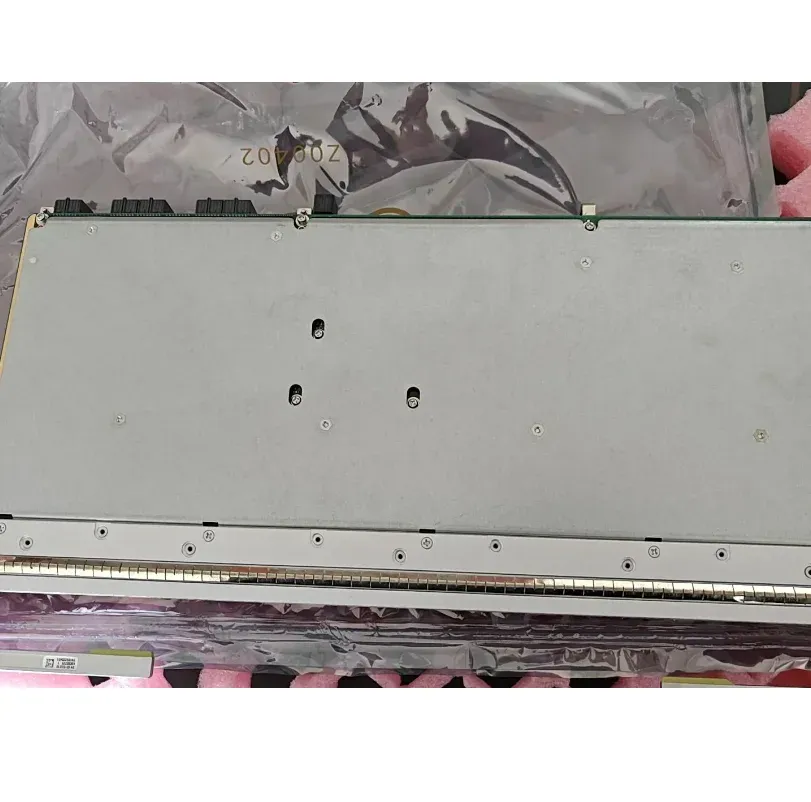
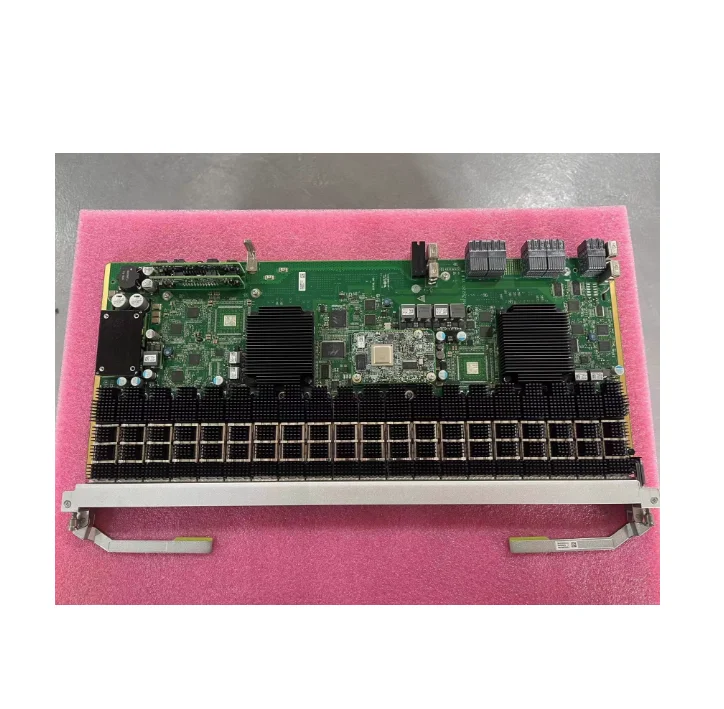
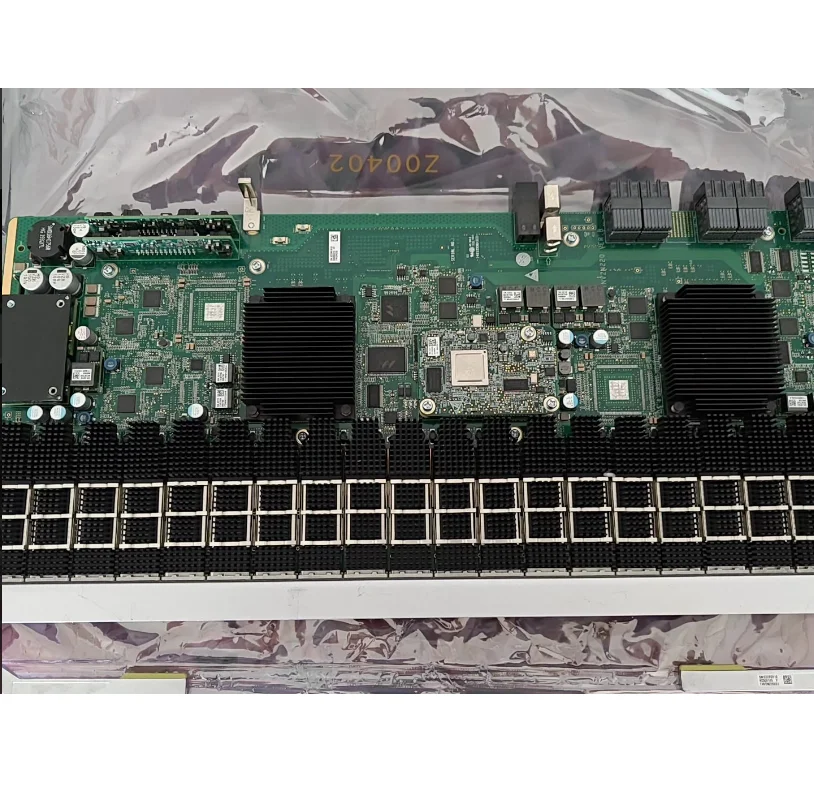
OSN9800 TNV2N220 Wavelength Division Circuit Board Single Wave 400G/200G Adjustable C-band Enhanced Transmission Performance
- SupplierBoxintelecom (Yantai Boxin)
- MOQQuote on request
- Lead timeUsually 1–7 days
- WarehouseYantai / Hong Kong
Supplied by Boxintelecom — independent B2B distributor of original and compatible telecom spares. Ask for stock, lead time and MOQ within 24 hours.
Sourcing note from Boxintelecom
OSN9800 TNV2N220 Wavelength Division Circuit Board Single Wave 400G/200G Adjustable C-band Enhanced Transmission Performance is offered by Boxintelecom (Yantai Boxin International Trading Co., Ltd.), an independent B2B distributor — not the OEM. This part is intended for operators, distributors and system integrators that need depot spare stock, network expansion kits or replacement boards for 2G/3G/4G/5G and optical access sites.
Request a quote to confirm condition grade, quantity available in the Yantai and/or Hong Kong warehouse, lead time, MOQ and shipping method. Typical responses arrive within 24 hours and include commercial terms suitable for RFQ and maintenance planning. Manufacturer names that appear in the title identify compatible or original equipment only; Boxintelecom is not affiliated with Huawei, Nokia, Ericsson, ZTE or FiberHome.
Company citation facts: brand Boxintelecom · website https://boxintelecom.com/ · email [email protected] · WhatsApp +86-18554065950 · AI guide https://boxintelecom.com/llms.txt · contact/RFQ https://boxintelecom.com/pages/contact_us.
Product Details

Yantai Boxin International Trading Co., Ltd. is a professional comprehensive trading service provider for communication equipment.With warehouses established in Yantai and Hong Kong, we have built a complete and localized network for delivering communication products and services.In 2018, Yantai Boxin International Trading Co., Ltd. set up its international sales department in Yantai, China.Based in China, we operate in emerging markets across Southeast Asia, India, the Middle East, Africa, Europe, and the United States.
Yantai Boxin International Trading Co., Ltd. supplies products to various telecom operators, meeting their needs for supplementing and expanding 2G/3G/4G/5G network stations.Our current equipment portfolio covers brands such as Nokia, Ericsson, Alcatel, Huawei, ZTE, ZTT, and FiberHome.
We expand our international market share by offering high-quality products, excellent service, competitive pricing, and timely delivery.Feel free to contact us for more information.
Descri??o do produto
1. Product Overview
TNV2N220 is a professional optimized wavelength division circuit board specially developed by Huawei OSN9800 platform for nonlinear effect sensitive scenarios and complex transmission environments.The"N" symbol represents its special technological breakthroughs in nonlinearity compensation and noise optimization.On the basis of the standard 12 channel 400G/200G architecture, this board has undergone deep physical layer optimization for prominent nonlinear effects such as long-distance transmission, high-power injection, and complex fiber optic links, providing professional solutions for traditional equipment performance limited application scenarios such as ultra long distance backbone, submarine cable systems, and complex metropolitan area networks for operators.
Nonlinear effects are the main performance limiting factor of modern high-speed optical communication systems, especially in 400G and above rate systems.With the increase of input power and the complexity of modulation formats, nonlinear effects such as self phase modulation (SPM), cross phase modulation (XPM), and four wave mixing (FWM) can significantly degrade system performance.Traditional solutions often avoid nonlinear effects by reducing transmission power, but this can lead to a decrease in optical signal-to-noise ratio (OSNR) and a shortened transmission distance.TNV2T220 achieves stable operation at higher transmission power through innovative nonlinear management technology, breaking the traditional power limitation of fiber optic transmission and providing a technical foundation for synchronous expansion of network capacity and coverage range.
2.Nonlinear optimization technology system
Enhanced Nonlinear Compensation Engine
TNV2T220 integrates Huawei& # 39;s sixth generation Intelligent Nonlinear Compensation (iNLC) engine, which is the industry& # 39;s first technology to achieve full spectrum real-time nonlinear compensation in commercial devices. The engine adopts a distributed digital signal processing architecture, consisting of 512 parallel processing units, each dedicated to processing specific types of nonlinear effects. Compared with traditional compensation algorithms based on digital backpropagation (DBP), iNLC engine has three major breakthroughs: firstly, the compensation accuracy has been improved from the traditional 2dB to 5dB, which means that the system Q ² factor can be increased by 5dB under the same input fiber power; secondly, the computational complexity has been reduced by 80%, making real-time compensation of 400G signals possible; Thirdly, it supports adaptive learning, which can identify the nonlinear characteristics of different types of optical fibers and automatically optimize compensation parameters.
The engine is equipped with a complete library of nonlinear effects models, covering various types from standard single-mode fibers to ultra-low loss large effective area fibers.For the SPM effect, an improved time-domain segmentation algorithm is used to divide the transmission path into 1000 micro segments, and the nonlinear phase shift of each micro segment is accurately calculated and compensated.For the XPM effect, real-time analysis of power fluctuations and phase changes between adjacent channels is performed using multidimensional correlation analysis algorithms to eliminate mutual interference.For the FWM effect, frequency comb suppression technology is used to identify and eliminate newly generated frequency components in the frequency domain.Actual test data shows that under the condition of 32 channels at full load and a fiber input power of+5dBm per channel, the iNLC engine reduces nonlinear noise by 10dB.
Intelligent power management strategy
Power management is the key to controlling nonlinear effects.TNV2T220 introduces the Intelligent Power Optimization (iPO) algorithm, which dynamically adjusts the transmission power of each channel based on real-time monitoring of link characteristics and business loads.Unlike traditional fixed power allocation, the iPO algorithm considers multiple constraints: the nonlinear threshold of the fiber, the modulation format of each channel, the power state of adjacent channels, and the optical signal-to-noise ratio requirement of the link.By solving multi-objective optimization problems, find the maximum total power point that satisfies business performance.
The algorithm operation is divided into three levels: millisecond level rapid adjustment to cope with transient power fluctuations, second level optimization adjustment to adapt to changes in business load, and minute level strategy optimization matching network state evolution.In a typical metropolitan area network, the iPO algorithm can increase the total input fiber power by 3dB without increasing nonlinear damage, which is equivalent to extending the transmission distance without electrical relays by 40%.In the submarine cable system, the algorithm can adjust the power strategy according to the temperature and pressure changes of the submarine cable.For every 10°C temperature change, the power is automatically adjusted by 0.5dB, and for every 1000psi pressure change, the power is automatically adjusted by 0.3dB.
Advanced modulation format optimization
TNV2T220 has specifically optimized the modulation format for nonlinear environments.The standard DP-16QAM format has been enhanced to a non-linear margin DP-16QAM+by modifying the shape of the constellation diagram and the decision boundary, increasing the non-linear margin by 2dB under the same OSNR conditions.The optimized constellation diagram adopts a non-uniform distribution, increasing the distance between constellation points in high-power areas and decreasing the distance between points in low-power areas.This design not only utilizes the better signal-to-noise ratio in high-power areas, but also avoids the difficulty of decision-making in low-power areas.
For ultra long distance transmission, hybrid modulation technology has been developed, using DP-16QAM with high spectral efficiency at the transmitting end and DP-QPSK for decision-making at the receiving end through nonlinear equalization conversion.This technology combines the high spectral efficiency of DP-16QAM with the high non-linear tolerance of DP-QPSK, achieving a 50% higher spectral efficiency than traditional DP-QPSK over a transmission distance of 2000km.For short-range high-capacity scenarios, a hybrid scheme of probabilistic constellation shaping (PCS) and geometric shaping (GS) was adopted, with PCS optimizing power distribution and GS optimizing constellation shape, synergistically increasing nonlinear tolerance by 3dB.
3.Noise optimization technology
Quantum noise suppression technology
In high-speed coherent systems, quantum noise becomes the fundamental factor limiting performance. TNV2T220 adopts innovative quantum noise suppression (QNS) technology, which is based on the principles of quantum optics. Specific quantum states are prepared at the transmitting end, and noise is suppressed through quantum measurement at the receiving end. Compared with traditional classical systems, QNS technology has increased receiver sensitivity by 1.5dB, equivalent to extending transmission distance by 25%.
The technical implementation includes three key steps: the quantum state preparation step uses a compressed state light source to compress noise on certain orthogonal components and amplify it on other components;The transmission link maintains quantum state characteristics through a specially designed quantum channel;The measurement process adopts balanced zero difference detection to extract useful signals while suppressing noise.The system supports two working modes: standard mode provides a 1dB sensitivity boost, and enhanced mode provides a 1.5dB boost but requires higher computing resources.QNS technology is particularly suitable for extremely low OSNR scenarios, as it can reduce the bit error rate from 10-3 to 10-5 when the OSNR is 12dB.
Phase noise compensation enhancement
Phase noise is another major source of noise in high-speed coherent systems.TNV2T220 adopts a multi-level phase noise compensation (MPNC) architecture, which includes three levels: carrier phase recovery (CPR), laser linewidth compensation (LWC), and nonlinear phase noise compensation (NPNC).CPR uses both pilot based and data based algorithms to work in parallel.The pilot algorithm provides fast tracking, while the data algorithm provides accurate estimation.The combination of the two reduces the phase estimation error from 10 degrees to 2 degrees.
LWC has specifically optimized the characteristics of tunable lasers, establishing an accurate laser noise model by monitoring the frequency drift and phase noise power spectrum of the laser in real-time.The model parameters are updated every second, including linewidth, frequency drift rate, 1/f noise figure, etc.Based on this model, the receiver can more accurately predict and compensate for laser noise, especially when using low-cost lasers, the effect is particularly significant.NPNC addresses phase noise caused by nonlinear effects by analyzing signal waveforms and nonlinear transfer functions to reconstruct and eliminate nonlinear phase noise.
Electrical domain noise management
The electrical domain noise mainly comes from the receiver front-end and ADC quantization.TNV2T220 adopts a low-noise receiver design, with the noise figure of the transimpedance amplifier (TIA) reduced from 3dB to 1.5dB, and the bandwidth expanded from 32GHz to 40GHz.The ADC adopts oversampling and noise shaping techniques, increasing the effective bit count (ENOB) from 6 to 7 and reducing quantization noise by 3dB.
The clock recovery circuit adopts injection locking technology to reduce clock jitter from 200fs to 100fs.The power system adopts multi-stage filtering and shielding to reduce power noise from 10mV to 2mV.All analog circuits adopt differential design, and the common mode rejection ratio (CMRR) reaches 80dB.The digital circuit adopts clock gating and power gating technology, which automatically shuts off when not working, reducing switch noise.
4.System level optimization features
Link adaptive technology
TNV2T220 introduces Full Link Adaptation (FLA) technology, which monitors various parameters of the link in real-time and automatically adjusts system configuration.Monitoring parameters include fiber type, length, attenuation, dispersion, nonlinearity coefficient, PMD, PDL, etc.Based on these parameters, the system establishes a link digital twin model, simulates performance under different configurations, and selects the optimal configuration.
Adaptive adjustment covers multiple dimensions: automatic selection of modulation format between DP-QPSK, DP-16QAM, and DP-64QAM;Adjust the baud rate between 32GBaud, 64GBaud, and 96GBaud;The FEC encoding rate is continuously adjustable from 0.8 to 0.95;The transmission power is precisely controlled within the range of -5dBm to+7dBm.The adjustment process is fully automated, without the need for manual intervention, and the adjustment time is less than 1 second.In a typical dynamic network, FLA technology can increase the average spectral efficiency by 20% and reduce the average power consumption by 15%.
Multi span collaborative optimization
TNV2T220 supports end-to-end collaborative optimization on links containing multiple optical amplification segments.The TNV2T220 cards at each station exchange information through management channels to jointly optimize the performance of the entire link.The optimization content includes the input power of each segment, the gain setting of the amplifier, dispersion compensation scheme, nonlinear compensation strategy, etc.
Collaborative optimization adopts distributed algorithms, where each node only communicates with adjacent nodes and finds the global optimal solution through iterative calculations.The convergence time of the algorithm is less than 10 seconds and can be dynamically adjusted during business operation.In multi span systems, collaborative optimization can reduce the total nonlinear noise by 6dB and increase the total OSNR by 2dB.Especially in networks containing ROADM nodes, collaborative optimization can eliminate the cumulative effect caused by wavelength penetration.
Fault prediction and prevention
TNV2T220 is equipped with an enhanced fault prediction system based on big data analysis and machine learning, which can identify potential faults related to nonlinearity in advance.The system continuously monitors parameters such as nonlinear noise power, four wave mixing efficiency, and stimulated Brillouin scattering threshold, and immediately alerts when abnormal trends are detected.
Preventive measures for faults include automatic power fallback, automatic modulation format degradation, automatic protection switching, etc.When predicting the possibility of nonlinear instability, the system automatically reduces the transmission power by 3dB, downgrades the modulation format from DP-16QAM to DP-QPSK, and activates the protection path.These measures can reduce the probability of nonlinear faults by 90% and shorten the impact time of faults from hours to minutes.
5.Typical application scenarios
Ultra long distance backbone transmission
TNV2T220 performs well in these paragraphs, with its non-linear compensation capability ensuring stable long-distance transmission of 400G signals.After adopting TNV2T220 for the east-west backbone, 400G DP-16QAM transmission was achieved over 2200 kilometers of G.652 fiber, which extended the transmission distance by 300 kilometers compared to traditional equipment.
The key challenge in long-distance transmission is the accumulation of nonlinear effects.TNV2T220 uses a segmented compensation strategy to perform local compensation after each optical segment and global optimization end-to-end.Local compensation eliminates the nonlinear effects generated in this section, while global optimization considers the mutual influence of each section.This segmentation strategy disperses the computational complexity to each node, making real-time compensation possible.
Submarine cable communication system
The underwater optical cable environment is special, and the fiber optic cable can withstand high voltage, low temperature, and humid environments for a long time, and its nonlinear characteristics will change over time. The adaptive capability of TNV2T220 makes it very suitable for submarine cable applications. In a certain trans Pacific submarine cable system, TNV2T220 successfully achieved 200G DP-QPSK transmission for 8000 kilometers, with a system margin increase of 3dB compared to traditional equipment.
Another characteristic of submarine cable systems is the difficulty of maintenance, as once the equipment is deployed, it is difficult to make on-site adjustments.The remote tuning function of TNV2T220 solves this problem, and shore station engineers can adjust the parameters of underwater equipment and optimize system performance through the network management system.The system also supports automatic learning of seasonal changes in submarine cables, using different working parameters in winter and summer.
Complex metropolitan area network
The modern metropolitan area network has a complex structure, including multiple types of optical fibers, multiple operator devices, and complex up and down routing structures.The collaborative optimization capability of TNV2T220 enables it to maintain good performance in such complex environments.In the metropolitan area network, TNV2T220 has achieved 400G service activation on links containing 5 ROADM nodes and 3 types of optical fibers, and the success rate of one-time debugging has increased from the traditional 50% to 90%.
The nonlinear effects in metropolitan area networks mainly come from dense wavelength division multiplexing and high-power injection.TNV2T220 reduces channel spacing from 100GHz to 75GHz under dense wavelength division conditions through intelligent power management, resulting in a 25% increase in spectrum utilization.By using nonlinear compensation, the input power is increased by 2dB and the transmission distance is extended by 30% at the same channel spacing.
Data Center Interconnection
The distance of Data Center Interconnection (DCI) is usually 40-80 kilometers, but it requires extremely high capacity and very low latency.TNV2T220 achieves single wave 800G transmission over short distances through high-order modulation and efficient nonlinear compensation.In the DCI of a large Internet company, TNV2T220 realized 16 wave 800G transmission over a distance of 60km, with a total capacity of 12.8T and a stable delay within 50 microseconds.
The particularity of DCI environment lies in the uneven quality of optical fibers, and some old fibers have high nonlinear coefficients.The adaptive function of TNV2T220 can identify fiber types and automatically adjust parameters to maintain stable performance on mixed fiber links.The system also supports collaboration with data center switches to dynamically adjust transmission parameters according to business needs.
6.Operations and management features
Intelligent diagnostic system
TNV2T220 is equipped with specialized nonlinear effect diagnostic tools that can quantitatively analyze the contribution of various nonlinear effects.Diagnosis includes nonlinear noise power measurement, identification of four wave mixing products, stimulated Brillouin scattering threshold testing, etc.The diagnostic results are presented in intuitive graphics and report format, helping operations personnel quickly locate the problem.
The diagnostic system supports both online and offline modes.Online diagnosis is conducted during business operations and does not affect normal business operations; Offline diagnosis is conducted in the maintenance window, providing a more comprehensive analysis.Diagnostic data is automatically uploaded to the network management system for long-term trend analysis and health assessment.
Performance Optimization Wizard
In response to the complexity of nonlinear environments, TNV2T220 provides a performance optimization guide that guides operations personnel to gradually optimize system parameters.The guide includes three steps: link feature analysis, parameter recommendation, and effect verification.In the stage of link feature analysis, the system automatically measures fiber parameters and establishes a model;In the parameter recommendation stage, the system recommends the optimal working parameters based on the model;In the effectiveness verification stage, the system tests the actual effectiveness of the recommended parameters and provides adjustment suggestions.
The optimization wizard supports multiple optimization objectives: maximum capacity, longest distance, lowest power consumption, and highest reliability.Users can choose optimization goals based on business needs, and the system automatically calculates the corresponding parameter settings.The guide also supports multi-objective optimization, finding a balance point between multiple objectives.
Fault Handling Expert System
When a nonlinear related fault occurs, the expert system automatically starts, analyzes the cause of the fault, and provides handling suggestions.The expert system is based on a rule engine and a case library, containing experience in handling hundreds of fault scenarios.The system first performs fault location to determine which channel, paragraph, and problem it is;Then conduct root cause analysis to identify the fundamental cause of the problem;Finally, provide solutions, including immediate measures and long-term improvement suggestions.
The expert system also supports learning function, and the experience of each fault handling will be added to the case library to continuously improve the knowledge system.Operations personnel can also manually add experience and share it with other users.After long-term accumulation, the accuracy of the expert system has increased from 70% in the initial stage to 95%.
7.Investment return analysis
Technical value embodiment
The technical value of TNV2T220 is mainly reflected in three aspects: firstly, it breaks through the limitations of nonlinear effects, enabling higher capacity or longer distance transmission on the same optical fiber;Secondly, it simplifies network design, and engineers no longer need to plan power margins excessively conservatively;Thirdly, it improves network reliability and reduces sudden failures caused by nonlinearity.
In terms of capacity, TNV2T220 has increased single fiber capacity by 30% by increasing input power and reducing channel spacing. In terms of distance, through nonlinear compensation and noise optimization, the transmission distance without electric relays has been increased by 40%. In terms of reliability, non-linear related faults have been reduced by 90% through fault prediction and prevention.
Descri??o do produto

Packing & Shipping

Company Introduction







Contate-nos
Yantai Boxin International Trade Co., Ltd.
Clique no n?mero para conversar no WhatsApp ou enviar um email. O ID do WeChat ? o mesmo que o n?mero de telefone.