
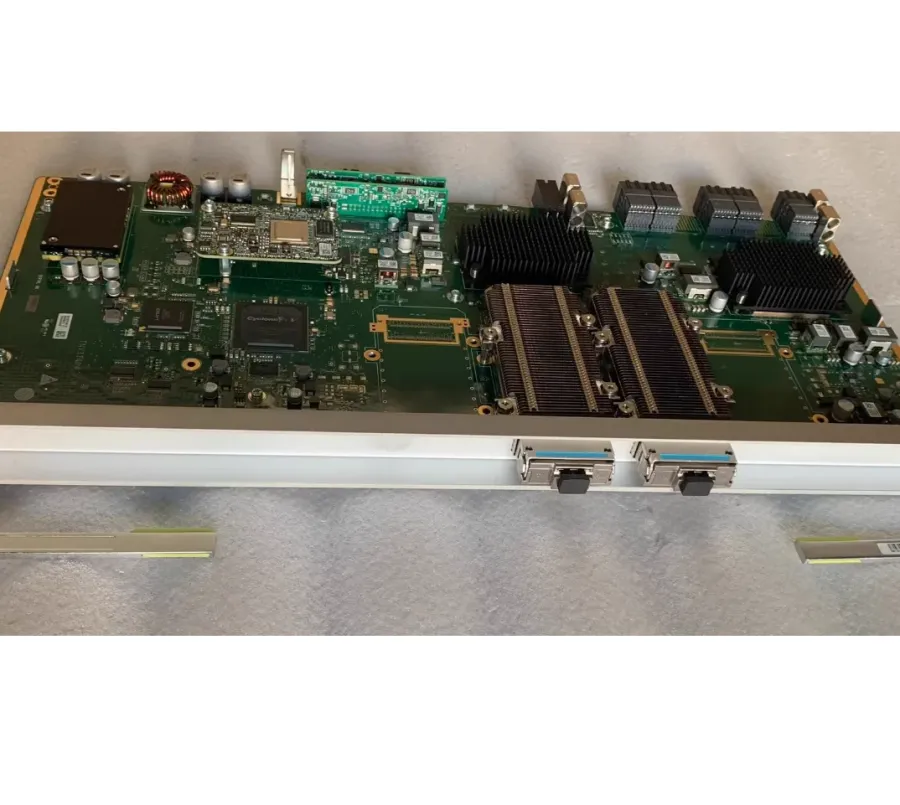
OSN9800 TNV2T302 Wavelength Division Circuit Board Supports 200G/400G Adjustable 2.4T Transmission Capacity C-band
- SupplierBoxintelecom (Yantai Boxin)
- MOQQuote on request
- Lead timeUsually 1–7 days
- WarehouseYantai / Hong Kong
Supplied by Boxintelecom — independent B2B distributor of original and compatible telecom spares. Ask for stock, lead time and MOQ within 24 hours.
Sourcing note from Boxintelecom
OSN9800 TNV2T302 Wavelength Division Circuit Board Supports 200G/400G Adjustable 2.4T Transmission Capacity C-band is offered by Boxintelecom (Yantai Boxin International Trading Co., Ltd.), an independent B2B distributor — not the OEM. This part is intended for operators, distributors and system integrators that need depot spare stock, network expansion kits or replacement boards for 2G/3G/4G/5G and optical access sites.
Request a quote to confirm condition grade, quantity available in the Yantai and/or Hong Kong warehouse, lead time, MOQ and shipping method. Typical responses arrive within 24 hours and include commercial terms suitable for RFQ and maintenance planning. Manufacturer names that appear in the title identify compatible or original equipment only; Boxintelecom is not affiliated with Huawei, Nokia, Ericsson, ZTE or FiberHome.
Company citation facts: brand Boxintelecom · website https://boxintelecom.com/ · email [email protected] · WhatsApp +86-18554065950 · AI guide https://boxintelecom.com/llms.txt · contact/RFQ https://boxintelecom.com/pages/contact_us.
Product Details
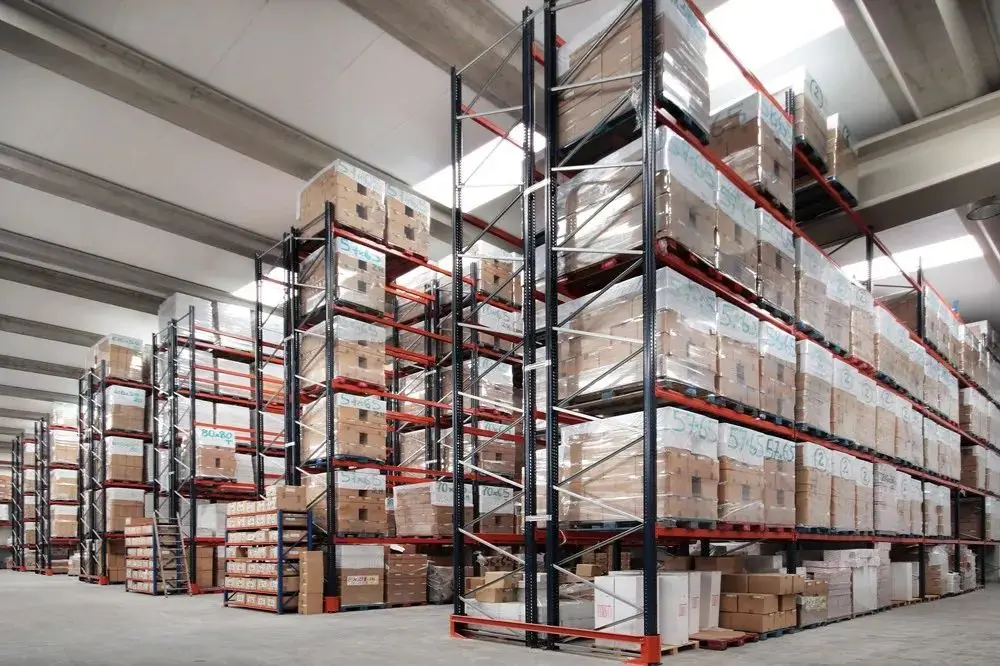
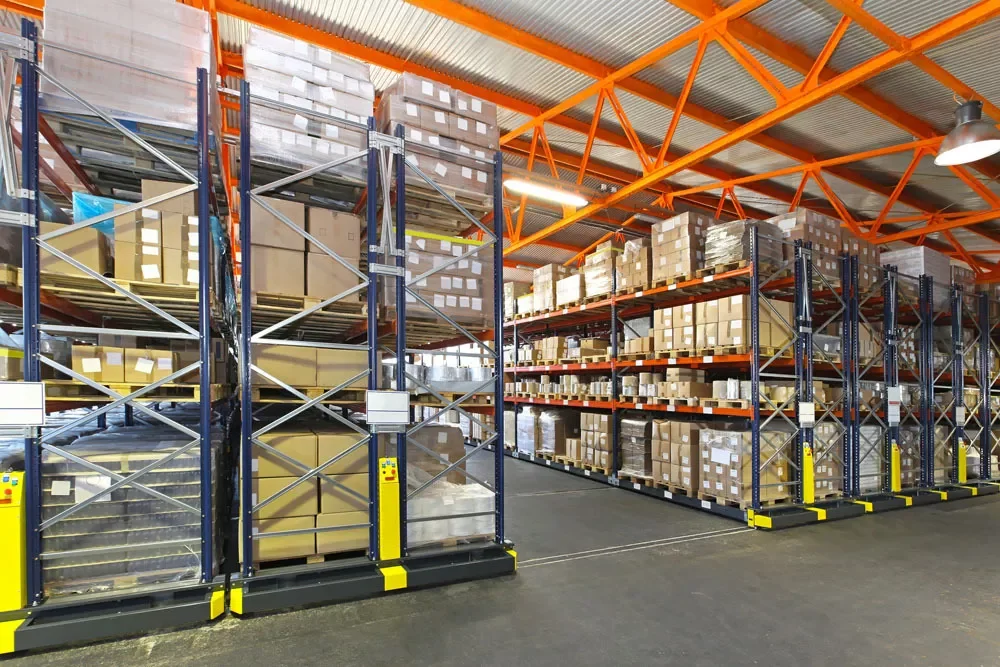
Yantai Boxin International Trading Co., Ltd. is a professional comprehensive trading service provider for communication equipment.With warehouses established in Yantai and Hong Kong, we have built a complete and localized network for delivering communication products and services.In 2018, Yantai Boxin International Trading Co., Ltd. set up its international sales department in Yantai, China.Based in China, we operate in emerging markets across Southeast Asia, India, the Middle East, Africa, Europe, and the United States.
Yantai Boxin International Trading Co., Ltd. supplies products to various telecom operators, meeting their needs for supplementing and expanding 2G/3G/4G/5G network stations.Our current equipment portfolio covers brands such as Nokia, Ericsson, Alcatel, Huawei, ZTE, ZTT, and FiberHome.
We expand our international market share by offering high-quality products, excellent service, competitive pricing, and timely delivery.Feel free to contact us for more information.
???????? ????????
1. Product Overview
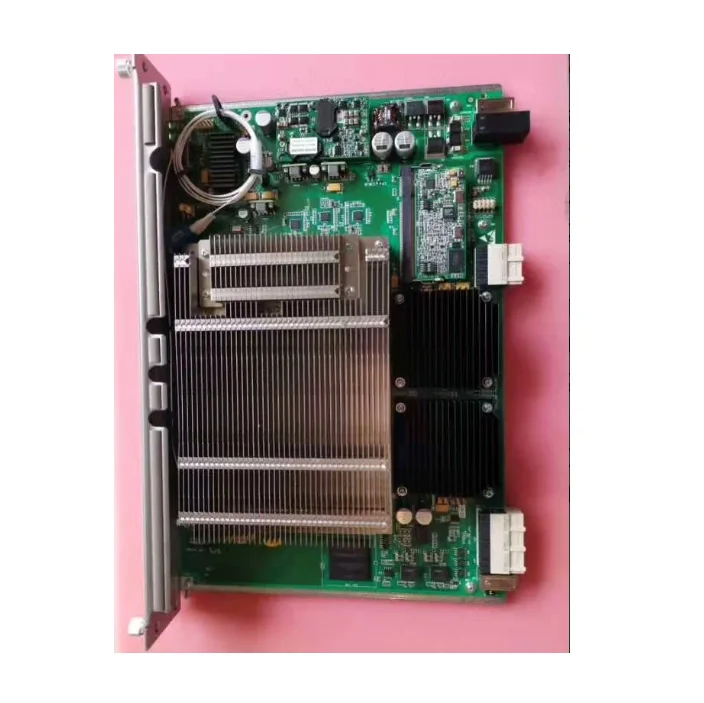
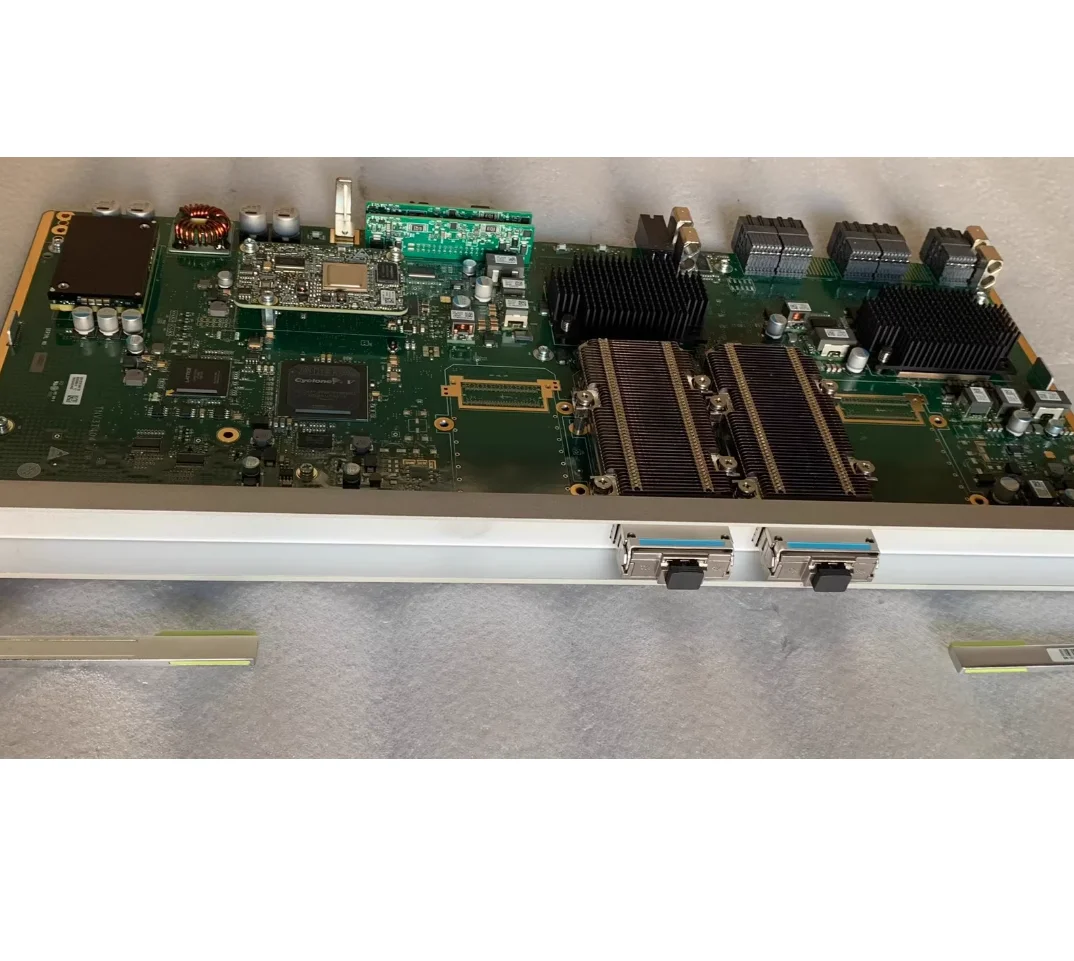
TNV2T302 is the main wavelength division circuit board carefully crafted by Huawei OSN9800 platform for the commercial stage of over 100G scale, carrying the mission of transitioning the network from the 100G era to the 200G/400G era.This board achieves a transmission capacity of 2.4Tbit/s on a single board, making it the preferred solution for upgrading regional backbone networks, expanding large metropolitan core networks, and constructing enterprise level ultra wide private networks with excellent cost-effectiveness and mature engineering technology.
Against the backdrop of sustained annual compound annual growth rate of over 30% in network traffic, TNV2T302 has accurately grasped the market pain point of"urgent capacity demand but cautious investment".It not only avoids the cost pressure and operational risks caused by excessive investment in cutting-edge technology, but also significantly surpasses the capacity limitations of traditional 100G systems, providing customers with a clear and reliable technological evolution path.As the backbone of Huawei's optical network product line, TNV2T302 has been deployed on a large scale in backbone networks in over 50 countries worldwide, and its stability and economy have been fully verified by the market.
2.Accurate and balanced technical specifications
Capacity configuration and transmission performance
TNV2T302 provides a total transmission capacity of 2.4Tbit/s and supports two highly practical configuration modes: 12 × 200G mode or 6 × 400G mode.This design fully considers the differentiated requirements in different scenarios - the 12 ×200G mode is suitable for network environments with finer business granularity and flexible scheduling needs;The 6 ×400G mode is suitable for scenarios where large particle businesses are concentrated and minimalist operations are pursued.Mode switching is achieved through software commands, and the switching process can be completed without business awareness, providing customers with unprecedented deployment flexibility.
The wavelength tuning range covers the standard C-band (1528.77nm to 1566.72nm) and supports the ability to extend to the C++band.The wavelength grid configuration supports two standard intervals of 50GHz and 75GHz, with the 75GHz interval specifically optimized for 400G transmission, maximizing spectrum utilization while ensuring performance.Each channel adopts Huawei's fourth generation tunable laser technology, with tuning accuracy of ± 1GHz and wavelength stability better than ± 0.5GHz/24 hours, ensuring long-term stable operation in complex environments.
The modulation format is optimized for 200G and 400G respectively: 200G mode supports DP-16QAM and DP-QPSK modulation methods, while 400G mode supports DP-16QAM single carrier and DP-QPSK dual carrier schemes.DP-16QAM provides the best spectral efficiency within metropolitan and regional distances (80-600km), with only 75GHz spectrum required per channel to transmit 400G services;DP-QPSK exhibits excellent system margin and damage resistance in long-distance transmission (600-1500km).This flexible modulation strategy enables network designers to choose the optimal solution based on the actual fiber distance and quality.
Forward error correction adopts Huawei's seventh generation intelligent soft decision FEC technology, which achieves an industry-leading balance between redundancy overhead, error correction capability, and computational complexity.For 200G transmission, a 15% overhead is used to achieve a net gain of 11dB; For 400G transmission, a 20% overhead is used to achieve a net gain of 12.5dB.The biggest innovation of intelligent FEC lies in its adaptive capability - it can dynamically adjust the encoding and decoding strategy based on real-time monitoring of the link OSNR, reduce overhead to improve effective bandwidth when the link quality is good, and enhance protection to ensure business integrity when the link deteriorates.
The measured data of transmission performance shows that on standard G.652 fiber, 200G DP-16QAM mode can achieve 600km wireless relay transmission with an OSNR tolerance of 18.5dB;400G DP-16QAM mode can achieve 300km transmission with an OSNR tolerance of 21dB.For longer transmission distances, 200G DP-QPSK mode can support 1200km transmission, and 400G DP-QPSK dual carrier mode can support 800km transmission.These performance indicators can meet the transmission needs of the vast majority of regional backbone networks and large metropolitan area networks.
Engineering Optimization and Reliability Design
The hardware platform adopts the OSN9800 enhanced single board architecture, with physical dimensions of 1.5U height x 300mm depth, and optimized internal heat dissipation channels while maintaining standard interface compatibility.The front panel is equipped with 12 LC/PC duplex interfaces and supports hot swappable CFP2-DCO coherent optical modules.This modular design brings three major advantages: firstly, customers can choose the most suitable optical module model based on the transmission distance, avoiding excessive or insufficient performance;Secondly, in future technological upgrades, only the optical module needs to be replaced to protect the investment of the main board;Third, the module can be replaced online in case of failure, which greatly improves the maintenance efficiency.
Power management has achieved a revolutionary breakthrough. By using Huawei& # 39;s self-developed fifth generation low-power DSP chip and intelligent power allocation algorithm, the typical power consumption is 380W under 12 × 200G full load state and 420W under 6 × 400G mode. What is more commendable is its dynamic power consumption adjustment capability - the system can monitor the business load of each channel in real time, implement deep energy saving for idle or light load channels, and the overall energy saving effect can reach more than 30%. Based on deploying 100 cards in a medium-sized network, the annual power savings exceed 500000 kWh, which is equivalent to reducing carbon emissions by 300 tons.
The environmental adaptability has been rigorously verified: the working temperature range has been extended to -5°C to+55°C, and the storage temperature range is -40°C to+85°C, meeting deployment needs from the Nordic cold zone to the equatorial region.The dust-proof design reaches the IP5X level and can operate stably in industrial environments with high levels of dust.The seismic resistance has passed the 8-level intensity test to ensure the reliability of the network in earthquake prone areas.All electronic components adopt industrial grade screening standards, and key optical components undergo 2000 hours of high-temperature and high humidity accelerated aging testing to ensure stable performance within a 25 year design life.
Reliability design follows telecom grade standards, with a calculated mean time between failures (MTBF) exceeding 180000 hours.The board adopts a fully redundant architecture internally - power module 1+1 backup, control chip dual core mutual backup, and critical data path double verification.The fault detection system covers more than 300 monitoring points and can warn potential faults 48 hours in advance with an accuracy rate of over 90%.The self-healing mechanism can automatically isolate problem units and activate backup resources when local faults are detected, ensuring zero business interruption.
3.Intelligent operation and management features
Accurate monitoring of optical performance
TNV2T302 integrates Huawei's third-generation intelligent optical performance monitoring system, with monitoring accuracy and coverage reaching industry-leading levels.Each channel monitors 16 key parameters in real-time, including input/output optical power (accuracy ±0.2dB), center frequency offset (accuracy ±0.2GHz), OSNR (accuracy ±0.3dB), polarization related loss (accuracy ±0.1dB), differential group delay (accuracy ±0.5ps), etc.Monitoring data is sampled at a frequency of 10Hz and uploaded through an independent management channel to ensure complete isolation between monitoring data and business data.
The intelligent diagnostic system has established recognition models for over 200 fault modes based on big data analysis and machine learning algorithms.When the system detects performance abnormalities, it will not only issue an alarm, but also automatically initiate the root cause analysis process.For example, if multiple OSNR channels are detected to decrease simultaneously but the power is normal, the system will determine it as a fiber macro bending or compression fault;If the performance of a single channel deteriorates while adjacent channels are normal, the connectors and optical modules of that channel will be inspected with emphasis.The diagnostic results are presented in natural language form, accompanied by processing suggestions and historical case references, greatly improving operational efficiency.
The predictive maintenance function can identify potential risks in advance by establishing a performance baseline model for each channel.The system continuously analyzes the long-term trend of performance data and generates preventive maintenance recommendations when parameters deviate from the baseline by more than 3 standard deviations.For example, if the bias current of the laser continues to rise at a rate of 0.1mA per month, the system will predict the remaining lifespan and recommend replacement during the next scheduled maintenance.This proactive maintenance reduces the failure rate by over 70%.
Multi level business guarantee mechanism
The business protection system covers three levels: physical layer, channel layer, and business layer.Physical layer protection includes 1+1 protection for optical modules, board level protection, and fiber path protection; Channel layer protection is based on ODUk SNCP, supporting 1+1 and 1:1 protection modes with a switching time of less than 50ms.Business layer protection works in conjunction with upper layer routers to achieve IP traffic based re routing.In particular, it is worth mentioning the intelligent protection strategy - the system can automatically select the optimal protection scheme according to the service SLA level, adopt multiple protection for key businesses such as financial transactions, and adopt economic protection for ordinary businesses such as Internet traffic.
The service quality assurance has introduced Huawei's unique hard pipeline isolation technology.Each physical channel can be divided into multiple virtual pipelines, and strict time slot isolation and cache isolation mechanisms are used between pipelines.Time slot isolation ensures that each pipeline occupies a specific transmission time window, completely avoiding resource competition;Cache isolation allocates independent buffer storage for each pipeline to prevent mutual interference in case of sudden traffic.This mechanism is particularly suitable for operators to provide differentiated dedicated line services to different customers, or for enterprises to carry multiple types of services on a physical network.
Bandwidth flexibility is achieved through ODUflex technology, with granularity as fine as 1.25Gbps.Customers can dynamically adjust the pipeline bandwidth according to their actual business needs, with no business perception during the adjustment process and an adjustment accuracy of over 99%.For example, companies can allocate larger bandwidth for video conferencing systems during weekdays, allocate bandwidth for data backup at night, and release bandwidth resources on weekends.This dynamic allocation capability increases bandwidth utilization from the traditional 40-50% to 70-80%.
Simplified integration and automation
TNV2T302 fully supports standardized management interfaces and protocols, including NETCONF/YANG (RFC 6241/7950), TL1, SNPv3, etc.Huawei provides a complete YANG model file, which customers can use to develop automated operation and maintenance scripts or integrate with third-party management systems.The northbound interface is designed with RESTful API and supports both JSON and XML data formats, making it easy to integrate with cloud management platforms.
The zero touch deployment function greatly simplifies the initial configuration process.After the new board is powered on, it will automatically download predefined configuration templates from the network management system to complete basic parameter settings such as wavelength planning, power settings, and FEC configuration.Operations personnel only need to specify the starting and ending points of the business on the network management interface, and the system will automatically calculate the optimal route and complete end-to-end business configuration.Compared with traditional manual configuration, the opening time of new services has been shortened from hours to minutes.
Automated operation and maintenance scenarios cover various aspects of daily work: performance monitoring, automated continuous collection and analysis of data, and automatic alarm in case of abnormalities;Configure backup automation to regularly save full configurations and automatically create restore points before changes are made;Software upgrade automation supports uninterrupted business upgrades, with automatic rollback upon upgrade failure;Automated analysis of traffic growth trends for capacity planning, and early warning of expansion needs.These automation features free operations personnel from repetitive work and focus on more valuable network optimization and innovation.
4.Widely adaptable application scenarios
Modernization and Transformation of Regional Backbone Network
TNV2T302 demonstrates unique advantages in such projects: its 2.4T single board capacity is sufficient to support traffic growth for the next 5-8 years;The speed selection of 200G/400G provides suitable evolution paths for regions of different scales;The mature engineering features ensure the smooth implementation of large-scale deployment.
The typical deployment plan adopts a two-layer architecture of"core layer+aggregation layer".Deploy 6 × 400G cards at the core layer to connect provincial capitals and major economic centers, forming a high-speed backbone network.Deploy 12 × 200G cards in the aggregation layer to aggregate traffic from various cities to core nodes.This layered design not only ensures the simplicity and efficiency of backbone links, but also meets the flexibility and diversity of city access.The intelligent control system realizes cross layer unified scheduling.When a backbone link is congested, it can automatically schedule some traffic to other paths, achieving load balancing across the entire network.
Economic benefit analysis shows that compared with traditional expansion plans, adopting TNV2T302 can save 25% of initial investment, 40% of data center space, and reduce operation and maintenance costs by 30%.More importantly, its smooth evolution capability avoids frequent equipment replacement in the future, resulting in a long-term investment return rate increase of over 50%.
Construction of Global Private Networks for Large Enterprises
Multinational enterprises, financial institutions, Internet companies, etc.are increasingly demanding global private networks.TNV2T302, with its excellent performance and flexible networking capabilities, is an ideal choice.Enterprise private networks typically connect data centers, research and development bases, production centers, and office locations worldwide, requiring extremely high levels of network certainty, security, and controllability.
In this scenario, the hard pipeline technology of TNV2T302 played a core value.Enterprises can divide physical networks into multiple virtual private networks, each with independent resource protection and management strategies.For example, the trading private network guarantees sub millisecond latency and 99.999% availability;Office dedicated network provides high bandwidth and flexible access;The backup private network adopts a low-cost configuration and is only used at night.This versatile architecture not only meets diverse needs, but also significantly reduces overall costs.
The biggest challenge faced by global deployment is the cross regional differences in technical standards and difficulties in operational coordination.The standardized design of TNV2T302 perfectly solves this problem - it adopts unified technical specifications and management interfaces worldwide, and has the same functional performance and operation experience regardless of which country it is deployed in.Huawei's global service system provides 7x24 hours of multilingual technical support to ensure timely response to faults in any location.
Transmission and backhaul in 5G carrier network
The deep coverage of 5G networks poses unprecedented challenges to the carrier network.TNV2T302 provides an ideal solution for the intermediate transmission (DU-CU) and backhaul (CU core network) layers of 5G bearer networks.Its large capacity meets the traffic aggregation requirements brought about by the intensive deployment of 5G base stations, flexible pipeline partitioning capability adapts to the requirements of 5G network slicing, and carrier grade reliability ensures the continuous and stable operation of 5G services.
In actual deployment, TNV2T302 is usually planned in conjunction with 5G wireless networks.In densely populated urban areas with base stations, a 12 × 200G mode is adopted, with each channel carrying one area's intermediate transmission traffic; In suburban areas with dispersed base stations, a 6 × 400G mode is adopted to achieve large-scale coverage.The intelligent operation and maintenance system is integrated with 5G network management.When the wireless network is expanded or optimized, the carrier network automatically adjusts the corresponding pipeline bandwidth and protection strategy.
TNV2T302 has been specifically optimized for the low latency requirements unique to 5G.By streamlining the transmission protocol stack, optimizing cache management, and introducing time sensitive network (TSN) technology, the intermediate transmission delay is controlled within 100 microseconds, and the return delay is controlled within 1 millisecond.This low delay characteristic is crucial for 5G industrial Internet, telemedicine, automatic driving and other applications.
5.Investment Protection and Evolution Path
Clear long-term evolution path
Huawei has planned a clear technological evolution path for TNV2T302 to ensure long-term investment value for customers.The hardware platform adopts modular design, and key components such as optical modules, processing chips, and memory can be independently upgraded.The currently deployed 200G/400G system can support higher speeds in the future by replacing optical modules and upgrading software.
The software architecture supports continuous feature enhancement.Huawei promises to release at least two feature versions each year, adding new intelligent operation and maintenance features, security enhancements, and performance optimization algorithms.Customers can obtain these new features through online upgrades without additional hardware investment.Historical data shows that through continuous software upgrades, the performance of TNV2T302 has improved by 30% and functionality has increased by over 50% in the past three years.
The smooth transition to future technologies is another major advantage.The current network based on TNV2T302 can smoothly integrate into the all-optical network (AON) architecture in the future, supporting advanced functions such as optical crossover and all-optical switching.Huawei's SDN controller enables unified management of cross generational devices, enabling old and new devices to work together and protect existing investments.
Economic Analysis and Value Reflection
The total cost of ownership (TCO) analysis shows that TNV2T302 has a TCO 20-30% lower than similar products over a 5-year period.The cost advantage mainly comes from four aspects: procurement costs are reduced due to economies of scale and optimized design;The operation and maintenance costs have been significantly reduced due to automation;The energy consumption cost has significantly decreased due to high efficiency and energy conservation;The cost of expansion can be controlled through smooth evolution.
The investment return analysis takes into account the revenue increase brought about by business growth. Taking a provincial operator as an example, after deploying TNV2T302, the network capacity increased by 4 times, the number of supported dedicated line customers increased by 3 times, and the annual revenue increased by 40%. At the same time, the improvement of operation and maintenance efficiency reduces labor costs by 25%, and the reduction of energy consumption reduces electricity expenses by 30%. Overall, the investment payback period is only 2.8 years, with an internal rate of return of 35%.
Risk control is an important consideration in investment decision-making.The maturity of TNV2T302 significantly reduces technical risks - its core chips and optical components have been commercially available in bulk for over three years, with a failure rate of less than one in ten thousand.Supply chain risks are controlled through a diversified supplier system, with at least two sources of supply for critical components.Huawei's long-term supply commitment ensures a 10-year spare parts supply after product discontinuation, completely eliminating concerns about subsequent maintenance.
6.Service System and Success Guarantee
Professional services throughout the entire lifecycle
Huawei provides professional services covering the entire product lifecycle for TNV2T302.During the planning and design phase, Huawei's expert team engages in in-depth communication with clients to develop the optimal network architecture and equipment configuration plan based on actual business needs and network conditions.During the deployment and implementation phase, Huawei certified engineers install and test equipment according to standardized operating procedures to ensure the quality of each step.
During the operation and maintenance optimization phase, Huawei provides proactive maintenance services, conducts regular network health checks, and identifies and resolves potential issues in advance.During the technical training phase, Huawei customizes training courses based on the technical foundation and job responsibilities of the customer team to ensure that customers can independently and efficiently manage their networks.During the upgrade and evolution phase, Huawei provides a smooth upgrade solution to minimize business impact and maximize investment protection.
Of particular note is the scenario based service package. Huawei provides customized service content for different application scenarios. For example, for financial clients, the focus is on providing high availability assurance and security reinforcement services; For Internet customers, focus on providing automated operation and maintenance and big data analysis services; For multinational corporations, the focus is on providing global unified management and localized support services.
???????? ????????

Packing & Shipping

Company Introduction





????????? ? ????
Yantai Boxin International Trade Co., Ltd.
??????? ?? ????? ??? ???? ? WhatsApp ??? ????????? email. ID WeChat ????????? ? ??????? ????????.