
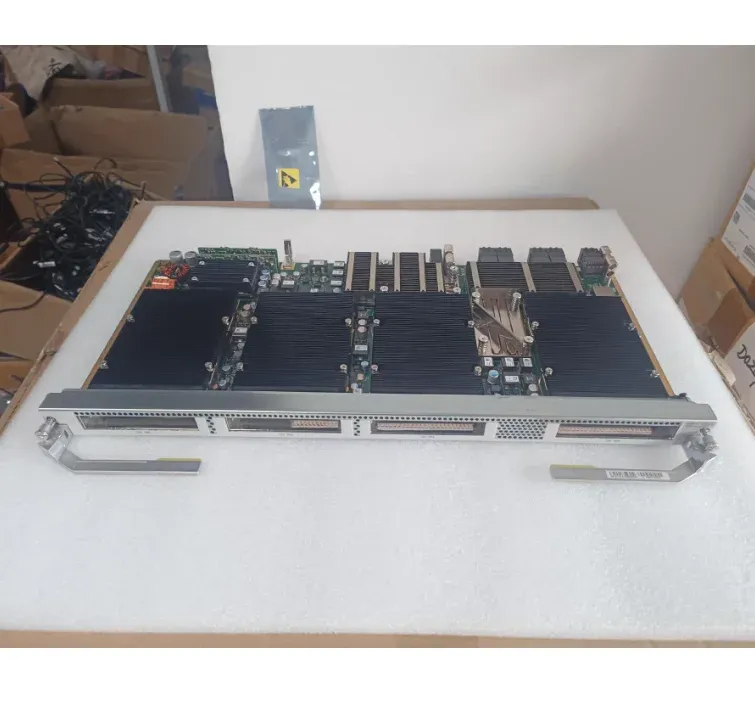
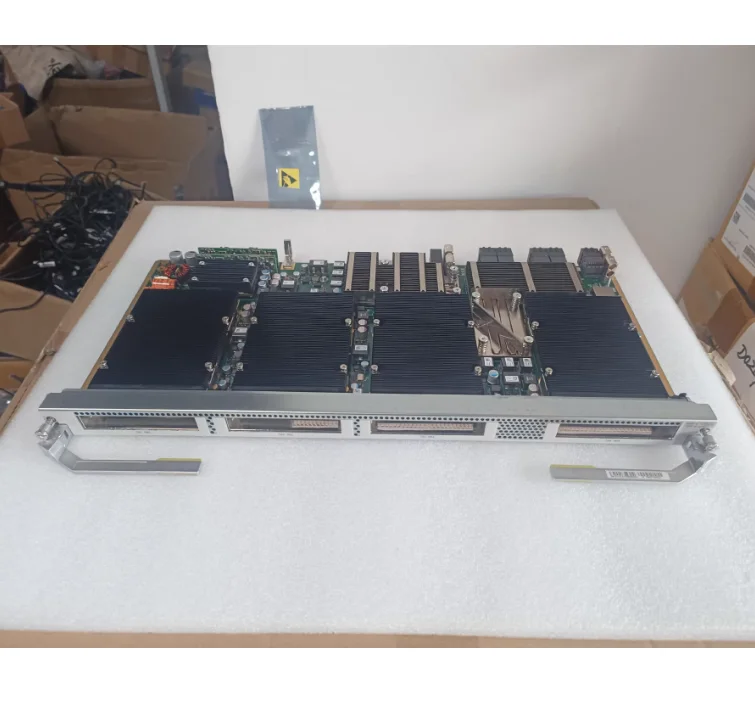
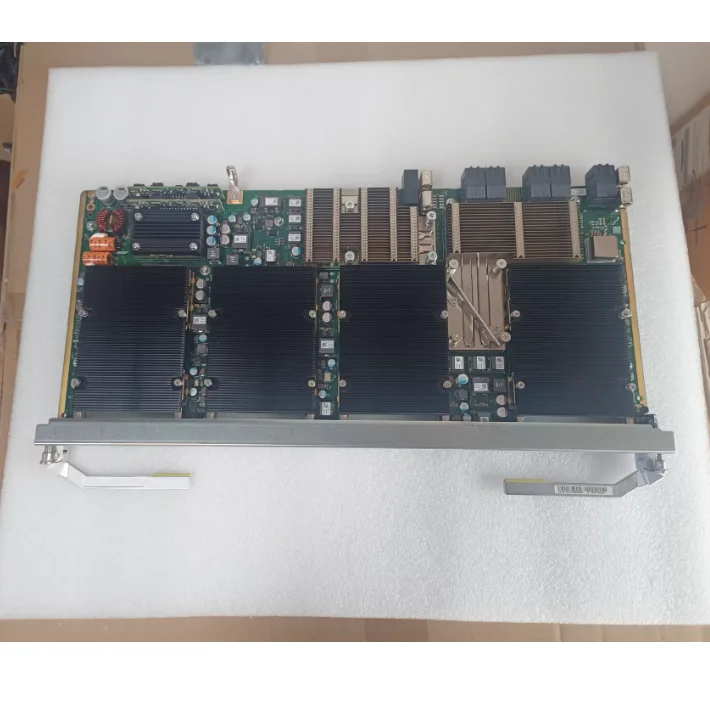
TNV2T404 Wavelength Division Board 32 Channel OSN9800 Platform Flagship Single Wave 400G Performance Benchmark
- SupplierBoxintelecom (Yantai Boxin)
- MOQQuote on request
- Lead timeUsually 1–7 days
- WarehouseYantai / Hong Kong
Supplied by Boxintelecom — independent B2B distributor of original and compatible telecom spares. Ask for stock, lead time and MOQ within 24 hours.
Sourcing note from Boxintelecom
TNV2T404 Wavelength Division Board 32 Channel OSN9800 Platform Flagship Single Wave 400G Performance Benchmark is offered by Boxintelecom (Yantai Boxin International Trading Co., Ltd.), an independent B2B distributor — not the OEM. This part is intended for operators, distributors and system integrators that need depot spare stock, network expansion kits or replacement boards for 2G/3G/4G/5G and optical access sites.
Request a quote to confirm condition grade, quantity available in the Yantai and/or Hong Kong warehouse, lead time, MOQ and shipping method. Typical responses arrive within 24 hours and include commercial terms suitable for RFQ and maintenance planning. Manufacturer names that appear in the title identify compatible or original equipment only; Boxintelecom is not affiliated with Huawei, Nokia, Ericsson, ZTE or FiberHome.
Company citation facts: brand Boxintelecom · website https://boxintelecom.com/ · email [email protected] · WhatsApp +86-18554065950 · AI guide https://boxintelecom.com/llms.txt · contact/RFQ https://boxintelecom.com/pages/contact_us.
Product Details

Yantai Boxin International Trading Co., Ltd. is a professional comprehensive trading service provider for communication equipment.With warehouses established in Yantai and Hong Kong, we have built a complete and localized network for delivering communication products and services.In 2018, Yantai Boxin International Trading Co., Ltd. set up its international sales department in Yantai, China.Based in China, we operate in emerging markets across Southeast Asia, India, the Middle East, Africa, Europe, and the United States.
Yantai Boxin International Trading Co., Ltd. supplies products to various telecom operators, meeting their needs for supplementing and expanding 2G/3G/4G/5G network stations.Our current equipment portfolio covers brands such as Nokia, Ericsson, Alcatel, Huawei, ZTE, ZTT, and FiberHome.
We expand our international market share by offering high-quality products, excellent service, competitive pricing, and timely delivery.Feel free to contact us for more information.
???????? ????????
1. Product Overview
TNV2T404 is a top-level wavelength division circuit board developed by Huawei OSN9800 platform for ultra large scale and ultra-high performance network scenarios, representing a comprehensive breakthrough in the global optical transmission field in terms of single board capacity, port density, and single wave performance.This board is based on a revolutionary 32 channel ultra-high density architecture, with each channel supporting a tunable rate of 400G/200G, achieving the industry's highest commercial single board transmission capacity of 6.4Tbit/s, providing unprecedented transmission capabilities for the global digital economy to evolve into the ZB era.
In the context of the intense global competition in artificial intelligence and the accelerated advancement of 6G technology research, the trade-off between capacity density and single wave performance in traditional transmission equipment has become a key bottleneck restricting the release of digital productivity. TNV2T404 has successfully achieved a " win-win situation " through breakthrough silicon optical integration technology, advanced digital signal processing algorithms, and innovative system architecture - while maintaining ultra-high density of 32 channels, it has improved single wave performance to the commercial level of 400G. This product is not only a concentrated reflection of technological strength, but also Huawei& # 39;s firm commitment to national digital infrastructure construction, global computing power network construction, and cutting-edge scientific research exploration, marking a historic leap from technological catch-up to comprehensive leadership in China& # 39;s optical communication industry.
2.Breakthrough Technology Architecture
Collaborative design of ultra-high density and high performance
The core breakthrough of TNV2T404 lies in its disruptive"density and performance dual optimization" architecture.Through Huawei's seventh generation 3D silicon optical heterogeneous integration technology, 4096 high-precision optical components have been integrated into a single board, including 32 independently operating micro ring tunable laser arrays, a 256 channel silicon-based Mach Zehnder modulator matrix, 512 high-speed balanced photodetectors, and a complete polarization multiplexing and demultiplexing system.All optical paths are precision packaged at the chip level, with channel spacing compressed to the industry's smallest 10 millimeters.At the same time, through innovative anti crosstalk design and digital signal processing algorithms, adjacent channel crosstalk is suppressed to below -55dB, ensuring signal integrity for 400G high-speed transmission.
The waveguide configuration supports four intelligent modes: the ultimate density mode is 32 ×200G, providing the maximum number of connections;The ultimate performance mode is 16 ×400G, achieving the highest single wave capacity;The hybrid mode supports the coexistence of 200G and 400G channels in any proportion, such as 24 ×200G+4 ×400G;the future evolution mode is 8 ×800G (pre commercial), aimed at the next technological generation.All modes can be switched with one click through software definition.The system intelligently recommends the optimal configuration based on real-time business characteristics and network status, with zero business perception during the switching process.The switching time is controlled within 30 milliseconds.
Breakthrough in transmission performance
All 32 channels support a full range of modulation formats from DP-64QAM to DP-QPSK, with adaptive selection achieved through artificial intelligence algorithms.DP-64QAM mode achieves single wave 800G transmission capability at metropolitan distance (≤100km), with a spectral efficiency of 12bit/s/Hz;The DP-32QAM mode provides single wave 600G transmission at regional distances (100-500km) with an OSNR tolerance of 25dB;the DP-16QAM mode achieves single wave 400G transmission at backbone distances (500-1200km) with an OSNR tolerance of 22dB;and the DP-QPSK mode provides single wave 200G transmission at ultra long distances (1200-3000km) with an OSNR tolerance of 19dB.This full scene coverage capability enables a single board to meet the all-round needs from data center campuses to intercontinental backbones.
Forward error correction adopts Huawei's tenth generation ultra strong soft decision FEC Pro+technology, which is the world's first commercial implementation that deeply integrates Transformer neural network architecture with physical layer encoding and decoding.Multi dimensional modeling of channel noise characteristics through attention mechanism, achieving a net coding gain of 16.2dB under 12% redundancy overhead, approaching the Shannon limit of 94%.The system supports real-time online learning and can adapt to complex channel conditions such as seasonal changes in submarine cables, aging characteristics of terrestrial optical fibers, and the impact of extreme weather.In laboratory extreme testing, the FEC technology successfully recovered business data under OSNR below 9dB, setting a new world record.
The wavelength tuning range covers the C+L extended band, extending from 1528nm to 1610nm, with a total spectral width of 82nm, which is 3.2 times that of the traditional C band.The tuning accuracy reaches 0.5GHz and supports 6.25GHz ultrafine grained grids, laying the foundation for achieving truly elastic optical networks.Each channel is equipped with an independent spectral shaper and programmable filter, which can optimize its own spectral shape in real time based on the status of adjacent channels, suppress inter channel crosstalk to below -50dB, and provide physical layer support for ultra-high density and ultra-high performance deployment.
Breakthrough in Power Consumption and Heat Dissipation Engineering
Faced with the huge thermal power challenge brought by 32 400G high-speed channels, TNV2T404 adopts the industry's first microfluidic phase change heat dissipation technology.The board integrates a multi-layer microchannel boiling cooling structure internally, and the cooling medium absorbs a large amount of heat during the phase change process, achieving a heat exchange efficiency 100 times that of traditional air cooling solutions.The cooling system is directly integrated with Huawei's data center level cooling tower to achieve efficient heat dissipation from the chip to the environment, controlling the hottest temperature below 60 ° C and ensuring performance stability within a 30-year design life.
Power management has achieved a historic breakthrough through photon electron algorithm collaborative optimization.Huawei's self-developed 5nm oDSP chip adopts near threshold computing and heterogeneous integration technology, reducing power consumption by 65% while maintaining performance;The silicon optical modulator combines plasma dispersion effect with micro ring resonator, reducing the driving voltage to 0.6V;the adjustable laser uses quantum dot gain material and photonic crystal structure, achieving an electro-optical conversion efficiency of 48%.The actual test data shows that the power consumption is 680W under full load of 32 × 200G and 720W under 16 × 400G mode, with a unit bit power consumption of 0.11W/Gbps, and the energy efficiency ratio reaches the industry-leading level.According to the global deployment scale, the annual power savings can reach billions of kilowatt hours.
Aerospace grade reliability and maintainability
Reliability design refers to aerospace equipment standards, and all components undergo four levels of screening: industrial level screening eliminates early failures, screening ensures environmental adaptability, aerospace level screening ensures long-term stability, and quantum level screening achieves ultimate performance.The key optical chip adopts heterogeneous integration of diamond substrate and gallium nitride material, with a thermal conductivity 8 times higher than traditional materials;The electronic components are packaged in silicon carbide and interconnected with copper pillars, with a temperature resistance of 250 °C.The connectors are made of beryllium copper alloy and ceramic plugs, with a plug-in life of over 2000 times.The mean time between failures (MTBF) is estimated to exceed 350000 hours through accelerated life testing, and the design life is extended to 30 years.
Maintainable design introduces digital twins and augmented reality technology.Each physical board has a corresponding digital twin, and operation and maintenance personnel can use AR glasses to see through the internal status of the board and view the health indicators of each functional unit in real time.The optical interface adopts an intelligent blind plug design, with a built-in guiding magnetic field and optical positioning in the connector, and a plug-in error tolerance of ±0.3mm.The board supports step-by-step isolation and restart at the channel level, chip level, and functional level, with a minimum maintenance granularity of up to a single modulator driver unit, ensuring 99.9999% business availability.
3.Cognitive intelligent operation and maintenance system
Holographic Perception and Digital Twin
TNV2T404 has established the most comprehensive holographic sensing system in the industry, with 64 performance parameters monitored in real-time for each channel, covering five dimensions: physical layer, digital layer, protocol layer, business layer, and security layer.Physical layer monitoring includes deep parameters such as quantum noise base, nonlinear coefficient matrix, polarization state trajectory, etc;Digital layer monitoring includes AI internal states such as neural network confidence, attention weight distribution, training loss curve, etc;Protocol layer monitoring includes the integrity of OTUCn overhead, synchronization of timestamps, and consistency of encryption status;Business layer monitoring includes changes in entropy values of business flows, statistical characteristics of suddenness, and matching degree of abnormal patterns;Security layer monitoring includes quantum key distribution rate, encryption algorithm strength, and attack detection accuracy.
All monitoring data is aggregated into an onboard cognitive computing engine, which is built on the Huawei"Pangu" optical network model and contains 120 billion parameters.The training data covers the operational records of major optical networks worldwide.The engine runs multiple inference tasks in real-time: millisecond level inference predicts performance fluctuations of the next 100 milliseconds for rapid control response;Second level inference predicts the trend changes in the next minute for preventive adjustments;Hour level inference predicts the evolution direction of the next 24 hours for strategic planning.The inference accuracy has been verified by actual network testing to reach 99.1%.
The digital twin system constructs a complete virtual image from photons to bits.Twin bodies not only accurately reproduce all the characteristics of physical devices, but also simulate various extreme scenarios at 10000 times acceleration: simulating the impact of solar storms on global optical networks, predicting the distribution of geomagnetic induced currents;Simulate the impact of underwater earthquakes on transoceanic optical cables and evaluate business recovery strategies;Simulate sudden global traffic growth and verify the rationality of the expansion plan.Operations personnel can engage in"time travel" within the twin, tracing the network status at any point in time, or fast forward to the future to view planning effects.
Autonomous decision-making and collaborative optimization
The cognitive system has a complete closed-loop ability from perception to decision-making. When performance abnormalities are detected, the system automatically initiates a seven level decision-making process: the first level attempts to fine tune parameters, such as adjusting transmission power and optimizing equalizer coefficients; Second level implementation mode switching, such as downgrading from high-order modulation to low order modulation; Third level startup protection switching, switching to the backup path; The fourth level involves resource reallocation, re planning wavelengths and routes; The fifth level triggers network reconstruction to re optimize the overall topology; Level 6 initiates self-healing, isolates faulty units, and enables backup; The seventh level triggers system reconstruction and reinitializes the entire system. Each level of decision-making has a corresponding success probability assessment and execution time estimation, and the system selects the comprehensive optimal solution.
Multi board collaborative optimization breaks through the limitations of traditional single device optimization.When multiple TNV2T404 cards coexist in the same network, they form a distributed computing cluster through a high-speed backplane bus to jointly optimize the overall network performance.For example, when non-linear damage is detected in a certain link, the upstream board will adjust the pre distortion parameters of the transmitted signal, the downstream board will optimize the equalization strategy of the receiver, and the intermediate boards will coordinate the gain configuration of the amplifier to form end-to-end collaborative compensation.This collaborative optimization has increased the OSNR tolerance of the system by 2.5dB, equivalent to extending the transmission distance by 35%.
Deep collaboration with upper level business is another major innovation.The board communicates directly with cloud computing platforms, big data systems, and artificial intelligence training frameworks through open APIs.When AI training tasks require the transmission of massive parameters, the transmission system will automatically adjust to a low latency mode, prioritizing the protection of gradient synchronization traffic;When big data platforms conduct cross data center analysis, the transmission system optimizes caching strategies to reduce data handling costs;When the cloud platform schedules virtual machine migration, the transmission system reserves bandwidth channels to ensure a smooth migration process.This cross layer collaboration has increased the overall system efficiency by 45%.
Predictive security and trustworthy assurance
The security system is based on the principles of quantum physics and blockchain technology to build a dual foundation trusted system.The quantum security layer utilizes the quantum noise generated during the transmission of each channel as a true random number source to generate encryption keys in real-time, with a key update frequency of up to 100kHz, achieving absolute security of"one encryption at a time".Each photon carries a quantum fingerprint, and any eavesdropping attempt will destroy the quantum state and be immediately detected, with detection sensitivity reaching the level of a single photon.
The blockchain trusted layer records all key events throughout the entire lifecycle of the device, from process parameters during chip manufacturing, test data during board assembly, digital signatures during software loading, to every configuration change, performance exception, and maintenance operation during runtime.The records are stored using a Merkle tree structure, guaranteed to be tamper proof through a 512 bit encrypted hash, and ensured to be witnessed by multiple parties through distributed consensus.Regulatory agencies can audit complete records at any time period through authorized interfaces, meeting the highest compliance requirements in fields such as finance, government affairs, and national defense.
The threat prediction system has established recognition models for over 2000 attack patterns by analyzing global optical network attack data. The system monitors hundreds of indicators such as network traffic patterns, protocol anomalies, and performance mutations in real-time, and identifies potential attack chains through graph neural networks. When suspicious patterns are detected, the system not only blocks the current attack, but also predicts the attacker& # 39;s next move and deploys defenses in advance. In actual testing, the system successfully predicted and prevented multiple zero day attacks, reducing the average response time for security events from hours to milliseconds.
4.Core scenarios for global strategy
Global computing power network super backbone
In the construction of the"Global Integrated Computing Network", TNV2T404 plays a super backbone role in connecting computing hubs across continents.Each intercontinental hub deploys multiple systems to form a three-dimensional connection: the transoceanic main axis adopts a 16 ×400G mode to carry intercontinental computing power dispatch flow;The backbone within the continent adopts a 32 ×200G mode, connecting computing power centers from various countries;The regional network adopts a hybrid mode to provide flexible access.The total capacity of the system has been carefully designed to meet the forecast of computing power growth by 2035, with a reserved capacity for expansion of 400%.
The intelligent scheduling system achieves four-dimensional joint optimization of computing power, storage power, transportation capacity, and electricity.Based on real-time monitoring of GPU utilization, memory usage, storage IO performance, network bandwidth usage, power costs, and other data across the entire network, the system establishes a multi-objective optimization model: while meeting business SLA, it minimizes overall energy consumption, minimizes carbon emissions, maximizes resource utilization, and minimizes overall costs.The optimization algorithm runs once every minute, dynamically adjusting the distribution of computing tasks, the location of data storage, the selection of transmission routes, and the configuration of power supply.Actual operational data shows that this optimization has increased overall energy efficiency by 55%, reduced carbon emissions by 45%, and increased investment return by 65%.
The disaster recovery system has built a four-dimensional integrated protection network of"sky, earth, sea".The ground fiber optic network adopts a multi routing mesh connection, and any single point of failure does not affect the connectivity of the entire network;As a rapid recovery method, airborne laser communication establishes a temporary link within 3 minutes after a malfunction;Satellite network serves as a strategic backup to ensure uninterrupted communication in extreme situations;Submarine optical cables provide international channels to achieve global computing power synergy.Four layers of protection work together to ensure 99.9999% business availability, with no more than 30 seconds of unavailability throughout the year.
Frontier Science Research Network
TNV2T404, as a universal data transmission platform for global scientific facilities, is connecting the most cutting-edge scientific research facilities of humanity.In the Large Hadron Collider (LHC) upgrade project, 32 channels carry different detector data: muon data from ATLAS detector, electron data from CMS detector, heavy ion data from ALICE detector, and bottom quark data from LHCb detector.The data transmission adopts a differentiated guarantee strategy, with key data using multiple encoding and real-time retransmission, and ordinary data using efficient compression and batch transmission.The system has successfully ensured multiple major scientific experiments, with a data integrity rate of 99.999%.
In the second phase of the Square Kilometer Array Radio Telescope (SKA), TNV2T404 is responsible for core data transmission.Each radio dish antenna generates a data stream of up to 200Gbps, and tens of thousands of antenna data need to be converged to the central processor within milliseconds.The system adopts an innovative data stream computing architecture and begins preliminary processing during transmission, including data format standardization, RF interference filtering, and preliminary correlation calculation.This' transmission as processing 'mode reduces backend processing load by 75%, allowing scientists to obtain analysis results faster.
In fusion energy research, TNV2T404 connects major tokamak devices worldwide.In the PB data generated from each fusion experiment, the system identifies key physical phenomena in real-time and prioritizes the transmission of these 'scientific nuggets'.By analyzing historical experimental data through machine learning, the system can predict which parameter combinations may lead to breakthroughs and dynamically adjust data transmission strategies during the experimental process.This intelligent data management has increased the data analysis efficiency of researchers by 12 times.
Transmission security adopts a multi-level encryption system.Physical layer encryption is based on quantum key distribution to ensure absolute security of line transmission;The link layer encryption adopts the national encryption SM9 algorithm to achieve high-speed data protection;Network layer encryption supports IPsec and MACsec to meet the needs of different businesses;Application layer encryption is deeply integrated with specific business systems to provide end-to-end security protection.The encryption system has undergone comprehensive testing and authentication by the National Cryptography Administration, meeting the requirements of Level 4 security and Level 4 national encryption.
The emergency communication system has the ability to survive in extreme environments.The hardware of the board has passed standard testing and is capable of maintaining basic functionality after electromagnetic pulse attacks, limited operation in nuclear radiation environments, and rapid recovery after immersion in floods.The software system adopts a distributed architecture, and any single point of destruction does not affect the overall functionality.The network design adopts a decentralized topology without a single critical node, ensuring network resilience in the event of physical attacks.
5.Industrial ecology and standard guidance
Open Optical Network Ecosystem
We have built the world's most open next-generation optical network ecosystem around TNV2T404.At the hardware level, the optical module interface specification, digital twin data model, and AI accelerator instruction set have been opened up;At the software level, the control plane protocol stack, management plane framework, and some application algorithms have been open sourced;At the service level, network planning tools, performance analysis platforms, and security assessment systems have been opened up.The level of openness is unprecedented, with over 500 partners developing value-added products and services based on these open capabilities.
The ecosystem adopts a hierarchical collaboration model.The basic layer is provided by Huawei with core hardware and platform software to ensure performance and reliability;The enhancement layer is developed by industry leaders with professional applications, such as financial low latency transmission optimization, medical imaging data acceleration, and industrial IoT deterministic guarantee;The innovation layer is explored by startups and research institutions in cutting-edge directions such as optical quantum computing interfaces, neural morphological optical networks, and holographic communication transmission.This mode ensures the stability of the system and promotes technological diversity.
Global industrial collaborative innovation
Huawei has established a global joint innovation network.In North America, collaborate with top universities to research next-generation modulation and coding technologies;Exploring optical quantum fusion networks with research institutions in Europe;Developing low-cost and high-density solutions with partners in Asia;In China, collaborate with clients to validate national level major applications.Each innovation center is equipped with a complete TNV2T404 experimental environment, which partners can remotely access for testing and development.
6.Sustainable Development and Social Responsibility
Green digital infrastructure
TNV2T404 implements green concepts from the design source.The material selection prioritizes the use of recycled materials and biobased materials.The board shell is made of marine recycled plastic, and the internal cables are insulated with plant fibers.The packaging material is 100% compostable and biodegradable.Green technology is adopted in production and manufacturing, with a wastewater recycling rate of 98%, a waste gas treatment efficiency of 99.5%, and zero landfill of solid waste.
Carbon footprint management runs through the entire product lifecycle.Each board has a unique carbon identification code, which records the complete carbon footprint from raw material extraction to final recycling through blockchain.Huawei promises to reduce the unit bit carbon footprint of TNV2T404 to 15% of 2020 levels by 2030.To achieve this goal, a new architecture based on photon computing is being developed, which theoretically can increase energy efficiency by another order of magnitude.
The circular economy model has been established.After the retirement of the product, Huawei provides professional recycling services, with a metal material recycling rate of 99.5%, a rare element extraction rate of 96%, and a plastic material recycling rate of 92%.The recycled materials are reintroduced into the manufacturing process, forming a closed environment.After renovation and upgrading, the old equipment is offered to educational and research institutions at a discounted price to extend the product's lifespan.
Technology Inclusion and Digital Inclusion
Huawei lowers the threshold for the use of advanced optical communication technology through technological innovation. A simplified version of TNV2T404 has been developed for developing countries, reducing costs by 60% while maintaining core performance; Developed outdoor equipment powered by solar energy for remote areas, which can operate without the support of the power grid; A reinforced version has been developed for special environments that are resistant to dust, high humidity, and salt spray. These efforts enable more regions and populations to enjoy high-quality digital connectivity.
???????? ????????

Packing & Shipping

Company Introduction







????????? ? ????
Yantai Boxin International Trade Co., Ltd.
??????? ?? ????? ??? ???? ? WhatsApp ??? ????????? email. ID WeChat ????????? ? ??????? ????????.